Pearl Jam “Vs.” (1993)

     I find there to be some similarities between “Vs.” from Pearl Jam and “In Utero” from Nirvana.  In both cases, the band was trying to follow up a massively successful album, and in both cases, they strived for a less polished, rawer and more aggressive sound.  And in both cases, they had a slightly less consistent collection of songs (my opinion) than their preceding album.  Even as such, “Vs.” was still a very successful album for Pearl Jam, with a very limited marketing campaign, and ultimately it was rated as the #5 grunge rock album of all time by loudwire.com.

     Unlike Nirvana, the songwriting and musical creation was a much more collaborative process with Pearl Jam.  Although all of the lyrics and vocals come back to Eddie Vedder, all five members of the band contributed songs for this record.   They struggled with locations and process while making this record, and two of their better and well-recognized songs ultimately contradicted their ambitions for a rougher edge.

     The album opens with “Go”, which was the first single released, and was written by new drummer Dave Abbruzzese.  It is a pretty intense rocker, but like a lot of songs on this record and their subsequent catalog, it lacks much direction or hook.  I like “Animal” better as a second dose of power, and “Daughter”, one of the two primarily acoustic tracks, is a classic Eddie Vedder story about a disabled girl and her lack of acceptance from her own family.

     “Glorified G” is another song that doesn’t really go anywhere, but “Dissident” is probably my favorite song on the album, and also the best display of the star power of Eddie Vedder, showcasing his depth of range and style.  I don’t find many of the other songs to be that compelling, even as I appreciate the singing of Vedder and his uniquely deep tone.  “Elderly Woman Behind the Counter in a Small Town” is an exception, and I love the delivery of his softer, soulful approach here.  Like “Daughter”, this is a Vedder story to be told, this time highlighting the life of a person we all know, the senior citizen who has led a humble and quiet life in the same town for all of their years.

     From this point on, the hits and big records would not flow as frequently for Pearl Jam, but unlike their peers, they soldier on today in various forms, and Eddie Vedder stands alone as the sole survivor from a generation of highly impactful and gifted vocalists in this genre.

Nirvana “In Utero” (1993)

     We are starting our second run through the grunge hall-of-fame, as many of the bands we featured in 1992 came out with their next release.  In most all cases, their follow-up was successful, if not as groundbreaking or impactful as the prior release, and also in many cases, it represented the last real high point for these acts as they lost ground to the evolving trends of music and their own inner demons.  On “In Utero”, by Nirvana, you can clearly hear the ongoing pain and inner struggle of Kurt Cobain, and he was focused on relaying that message through this album.  In fact, his preferred title for the record was “I Hate My Life and I Want to Die”, sadly way too prophetic, and that was his pat answer for anyone who asked him how he was doing.  Ultimately, bassist Krist Novoselic convinced him to go with an alternate title, and they landed on “In Utero”, taken from a Courtney Love poem.  You can tell they were going with a much rawer, more intense and abrasive sound on this album, and the songwriting doesn’t contain the catchier hooks or riffs we saw so much of on “Nevermind”.  Even so, fans and critics both loved this follow-up, and it is rated as the #6 grunge rock album of all time by loudwire.com.

     For me, most of this album is just a little too much of the hard edge and strain we hear so much of on most of the songs.  There are two well-known iconic songs that emerged from this record, “Heart-Shaped Box” and “All Apologies”, both of which are awesome and hold up to any track from “Nevermind”.  Other songs like “Rape Me”, “Dumb”, and “Pennyroyal Tea”, are intense and harsh but melodic enough to bring me back, but songs such as “Scentless Apprentice”, “Milk It” and “Radio Friendly Unit Shifter” just scrape a bit too roughly across my senses to make me want to return as a listener for any reason other than historical recollection.  It is good to see Dave Grohl slowly working his way into some of the backing vocals and he even received a songwriting credit on “Scentless Apprentice”, along with Novoselic.  One can’t help but wonder what could have come with more collaboration from these two massive rock icons working within a single unit.  It is hard to picture Cobain relinquishing much more creative control in this arena, and that doesn’t even touch on what was really brewing under the surface with Nirvana.

     “In Utero” was released in September of 1993, and just seven months later, decimated by the dueling destruction of severe addiction and crippling depression, Kurt Cobain finally succeeded in taking his own life, after multiple attempts and constant references to the possibility.  Sadly, most around him tended to sense this inevitability, even as they all fought as hard as they could to keep him safe and healthy.  Nirvana will forever represent one of the most explosive, short-term, and intense cycles in rock music history.  Their time in the limelight was not much more than two years, but their impact is nearly unmatched, even to this day.  One could have hoped Cobain’s tragic death would serve as a wakeup call and cry for help for many of his celebrated peers, but unfortunately it proved to be more of a foreshadowing of further tragedy to follow.

The Smashing Pumpkins “Siamese Dream” (1993)

     Through the course of my musical wandering and searching for other sounds, certain definitive albums always bring me back to guitar-based rock and roll.  There are five albums in my head that over the years, captured my attention immediately upon the first listen, and held it for an extended period of time.  This often occurred when I was focused on another genre of music at the time, as if I needed a reminder that guitars, bass and drums are where it all starts for me.  The first of these transformative albums was “Appetite for Destruction” by Guns N’ Roses, and the next hit me in 1993, when I definitely needed a wakeup call, with “Siamese Dream” by The Smashing Pumpkins.  This was their second studio release, emerging from the shadows of grunge and alternative rock, and this masterpiece by Billy Corgan and his band lives on as one of my favorite all-time albums to this day.  It is rated as #341 on Rolling Stone’s Top 500 Greatest Albums of All Time.

     There are six tracks on this record that have always stood out to me above the rest, and I will address those primarily in this blog.  Before I go any further, I have to give credit to my friend Mike, and this would be the Mike I have known the longest, for pushing me to explore this album once upon a time.  He was spot on with this pick, and I owe him big-time for sharing his love of The Smashing Pumpkins.

     The album opens with his favorite, and one of mine too, “Cherub Rock”.  Jimmy Chamberlin’s snare drum announces the beginning, and before you know it, we are hit with the full-on guitar assault of Corgan and James Iha and their signature distorted sound that is so perfectly filthy.  The riff on this song is so good, and Corgan’s unusual vocals add the ideal amount of delicate imbalance to this fairly standard rant against the record company industry.

     “Today” is another phenomenal chord combination that explodes off of a subtle opening riff, and is one of many tracks on this song that focuses on Corgan’s intense depression and thoughts of suicide during this album.  I’m very happy he was able to escape the demons that captured so many of his peers of the time, and this song is an intense emotional testimony to that delicate and precarious state.

     “Hummer” was one of the deeper cuts on the album I originally claimed as a favorite, returning the favor to Mike as I pushed him many times on this track.  It has an unusual, Middle-Eastern rotating turn that melts into more guitar distortion and eventually a really beautiful melody.  “Life’s a bummer… when you’re a hummer”.

     “Rocket” was the 4th and last single from the record, and has a similar feel to “Hummer”.  With a hypnotic centerpiece riff, Corgan digs further into his isolated state and desire for escape, as the droning grind of this melodic rock track carries on.

     “Disarm” is distinct in its acoustic base, a stark contrast to the rest of the album.  With a string and bell-based backing, this is a dark exploration of Corgan’s childhood and the isolation that helped fuel his powerful approach to making music.  It is certainly a departure from the guitar-drone of the album, and in the middle of the record, it is perfectly placed to add that contrast.  It is a song that may have naturally fit later on some of their subsequent albums, but added that needed shift of pace a great album often contains.

    Another non-single I absolutely love from this record is “Mayonaise”.  The soft and gentle guitar opening, even more so than on “Today”, creates the perfect framework for the band to come crushing in at the one-minute mark.  I love the guitar playing on this song, perhaps more than any track on the record, and it is one of the few songs to co-feature James Iha as a songwriter. 

     There isn’t a song on the album I don’t enjoy, even as I highlighted my six favorites.  The band went way over their schedule and budget to make this record, and it dragged the band and particularly Corgan to the edge of exhaustion and breakdown, as we have seen before, but for all of the pain and turmoil, they emerged with one of the best albums of the 1990s and one of the most significant records of my own personal history as a music fan.

Liz Phair “Exile in Guyville” (1993)

     Today’s album was an interesting and different album, as I listened to the debut album from Liz Phair, “Exile in Guyville”.  She indicates that the song structures were built and sequenced as a response to “Exile on Main Street” by the Stones, but many of these songs were written over different time frames and the correlation can be challenging to reconcile.  All of that noted, it is a highly regarded record by many and is rated #56 on Rolling Stone’s Top 500 Greatest Albums of All Time.

     In summary, your first reaction when listening to this record is that Liz must have really been going through a few things when she wrote these songs

.  (All of the songs are of her own writing, and she also handles the vocals and a lot of the guitar and piano work as well).  She actually maintains that most of the songs are NOT autobiographical but associated with experiences she witnessed in her social circle and friend group.  Either way, the net sum of these 18 songs is a pretty blunt, candid and sometimes jarring assessment of relationships with others, as well as one’s self.

     Musically, the sound is pretty raw and bare.  Most tracks are simply guitar, bass and drums, with low-key vocals, and there are a couple of songs with piano or other instruments as well.  My favorites tend to lean towards the more melodic, and I enjoyed “Never Said”, “Soap Star Joe”, and “Canary” with some haunting piano accompaniment.  “Divorce Song” has some really powerful lyrics about acceptance and rejection in a relationship, and her story-telling is pretty remarkable through these songs.  If I had to describe Liz Phair to someone unfamiliar, I would qualify her as 60% Patti Smith, 30% Sheryl Crow, and 10% Joan Jett.  The raw sexuality, honesty and candor of many of her songs, including “Fuck and Run” and “Flower”, certainly stands out, and she doesn’t hide from herself in anyway, including the topless photo of her on the album cover.  On “Fuck and Run”, she willingly gives in to the emotions she wants to avoid, acknowledging that her own habitual choices run counter to her desire for a meaningful, long-lasting relationship.  It is pretty intense and whether it is autobiographical or not, it is a lot to take in.

     I don’t know that I will add a lot to the playlist from this record, but I’m definitely glad I took the time to listen closely.  There is a highly disproportionate representation of males vs. females in the world of rock and roll, and I think we are all better served when that equation receives some appropriate rebalancing.

Duran Duran “Duran Duran” aka “The Wedding Album” (1993)

     In the 1980s, there were many artists of the ‘60s and ‘70s who experienced a comeback and renaissance in their career.  In the 1990s, it doesn’t feel like that happened nearly as often, but one act who came back strong after several years on the back pages was Duran Duran, with their second self-titled album, also referred to by fans as “The Wedding Album”, with wedding photos from band members on the album cover.  I always really liked the two big hits from this album, and listening to the rest of it in full, I can say the same about the entire release.

     Warren Cuccurullo had replaced Andy Taylor on guitar, and they went with session drummers and programmed percussion, but the band was still essentially the same lineup.  The record opens with “Too Much Information”, a simple pop song that sets a great tone.  Next comes their first of two major hits from the record, “Ordinary World”.  I think this is an outstanding performance by Simon Le Bon on vocals, and just a really well written song.  I also really liked the funkier “Love Voodoo” with a great bass line from John Taylor.  “Drowning Man”, a dance-club track, doesn’t do quite as much for me, but it was another of the singles released from the album.  “Shotgun” is a short, reworked version of a similar song by Jr. Walker and the All Stars.

     My definite favorite on this album is their other big hit, “Come Undone”.  It has a very familiar percussion beat, and Taylor’s bass weaves in perfectly with Cuccurrollo’s descending riff and Le Bon’s low-key delivery that builds perfectly over the course of the song.  Tessa Niles also delivers a very memorable vocal riff on this song, it really is a fantastic production.  Like often happens, they came up with this song after they had finished the rest of the album, and scramble to make sure it made it on to the release… good choice.

     “Breath after Breath” mixes in vocals from Brazilian singer Milton Nascimento.  It has the potential to be a really intriguing song, but it seems a bit out of place with the rest of the vibe.  “U.M.F” is a funky track that gives off a Prince feel (as does “Shotgun”, mentioned above), and is another of my favorites on the album.

     As I listened to “Femme Fatale”, it sounded oddly familiar and reminded me of the Velvet Underground.  That’s because it IS a Velvet Underground song, from their classic album “The Velvet Underground & Nico”.  I may not have completely nailed it, but I’m glad I was able to connect the dots.  It is a really respectable cover of a classic song, worthy of inclusion here.   None of the remaining tracks stand out from the rest, but I like them all.

     This proved to be a very successful re-launch for Duran Duran, who continues to perform and record to this day.  Even beyond their initial success a decade before, they proved they had the talent and staying power to accomplish much more than many of their ‘80s peers. By definition, I’m NOT a karaoke guy, but if I ever had to perform, my go-to song I have pondered for many years involves a hybrid of material from this album among others. Afraid? You probably should be…

Whitney Houston & Various Artists “Soundtrack – The Bodyguard” (1992)

     Rolling into 1993, I don’t think anyone would be that shocked that the #1 selling album of 1993 was the soundtrack to “The Bodyguard”, featuring Whitney Houston on the album and in the film.  I have never seen the film, nor do I have any intention to do so, but I respect the magnitude of success the album attained.  Among its many milestones, it is the best-selling soundtrack of all-time, the best-selling album ever by a female vocalist, and the best-selling album of the entire decade.  I will admit as I prepared for this record, I wondered if this would this be another Billy Ray Cyrus moment, where the entire album was carried by a single hit, the monster ballad “I Will Always Love You”.  I was happy to learn this album had a few surprises in store for me.

     It does open with “I Will Always Love You”, and no matter how you feel about Whitney Houston, this remains one of the single-most powerful vocal performances in music history.  Her voice is unbelievably strong and pure, as it is throughout this entire record, and the key changes that keep raising the intensity deliver a song for the ages.  Even better, it was written by Dolly Parton, and has a long history including a version by Linda Ronstadt.  Both are really worth the listen, and I’m glad I took the time to do so.  That said, this song belongs now to Whitney, once and for all.

     Almost every song on this album by Whitney was released as a single, and “I Have Nothing” was another powerhouse hit and performance.  Next came a forgotten treat; I had forgotten that she covered Chaka Kahn’s “I’m Every Woman” on this album and she delivers a worthy follow-up that I really enjoyed.  “Run to You”, “Queen of the Night”, and the Christian hymn “Jesus Loves Me” round out side one, all performed by Whitney as well.  They were starting to run together a bit and my interest was starting to fade, and then, it happened…

     Thankfully, I don’t read ahead to what comes on an album, and at this point, I didn’t even have the song title or artist at my fingertips, which helped set up this great moment, at least for me.  “Even if My Heart Would Break” started off simply enough, with a standard sax opening, although I would learn later that sax was none other than Kenny G.  However, I was stopped cold when the vocals kicked in.  It took me about 0.5 nanoseconds to recognize my beloved Aaron Neville weigh in with his angelic voice.  Better yet, I honestly don’t think I have ever heard this song before, and if I have, it has long since faded from my memory.  That said, his music has moved me for over 30 years, and the person he remains today is worthy of the highest love and respect I have for him.  I have had the pleasure of meeting him on several occasions, and he is very bit the gentle giant that he appears to be with his burly frame and unmatched voice. 

     Nothing else was going to match up after that, but I did hear one more song I really liked.  Side two was all non-Whitney performances, and I really enjoyed “It’s Gonna Be A Lovely Day” by The S.O.U.L. S.Y.S.T.E.M., who was a variant of C&C Music Factory reworking a Bill Withers song.  It is a ridiculously simple pop/hip-hop hybrid, but it has the “Paid In Full” drum beat like half of the music from this era, and the hook is difficult to ignore.  Songs by Lisa Stansfield and Curtis Stigers were OK if not great, as was the obligatory Joe Cocker soundtrack song I think every movie from this timeframe contained.

     Overall, a better experience than I expected.  Some of that was due to the performances of Whitney, and the rest of the day was carried by some much-appreciated surprises.  I still don’t have any plans to watch “The Bodyguard”, but if I did, at least I know I would enjoy the music more than I would have ever expected.

Pavement “Slanted & Enchanted” (1992)

     Indie rock, which is a very broad and wide-open term, was represented by the debut release from the band Pavement on “Slanted and Enchanted”.  As I do with each album, particularly those I don’t know well, I make sure to give it several listens before rendering an opinion.  Even though this album is widely praised, as the #199 album on Rolling Stone’s Top 500 Greatest Albums of All Time, and even the band and their main creative force Stephen Malkmus, who plays lead guitar and covers lead vocals, also consider it to be their best album, it falls a bit flat for me.  I tried several times, but struggled to find much here that will stay with me long-term.

     The first two songs are the singles from the album, “Summer Babe (Winter Version)” and “Trigger Cut/Wounded-Kite At :17”.  With a blend of punk-grunge grind and off-melody vocals, the music is very unique and mildly entertaining, but I just don’t personally hear the hooks that make me want to listen again.  The second track has an opening that reminds me of “Back in the Saddle” by Aerosmith, but that is merely an observation and not an expression of interest.

     Like every album, I can still find a few favorites from the mix, and I do like “Zurich is Stained” with its more mellow flavor.  “Here” is a bit darker but still a more compelling melody, and also near the top of my favorite tracks on this record.  I like and appreciate their lack of conformity, and on “Here” in particular, you hear the roots of Lou Reed coming through in each note and verse.

     Through the course of 500+ albums, you aren’t going to love everyone, but I don’t hate it either, and I’m glad I found a few moments to recall and add to my mix.  The music of the day matches the weather and mood on a gray Thursday, with the anticipation for more sunshine and light ahead.

Dr. Dre “The Chronic” (1992)

     Here we are genre-jumping again, over to the world of gangsta rap with the iconic debut album from N.W.A. alum Dr. Dre, “The Chronic”.  In my opinion, this album is a big step forward from the roots of N.W.A., as we trade in the caustic shouting for the smooth rhymes of Dre and his partner for this album, the emerging MC, Snoop Dogg.  There is still plenty of anger and aggression, but it is packaged in a much more polished, smooth and lush sound.  The backing on this album is mostly funk-based, which is probably why I love it so much.  The addition of Snoop to these songs elevates this record to greatness, as we first are exposed to his smoky-smooth and highly agile vocal delivery.  Dre was always more of a producer than a rapper, and he did a masterful job putting this album together, allowing Snoop to take the lead role in many of the songs as they both played to their respective strengths.  Setting the tone for a decade of West Coast gangsta rap to follow, much of it on Dre’s Death Row record label, this highly influential record is rated #37 on Rolling Stone’s Top 500 Greatest Albums of All Time.  It is also the #3 rated hip-hop album of all time on definitivedose.com.

     For most casual listeners, the massive hit single “Nuthin’ But A ‘G’ Thang” is the defining song from this album.  Like most of the tracks on this record, Snoop takes the lead role for most of the rapping, but Dre brings in his angry self for depth and back-up.  Along with “Smells Like Teen Spirit” from Nirvana, this has to be one of the most memorable and instantly recognizable songs from the entire decade.  If you don’t love this song, you probably won’t find much else to enjoy on the rest of the record.

     The record is a pretty predictable formula, and the hooks and beats from this song flow from the past in N.W.A., with many identifiable lines and references that resurface on subsequent records by Snoop and other Death Row legends.  The bass lines are fat, the beat is slow and chill, the melody comes from a limited upper range of synthesizers, and the lyrics line up a long line of grievances with past N.W.A. members, rival gangs, and anyone else who isn’t fully on board with a steady diet of weed, firearms, sex and praise for Dr. Dre.

     It would be hard for me to pick out other standout tracks, as I feel like the entire album runs as one continuous track, but I will say, I love it all.  Some of this perceived blur comes from the fact that “The Chronic” has again disappeared from streaming services, so I had to check it out via one long extended play on YouTube.  All of that said, you can’t go wrong with “Fuck Wit Dre Day (And Everybody’s Celebratin’)”, “Deez Nuuuts”, “Lil’ Ghetto Boy” and “Rat-Tat-Tat-Tat”.  It’s mildly absurd and certainly over the top, especially the mass appeal to painfully white suburban dwellers like myself, but just like the movie “Scarface” or “The Sopranos”, the excess of this fantasy/tragedy life is what draws so many of us in.

     Snoop is easily one of my favorite rappers of all time, and this first glimpse of him is outstanding.  Way before he became the pop-culture cartoon character who makes brownies with Martha Stewart, Snoop’s delivery and his background from Long Beach added a lot of credibility and listening to appeal to “The Chronic”.  I’m not personally planning on going on a drive-by any time soon, but if I was, I’m pretty sure this is the album I’d take with me for the ride.

“So just chill, ’til the next episode…”

The Sundays “Blind” (1992)

     Being a devoted fan can be a very communal or private act, depending on the artist.  When you follow a massively successful act like the Beatles or Led Zeppelin, you are literally one of millions who love their music, and that is a powerful and uniting sensation.  However, there are times when an artist or band connects in a way with you that seemingly only you can appreciate, and there is something very personal and unique with that affinity.  I first heard the Sundays in the early ‘90s as I was looking for new music to appreciate.  It probably started with their relatively successful single “Here’s Where the Story Ends”, off of their first album, “Reading, Writing and Arithmetic” which was released in 1990.  While I love that song, the rest of the album didn’t connect with me at the time, and to this day, it still doesn’t grab me other than that one great track.

     That all changed for me in 1992, with the release of their second album, “Blind”.  The point of entry for me and probably most who have heard the record is their cover of “Wild Horses” by the Rolling Stones, but as beautiful as that song is, it probably doesn’t crack my top five favorite songs on an album that has become an all-time favorite.  As I have told many over the years, if I could only take ten albums with me to a desert island, this would be one of them.  Most of my music listening during this time was in the car commuting to work and back, so the Sundays were my own personal obsession of the day.

     A four-person band, the Sundays are primarily defined by the lovely and talented Harriet Wheeler on vocals and her partner/husband David Gavurin on guitar.  While Wheeler’s dreamy vocals are what you first notice, the creativity and orchestration of the guitar performances really frame this great sound.  With many British artists, you have to strain to hear their accent, but with the Sundays, their sound is wholly British with each word, which I absolutely love.  Some have compared their sound to a more guitar-based version of the Cocteau Twins, another band I have grown to really appreciate.  That isn’t an unreasonable reference, but the sound of the Sundays is unique just the same.

     The album opens with the hopeful optimism of “I Feel”, and the pairing of Wheeler and Gavurin is charming and alluring from the beginning.  The layered guitars and multi-track harmony vocals fill in the sound in a way that becomes very familiar on this record.  One of the more up-tempo songs, “Goodbye”, which became the first single on the record, rhythmically rushes through its paces while lingering in a dreamy state through the bridge into its outro.  This tradeoff of driving guitar and Harriet’s singing makes this song a favorite of mine.

     There are two or three songs on this record that somehow transform me to another place, where I envision myself walking alone on an isolated country field or trail, completely immersed in fog and mist, perhaps in line with the cool climate of the UK.  “Life and Soul” is the first of these songs; it is a beautiful song that really finds its place about halfway through the track, leading into a gorgeous outro that is unforgettable in its simple reflection.

     As I have discussed before, one thing I love about a really good song is when it builds on a simple melody and chord structure into something bigger and more powerful as the song evolves.  U2 has always been one of the very best in this style, and the Sundays find that magic on “More”.  Simple in structure, by the time it reaches the third verse, around the two-minute mark, the added guitar tracks around the chords elevate a good song to great, and this is another song I absolutely love, especially how it transforms from beginning to end.

     “On Earth” is probably my second favorite song on the record, and once again I’m back in the misty mountains, lost in the wandering magic of this song.  For such an unacclaimed duo, it is stunning to me how good this music is, and it is always an emotional and impactful return when I come back to this song.

     Next, we have my all-time favorite song by the Sundays, “God Made Me”.  It is nothing more than a simple drum intro, followed by a two-chord alternation by Gavurin.  However, somehow this song has always captured me like few others, and the story-telling from Wheeler on this song is profound and remarkable.  Emerging from her pre-programmed life that most of us are confronted with growing up, she embraces that one can be spiritual and still love life on earth while pursuing happiness in our present moment.

“God made me, That’s what they told me before, Who knows what they’ll say today?”

“Because God made me for his sins, Imagine my eyes when I first saw, We can do what we want…”

     Following this powerful realization, the outro begins with the same two chords amplified with a soaring alternate melody overlayed as Harriet asks, “How could I know?”  I fully recognize that few will love this album or specifically this song the way I do, which is perfectly fine, and the individualism of our own tastes makes each of our journeys in life special and unique even as they are intertwined with others.

     “Love”, probably their most successful single from the album, is another beautiful self-realization that we have to start with our own happiness to find happiness among others, and the bouncy, up-tempo melody brings hope and confidence to that lofty goal. 

     Three of the next four tracks aren’t quite as impactful to me, although embedded in these is the third of my misty trail songs, “24 Hours”.  Another soft song of introspective self-discovery amidst a budding relationship, this song is the source of the album title.  “I was blind, but now I’m still blind… And when the time has come to live again, I shall.  And I liked you for 24 hours in your house, and now the time has come to live again, I shall…”  Clearly, as you dig deeper into the very unusual history of this band, you will realize the music came from a remarkable combined talent and love of two performers who just happened to find each other at the right time and place.

     As I mentioned earlier, the first glimpse for many came on their cover of “Wild Horses”.  Not surprisingly, I absolutely love this version.  It is softer and less caustic when sung by the voice of a female, and the intertwined acoustic and electric guitar create the perfect backdrop for this elevation of a good song to greatness.  It is an impactful end to an impactful album, and if you don’t listen to the entire album, I certainly encourage to at least add this emotional testament to your playlist.

     There will be more to come from the Sundays, but perhaps not enough…
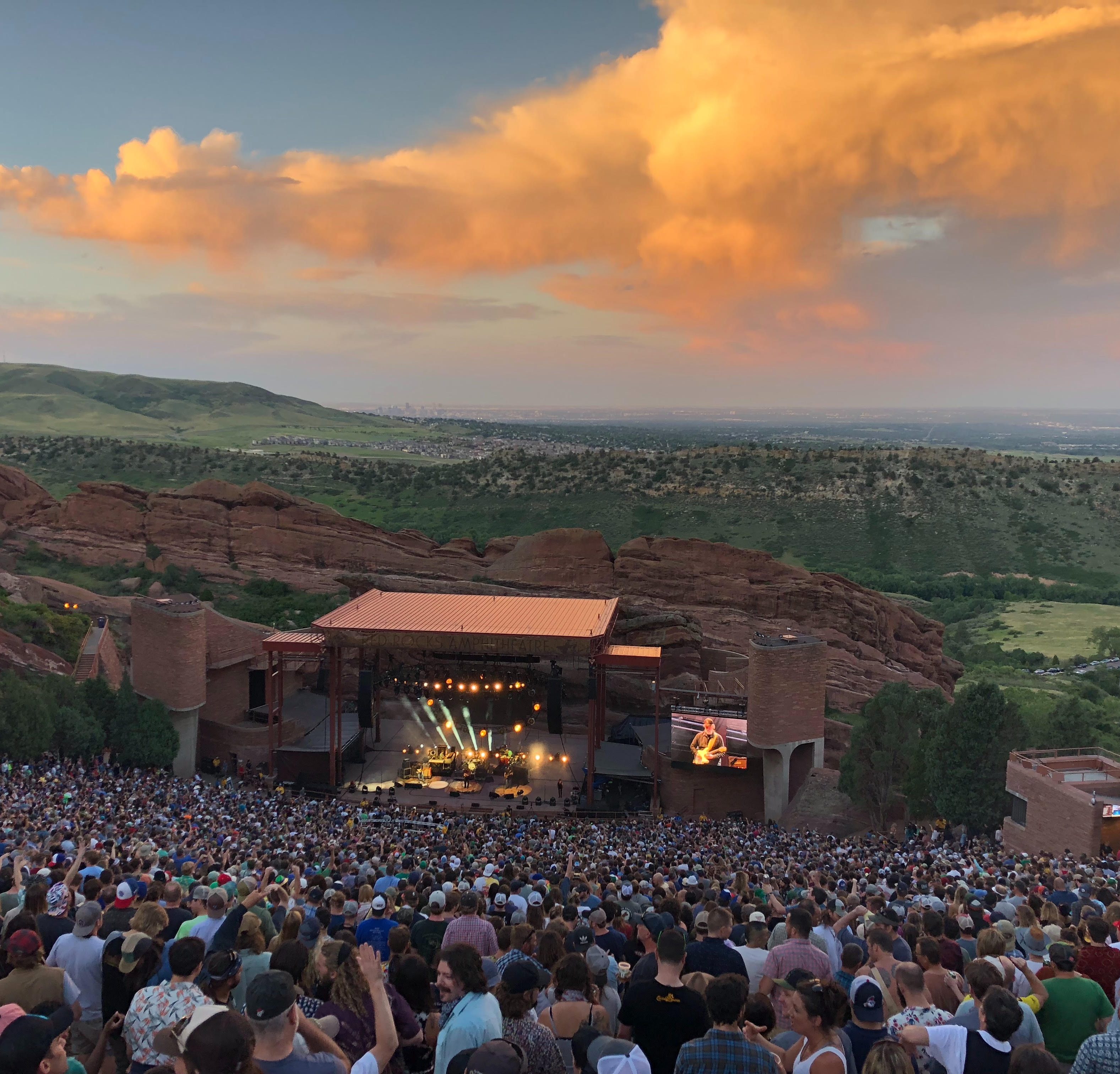
R.E.M. “Automatic for the People” (1992)

     Today is the end of the line of my journey through the R.E.M. albums on my list.  This is the one album I owned from its initial release, and I have been searching for that elusive R.E.M. album that would pull everything together for me as fan of this band.  I have come to the conclusion that every R.E.M. album has a common thread for me, in that there are 2-4 songs I absolutely love, and the rest are just not as compelling as I had hoped they would be.  “Automatic for the People” is probably their most universally successful record, and it is highly acclaimed as album #96 on Rolling Stone’s Top 500 Greatest Albums of All Time.  It also is a big bonus for me that the string arrangements on several of the songs were created by Led Zeppelin bassist and recording/performing genius John Paul Jones.  All of that said, the same ratio applies here, where there are 3-4 standout songs on an album that I liked but did not love otherwise.

     “Drive” opens the record with a dark and powerful intensity, augmented by the strings arranged by Jones.  When the drums kick in during the chorus, the full power of this band at their strength is recognized and realized.  There are more ballads than rockers on this album, and “Try Not to Breathe” is one of the better ones.  I also feel the same way about “Sweetness Follows”, but the real gem of side one, and probably the entire album, is “Everybody Hurts”.  Oddly enough, this song was written primarily by drummer Bill Berry, who expands his musical reach on this record, and it is a pretty straightforward acknowledgment that there are certain unavoidable moments of pain and sadness we are all going to encounter in life.

     There are three songs on the second side that stand out from the rest.  The first is “Star Me Kitten”, a wandering and mildly hypnotic drift set against the note-for-note guitar echo from Peter Buck.  “Man on the Moon” is probably the most commercially successful track on the record, and it is a quirky tribute to comedian Andy Kaufman and his many alter egos, including his wrestling background and his unusual tribute to Elvis Presley.  It is an oddly happy song, and like on many R.E.M. tracks, the backing vocals from Mike Mills really compliment a strong performance from Michael Stipe.

     My other favorite song on this record is also a slow and contemplative track, and it is a beautifully written song.  Featuring Mike Mills on piano and the story-telling of Michael Stipe, along with the lush string arrangements that frame this record, it takes me back to my own youth when we would sneak into the neighborhood swimming pool late at night.  The cool Colorado night air provided a wonderful contrast to the comparatively warm water, illuminated by the blue-and-white brightness of the night-time ripples in the water.  For all of their dark and sad moments, R.E.M. is often at their best when they are looking at life through a brighter lens.

     From college rock innovators to mass-appeal album rock, the decade-long run of R.E.M. was nearly unmatched in their growth and development.  Within anything close to their genre, only U2 came from a similar background to reach greater heights.  I really wish I had seen this band live back in their most energetic period, and although I may not love everything they recorded, the collective best of the best of their catalog will always be an important staple on my lifelong playlist.