N.W.A. “Straight Outta Compton” (1988)

     Day two of the hip-hop domination, and today we have “Straight Outta Compton” by N.W.A.  This album garnered all kinds of attention and controversy for its confrontational and explicit take on the gang world of Los Angeles, and its epicenter in Compton, CA.  Despite the video bans, warning labels and overall hype, which is exactly what they were striving for, N.W.A. served as the launching pad for the West Coast hip-hop contingent, and shined the spotlight directly on Ice Cube, Dr. Dre, and Eazy-E among others as future stars in their respective solo careers.  Receiving as much acclaim as it did negative press, this album is now rated as #70 on Rolling Stone’s Top 500 Greatest Albums of All Time, and #7 on the Top Ten Greatest Hip-Hop albums as rated on definitivedose.com.  As a straight comparison, I do prefer yesterday’s Public Enemy album to this record, but there is a bunch to like here, particularly for me with the deeper you dig into this album.

     The record is front-end loaded with the title track, as well as “Fuck tha Police” and “Gangsta Gangsta” opening the record.  Honestly, as much attention as these tracks received, they are probably among my least favorites on the record.  Not because I have some over-arching moral objection or resistance to the topics here, I just think the hooks and samples get better the further we go.  Living next door to two retired cops, I did pause for a moment to make sure my sound system wasn’t working too hard this morning.

     M.C. Ren lays a smooth track on “If It Ain’ Ruff” that takes a bit of the harshness out of the album openers.  The slow funk continues with “Parental Discretion Iz Advised”, as five different members of the group rotate through the vocals.  “8 Ball” is Eazy-E, who suffered a unique sad fate not too many years later when he died from complications from AIDS.  All kinds of speculation and accusations swirled at this time, but even as the most blatantly abrasive and misogynistic lyricist in the group, we have all thankfully figured out that it doesn’t matter how or why someone contracts a deadly virus, what matters is how we prevent and treat it to help all who are affected in any way.

     Of all the songs on this record, I think my favorite is when they reshape “Express Yourself”, heavily sampling the 1970 R&B hit by Charles Wright & the Watts 103rd Street Rhythm Band.  Dr. Dre takes the mike for this hit, and it is fun to hear how relatively young he sounded here, as well as the rest of the album.  Every song from this point until the end of the album, with the closing track “Something 2 Dance 2”, creates a little separation from the anger and rawness of the first two tracks, and for me, are a lot more enjoyable.  “I Ain’t Tha 1”, featuring Ice Cube, is another awesomely funky track.

     N.W.A., particularly Dr. Dre’s production house, served as the roots for the west coast hip-hop tree that continues to grow to this day.  In case you didn’t hear, Dre and his proteges Snoop Dogg and Eminem will be in this year’s Super Bowl Halftime Show, along with Mary J. Blige and Kendrick Lamar.  It’s been a long journey from the hood to the mainstream, and Dre and his peers from N.W.A. have created a lot of great music along the way, starting with this highly visible debut.

Public Enemy “It Takes a Nation of Millions to Hold Us Back” (1988)

     The next two days are a hip-hop powerhouse double-header, and I couldn’t be more excited.  Of all the hip-hop artists I have enjoyed over the years, none has had a bigger impact or influence on me than Public Enemy.  While many of their peers were focused on the more trivial matters of life, Chuck D and Public Enemy were trying to change the world.  Their second album, “It Takes a Nation of Millions to Hold Us Back” is an absolute masterpiece, and listening to this album multiple times today was a real highlight.  Rated as the #15 album on Rolling Stone’s Top 500 Greatest Albums, this classic is also rated as the #5 hip-hop record of all time on definitivedose.com.

     The lineup for Public Enemy is just as solid as this record.  In addition to the intellectual and defiant activism of Chuck D, we have the cartoonish clowning of Flavor Flav (Yeeeaahhhh, boy!), as well as the controversial Professor Griff, who left the group after this album for some of his controversial stances politically.  On DJ, we have the one and only Terminator X, and the duo on production, known as the Bomb Squad, drop a heavy groove on track after track.

     The album opens with a live-concert announcement of the “Countdown to Armageddon”, and there is no question this record is on point from the very beginning.  “Bring the Noise” and “Don’t Believe the Hype” comes next, and if you like Public Enemy like I do, just settle in for what is nearly an hour of one great tune after another.  Flavor Flav takes the lead on “Cold Lampin’ with Flavor”, and the samples and beats just keep coming.  A sample of “Flash’s Theme” by Queen brings us back to “Terminator X to the Edge of Panic”, and while I could rave about every song on this album, I will point out some others that are just unbelievably good.  “Louder Than a Bomb” may be the thickest groove on the album, and the guitar riffs on “She Watch Channel Zero?!” are filthy.

     I have always loved that Chuck D took the angle of elevation and superiority in every manner as a way of confronting the systemic racism that is front and center on this record, and everything that Public Enemy stands for.  That said, he always holds his own community accountable for their own actions, and on “Night of the Living Baseheads” and “Black Steel in the Hour of Chaos”, he takes on drug use and incarceration as the cancers they can be for any society.  Powerful music with a message that hits like a hammer?  Sign me up.  The last song on the album, “Party for Your Right to Fight” is a word play on the Beastie Boys hit, while maintaining the message of fighting for change and equality all the way to the last note.

     “It Takes a Nation of Millions to Hold Us Back” is angry, intense, heavy, groovy and a phenomenal product in every way possible.  Thankfully for all of us who are Public Enemy fans, they come back strong after this iconic release, but for most, this bombastic showcase will always serve as their definitive moment in the world of hip-hop.

Pixies “Surfer Rosa” (1988)

     A very unique choice today with the debut album from the Pixies, “Surfer Rosa”.  I listened to this album twice, and although my first reaction was something like “What did I just listen to here?”, I truly enjoyed the irreverence, the completely wandering tracks with dialogue and whatever else it was I heard, I enjoyed the male-female vocal dynamics, and when they get down to it, this band could definitely rock.  It isn’t punk music per se, but it has some of that attitude and a thicker, fuzzier guitar sound that worked its way into the world of grunge rock in the 1990s.  This album is rated #390 on Rolling Stone’s Top 500 Greatest Albums of All Time.

     If I had to pick four favorites from the record, I would go with the one single from the album, “Gigantic” which features bassist Kim Deal on lead vocals.    My other three favorites are “Tony’s Theme”, with the inspired lyrical opening, “THIS IS A SONG ABOUT A SUPERHERO NAMED TONY… ITS CALLED TONY’S THEME!”, as well as “Oh My Golly!”, which has a peculiarly catchy drum opening, and “Brick is Red”, which has some great guitar work.

     Some of the absurdities of their sound reminds me of what we would eventually hear from Sublime, but it is really hard to put a label on this band.  They rocked hard, they did something different from anything I had heard before, and they appeared to remain true to this mindset throughout their long and successful career.  That’s a lot to appreciate… which I did.

Robert Plant “Now and Zen” (1988)

     Robert Plant has certainly never been an artist who has been comfortable looking backwards, or relying on his past with Led Zeppelin as a door opener for new opportunities.  At any point since 1980, he and the others could have earned millions and millions of dollars for a broad-based and fully endorsed Led Zeppelin reunion, but he has always resisted that temptation.  The one collaboration that does tend to resurface more frequently is his partnership with guitarist Jimmy Page, and we see that happen for the first time on “Now and Zen”.   This was Plant’s 4th solo album, and one his biggest and most successful releases.  Was it a coincidence that Jimmy Page played on two of the album’s biggest hits?  I don’t think so, and neither does Plant.  For all of their differences and indifferences over the years, he clearly has tremendous respect for his former bandmates.  In several recent interviews, when asked about his success with Zeppelin, he frequently points to “the three guys who were playing behind me” as the driving force behind his massive success.

     Clearly Plant did his part too, and this album does have three widely appreciated songs I wanted to cite in this blog.  I really love the opening track, “Heaven Knows”, even if it was a Plant song my own son thought was terrible.  I love the building melody and I think his voice sounds great on this song.  And yes, that Jimmy Page guitar solo is a difference maker.

     To most casual fans, they will remember the absurd and ridiculous self-declaration, “Tall Cool One”.  They say it isn’t bragging if you can back it up, and Plant is tall, he’s definitely cool, and he has always been most comfortable as one, both musically and in his personal life.  After shunning Led Zeppelin music for eight years after the death of John Bonham, this song not only again features Jimmy Page on lead guitar, it is also bursting with Zeppelin samples and Zeppelin citations vocally.  For the first time on this tour, be opened the door to adding some of the band’s songs to his setlist.  

     More on that tour in a moment, but first let me talk about the best song on the record, “Ship of Fools”.  It is slow, mystical tune, similar in style to “Moonlight in Samosa” from his first solo album, and it is a beautiful and elegant song, among his very best.  The rest of the record is ok but not great, and if I had to single out one other song I like best, it would probably be “The Way I Feel”. 

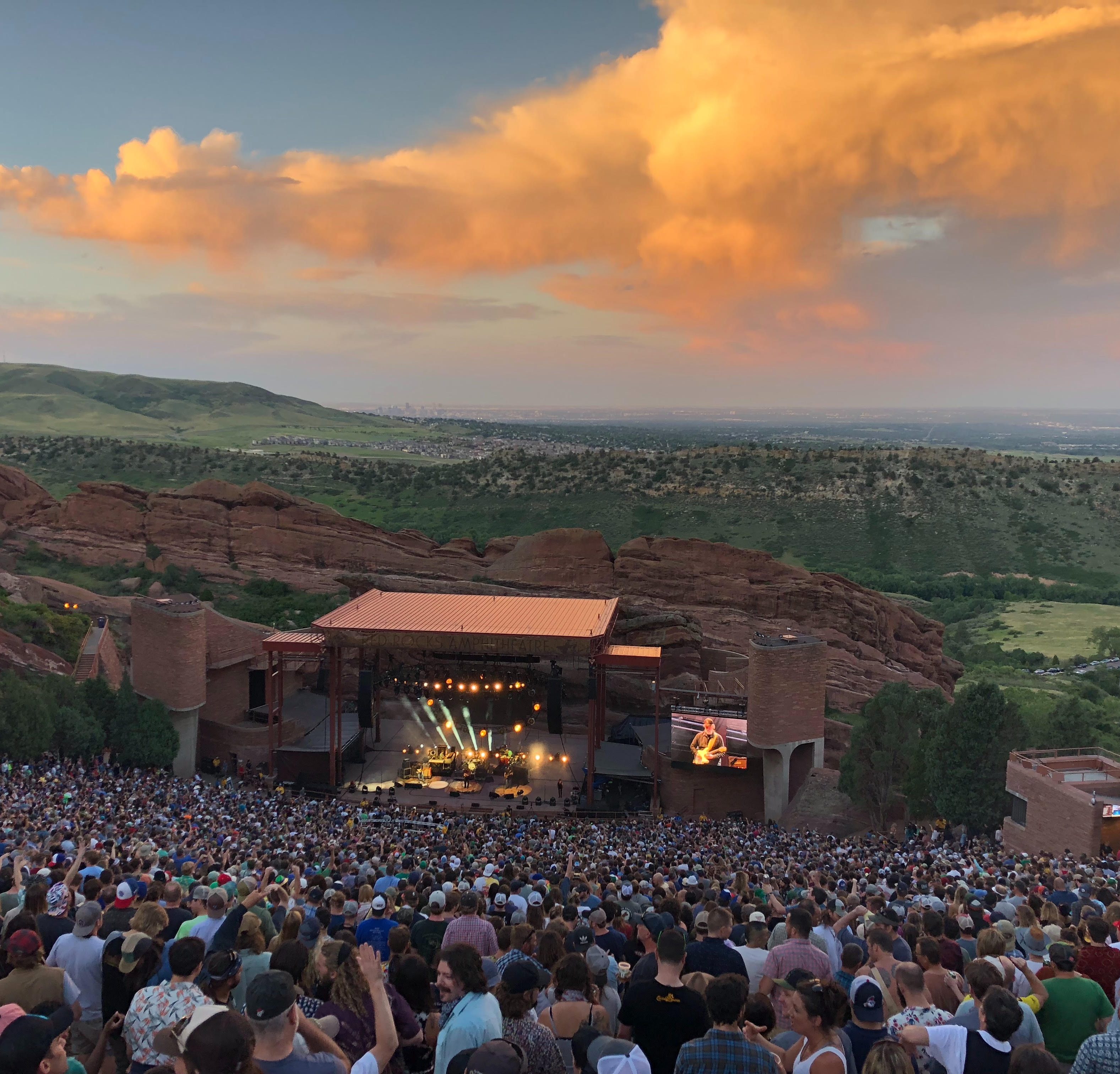
     Even for this inconsistency, these four tracks made it worth the reflection for me, particularly when taken in context with the show I attended on this tour.  Everything fell perfectly into place for this show.  It was Red Rocks, it was July 4th, it was seventh row, and it was the last great concert moment where pretty much every close friend from my high school and college days came together for one last hurrah.  I was a year away from graduating college, and none of us knew how far apart we would all soon be from each other.  Jim, Mike, Doug, Shane, Matt, John and John were all there as I remember it, as all of us gathered to pay tribute to the “Tall Cool One” who had so influenced all of us for so many years, especially myself and Mike.  It was just a perfect night, as one would expect, and I recall even at the time, it would never be quite like that again… and I was right.

George Michael “Faith” (1987)

     From one George to another, today we have the #1 selling album of 1988, which was released in late 1987.   Having left his partnership in Wham!, George Michael released his blockbuster debut album, “Faith”, and it was a massive success.  Wanting to put himself in the same category as Prince and Michael Jackson as an artist, Michael again was the creative force here, writing and performing much of the music on the album.  I didn’t fully appreciate his talents at the time nor did I embrace this album when it was released, although others in my life, to include my friend Jim and my sister Amy, were both big fans, as was most of the pop music world.  Enduring as a classic, it rates today as album #151 on Rolling Stone’s Top 500 Albums of All Time, which feels a bit low, and I wonder if it is being punished for being such a commercial success in addition to its critical acclaim.

     The album opens with the organ chords to the Wham! Song “Freedom”, before bursting into the simple guitar chord gem that is the title track.  A massive pop hit then and now, “Faith” remains one of his biggest hits ever.  The entire record is laced with sexual tension and relationship sensuality, and the next song, “Father Figure” pushes those boundaries with perfect musical accompaniment.

     For all of the success of the record, the real shock factor came with the first single of the album, “I Want Your Sex”.  Embedded in the late 1980s, when the opposing forces of the Reagan right, the euphoric late-night clubbing and sexual freedom and the ever-growing dark shadow of HIV & AIDS on sexual experimentation all collided and Michael confronted it head on with this song.  I remember the disclaimer MTV was either required or was compelled to air before they played his equally racy music video, and this song was a huge gamble for Michael.  For it to work, it had to leverage his charismatic beauty and sexual undertones, and most importantly, if you are going to put this out as a first single, it better be a good song.  Fortunately for all, he created a masterpiece groove that accompanies this song, and it reinforced once again that he was much more than just a pretty face.  I have often heard Part One of this song which we all recognize as the single, but Part Two immediately follows, which is an extended horns-based extension of the song, a really well done continuation of that core melody.

     “One More Try” is an emotional and powerful ballad about giving the pain of love another shot, and reflects the diversity of songwriting Michael was able to deliver.  The next three songs, “Hard Day”, “Hand to Mouth” and “Look at Your Hands” are all really good songs, even if they were overshadowed by the many hits on this album.

     A sad irony of the next song, “Monkey”, explores the obsession of substance abuse within a relationship, and it is a masterpiece dance track as well.  This may be my overall favorite song on this great album.  From front to back, Michael reached that goal he aimed for, as one of the biggest and most capable artists in the world.  An interesting exploration of this time in his life comes on a subsequent record, on “Freedom ‘90”, where he tries to reshape how the world looks at him as image vs. artist.  Not on this album, but I had to mention it as my all-time favorite George Michael song.

     As we all know, George Michael unfortunately joined a way-too-long list of artists whose life ended way too prematurely, and his demons with relationships and substance remained a source of complication throughout his life, but in spite of, and perhaps because of this, he gave us an unbelievable catalog of music, with this massive album serving as the centerpiece of his great career.

George Harrison “Cloud Nine” (1987)

     Since the breakup of the Beatles, I have tried to pick some of the best solo work from John, Paul and George, as they each had their moments of success working on their own, or with others.  This time, it is George’s turn again, with his well-regarded collaboration with Jeff Lynne from Electric Light Orchestra, “Cloud Nine”.  In the late ‘80s, not only did George join the Traveling Wilburys with Lynne, Bob Dylan, Roy Orbison and Tom Petty, most of those same artists allowed Lynne to co-create and co-produce at least one record for them.  While successful, each of these are recognizably Lynne productions, and sound somewhat like ELO records with a different singer.  The lush backing vocals and instrumentation are the most notable common themes.  Today, I’ll start with the record of the day, before adding on some additional thoughts on George and his famous ex-bandmates.

     “Cloud Nine” is a relatively simple and straight-forward pop-rock album.  There are no avant-garde or experimental tracks, and thus these are all pretty easy to listen to from beginning to end.  The title track opens the record, and I really like the second track a lot, “That’s What It Takes”.  It may be my favorite song on the record.  In particular, I really like the chorus on this tune.  “Fish On the Sand” isn’t quite as catchy, but it is another happy song to enjoy.

     For Beatles fans, the most significant song has to be “When We Was Fab”, where George looks back with warmth and perhaps some hesitation on his time in the biggest band in the world.  In a really well-constructed manner, the song not only includes Ringo on drums, but the strings in the beginning and the sitar at the end take you back to many of the Beatles songs.  Listening closely, you can definitely pick up strains of “Eleanor Rigby”, “I Am the Walrus”, and “Within You Without You” at the end.  I will come back to his place in the Beatles before we end, but I’m glad he felt comfortable looking back, as he knew we all did too.

     “Devil’s Radio” absolutely sounds like an ELO song, and I’m a bit confused by “Wreck of the Hesperus”.  The big hit on this album was actually a cover, which I didn’t know until I read up on this record.  “Got My Mind Set On You” was written by Rudy Clark and recorded by James Ray in 1962, but you never would know that as it certainly presents as a modern Harrison-Lynne production.  Along with the Wilburys, this was George’s last big moment in the spotlight, and it was very encouraging to see his music do so well with a new generation of listeners.

     George clearly struggled during the evolution and growth of the band.  They started off as John’s band, evolved quickly into John and Paul’s band, and ended with Paul taking the dominant role in the creation and leadership of the group.  George was always left on his own to create and attempt to deliver quality music, which was not always widely supported by John and Paul or the fans of the band.  If you haven’t seen the new documentary on the Beatles yet, “Get Back”, you absolutely have to make it must-watch TV.  Never have I seen a more revealing and intimate look at any artist, much less the legends that these four were, working to write, create, record and ultimately perform live a set of new songs in a compressed timeframe under constant watch of the cameras.  Even within these pressures, you could see the dynamics of the band play out.  George became so frustrated at one point that he left the band for several days, and even after returning, commented that he felt completely constrained by the amount of material he was allocated on any Beatles album.  It was this lack of support that led to him ultimately releasing a triple album “All Things Must Pass” once he went solo.  Even as he tried to present new songs to the others, they were met with some combination of patronization and lukewarm interest.

     Who knows how much more productive George could have been if he had received genuine partnership and assistance from John and/or Paul on his songwriting?  It is easy to point out that of the all-time legendary Beatles songs, only “Something” truly makes the cut as a classic, although “Here Comes the Sun”, “Taxman” and “While My Guitar Gently Weeps” are close to that high caliber as well.  George was initially the last of the three guitarist-singers to join the band, and he was the youngest, and both of these facts initially put him in a subservient role to the others.  Over the course of time, we all learned what a true talent George Harrison was, and many fans and critics look at the net summation of his solo work to be of greater interest and significance than either of his peers.  I won’t go quite that far, but like the others, he was one of three remarkable talents to join the Quarrymen from a tiny corner of Liverpool, and with or without help from John and Paul, he had a remarkable career during and after the Beatles.

     As if it wasn’t tragic enough that we lost John in 1980, George’s death in the fall of 2001 from cancer was another brutal and unnecessary footnote to the story of the Beatles.  Although he died way too young, he did leave with immense respect, not only from Paul and Ringo, but an entire generation of musicians since who collaborated with him and performed with him on many projects.  Take the time to watch “Get Back”, and through it all, you will see the love these four had for each other, and the resolve the other three had to bring George back to the group as a prerequisite for any future work by the band.  It is fascinating and truly heartwarming to watch as a Beatles diehard myself.

R.E.M. “Document” (1987)

     The subplot that is my personal journey through the catalog of R.E.M. continues today with their fifth album, “Document”.  So far, this journey has been a bit marred by inconsistent releases, and I’m still looking for that top-to-bottom great record from R.E.M.  “Document” comes much closer than any of their first four albums, and not coincidentally, it syncs up with a change in production and a continued shift towards a rougher rock sound, along with two more timeless hits and some hidden gems.

     The record opens with a really good driving rocker, “Finest Worksong”, and I really love Peter Buck’s guitar work on this song.  The next song I really like is the quirky track “Exhuming McCarthy”, where Michael Stipe draws a parallel between the overly nationalistic 1950s of the Joe McCarthy era with the Reagan movement of the 1980s.  It has a great basic melody and I love the chorus, and as always Mike Mills provides some great backing vocals.

     The great guitar work continues on “Strange”, which oddly has echoes of both Green Day and Bruce Springsteen in the intro.  Hmm… who influences who here?  This track is representative of the overall higher quality I think R.E.M. delivered on this record.

     One of the most memorable songs ever by R.E.M. is “It’s the End of the World As We Know It (And I Feel Fine)”.  The frenetic vocals by Stipe and Mills, the amazing chord progressions, and Bill Berry’s high pace drums make this such a great song, and it truly is one of their biggest signature songs.  And if you like ridiculous movie scenes, who can forget Chris Farley and David Spade trying and failing to keep pace with this song as they drove across the Midwest selling brake pads for Callahan Auto Parts? 

     Side two opens with another R.E.M. classic, “The One I Love”.  This one is much darker in its desperation, but is another powerful rocker, and a song I would have loved to see live.  “Fireplace” has an oddly placed saxophone as the band expands their approach and sound, and “Lightnin’ Hopkins” has a guitar and drum mix that feels like this riff and track would have fit well on Led Zeppelin’s “Physical Graffiti” or “Presence”.

     Overall, this is certainly my favorite R.E.M. album to date, and probably no coincidence it became their first platinum album as their mass appeal continued to build.  The search for the perfect R.E.M. album continues, but this one was a big step in the right direction.

Michael Jackson “Bad” (1987)

     It took almost five years, but Michael Jackson finally released his follow-up to “Thriller”, with his next album, “Bad”.  It proved to be another massive commercial success for Jackson, and at one point “Thriller” and “Bad” were the top two selling albums of all time.  Working with producer Quincy Jones for the 3rd and last time, most of the songs are written or co-written by Jackson, who spent several years getting this material to where he wanted it to be.  “Bad” is rated #194 on Rolling Stone’s Top 500 Greatest Albums of All Time.

     My overall take on this album is that I rate it below certainly “Thriller”, and probably “Off the Wall”, but there are plenty of memorable Jackson songs on this record.  The title song is pretty good, but I tend to think of two comic references to this song when I hear it.  One, the music video “Fat” by Weird Al Yankovic may be his greatest parody of all time, and it is one that was not only widely celebrated in the Rat Mansion, but in recent times between my son and I.

     “The Way You Make Me Feel” is probably my favorite song on this album, it is just a really catchy and well-written pop song.  I’m not quite sure what to make of “Speed Demon” and “Liberian Girl”, and it is filler tracks like these that lower the overall quality of the record in relation to “Thriller”.  I’m also not a big fan of “Just Good Friends”, a collaboration with Stevie Wonder.  Two amazing talents, but the song is not that interesting at all.

     “Man in the Mirror” is a very personal song for Jackson, even though he did not write it.  I often wondered what he liked and didn’t like about himself, and I won’t even begin to think about many of the allegations that have been made about him over the years.  All of that said, we all owe it to ourselves to keep working on our own selves before we take on others, and that message has always resonated with me.

     “Dirty Diana” is this album’s rocker like “Beat It”, and this time he brought in Steve Stevens from Billy Idol’s band to do the guitar solo.  Somehow his enunciation on this song has always annoyed me a little, and the rest of the song is ok, but not great.

     I love the beat and overall track that is “Smooth Criminal”, it is the other really good song on this album.  My one pet peeve is that he asks Annie if she is OK just a few too many times… can we have a bit more variety in the lyrics, please?  The album now ends with “Leave Me Alone”, which was not on the original release.  This song and music video publicly presented the growing paranoia, fear, resentment and isolation that we enveloping Michael at this time.  I can certainly never relate to his life experience, just as I think he would have been equally puzzled by ours.

     Like I said, there are some good songs here, and it was a massive success, but between the inconsistencies and the emerging odd behavior from Michael that was becoming harder and harder to ignore, I feel like this album was a sad signal of further troubles and struggles to come, even as it topped the charts.

Def Leppard “Hysteria” (1987)

     Another massively successful rock album today, although the contrasts with Guns N’ Roses are notable.  In some regards, I looked at Guns N’ Roses as a much-needed reset as British pop-metal giants Def Leppard return with “Hysteria”.  More mainstream in sound, “Hysteria” dominated the airwaves and music television with every bit the same level of success as Bon Jovi and Guns N’ Roses.  All three albums spawned many radio and music-television friendly releases, as well as years of successful arena touring.  My friend Lorenzo, who escaped Greeley after one year of college, even caught on with Def Leppard as a roadie for this tour.  I look back on this album with many memories, and mixed reviews.  Many of the songs remain huge even in today’s classic rock programming.  Some of them are a bit dated, some are cursed by excessive airplay, and most of my favorites are on the slower, power-ballad side of this album.  That said, I can appreciate the huge hit they created with producer “Mutt” Lange, and I even found a couple of the “filler” tracks I liked a lot, which doesn’t happen very often.

     To their credit, this album was an airplay monster, and the first six songs are all well-known to those from that era.  The first two songs, “Women” and “Rocket”, while successful hits, are two of the more generic and less interesting songs, particularly from those that released as singles.  I’m not quite sure what Joe Elliott is singing about on “Animal”.  The melody makes me think this is some kind of love song, and the sweet chord progressions and chorus suggest the same.  I find it to be one of the more appealing tracks on the record, along with the next ballad, “Love Bites”.  They are both a bit cliché, but in some regards the entire 1980s was cliché, so I still like these songs, particularly “Love Bites”.

     Probably their most famous and enduring song from this record is the rocker “Pour Some Sugar on Me”.  It isn’t as decadent or untamed as Guns N’ Roses, but it certainly taps into the same carefree and good-time mindset that defines much of rock and roll.  It took me way too long to realize that Joe sings “One lump or two?” after the line “Do you take sugar?”, but I appreciate my friend Mike for explaining it to me and it certainly makes sense with the rest of this unforgettable song, love it or hate it.

     The sixth song in a row to be a successful single, “Armageddon It” comes next.  I will put this in the same category as “Animal”, in that while easy enough to listen to, and perhaps rather catchy to some, I have no idea what Joe Elliott is talking about here either.

     “Gods of War” comes next, and it is the first non-single I arrived at on the album.  Oddly enough, it is a quirky song that I actually enjoyed, more so than many of the other tracks on the record.   In what I assume is an anti-war track, we are handed some Ronald Reagan soundbites at the end of the track, as Ronnie was essentially the unchallenged face of world leadership by this time as the Soviet Union was on the verge of collapse.

     After what are two completely forgettable songs, the last big hit from the record comes on, the title track.  I have to say that “Hysteria” is my favorite song from this record.  It is a simple rock ballad, but it is just a very well-done song of affection that is remarkably easy to enjoy.  Call it a guilty pleasure if you must, but I really like this song a lot.

     Following one more uneventful song, the album ends with “Love and Affection”, another unsung track that surprised me how much I enjoyed listening to it.  In total, this album stands up reasonably well to the test of time, and it certainly is a signature album from the MTV-Classic Rock run of the late 1980s.  I will always appreciate and respect how the band stood by drummer Rick Allen after he lost his arm in an auto accident, custom-designing a setup that maximized usage of his legs and electronic percussion.  Phil Collen has to be one of the most physically fit rock stars ever, and one who actually can justify playing each night without his shirt on.  The rest of the lineup stayed intact through this record, even though the demons of alcoholism were catching up with Steve Clark.  As time passed, my interest in Def Leppard waned, but I will always appreciate their run of success that peaked with this blockbuster album.

Guns N’ Roses “Appetite for Destruction” (1987)

     One of the best and most iconic hard rock albums ever, as well as one of the best debut albums ever, today we have “Appetite for Destruction” by Guns N’ Roses.  This album was a complete game-changer for many of us, snapping the rock world out of the increasingly glam and pop-laden metal trends, with a steady diet of excess and decadence.  During this point in my life, I also had my share of excesses, less than some and more than others, and it was the perfect soundtrack for the remainder of my college experience.  This album has endured as a true classic to this day, and is the #62 rated album on Rolling Stone’s Top 500 Greatest Albums of All Time.

     Like I said above, Guns N’ Roses were something different than anything else around when they burst on the scene.  Fully embracing the out-of-control lifestyle of Los Angeles and Hollywood in the late ‘80s, their music epitomized and was built around the classic rock recipe of sex, drugs, booze, and rock and roll.  Most importantly, they had a stellar collection of original songs and riffs that showcased their unique talents.  Starting with Axl Rose, we hadn’t and probably still haven’t heard a vocalist quite like him in the rock and roll arena.  His range and depth of sound at all points on the register was remarkable, and if you weren’t listening closely, you might think they had multiple lead singers.  Over the course of time, we have learned what a complicated and truly difficult person Axl Rose can be, but the dude could sing hard rock (and the occasional ballad) like nobody else.

     To complement Rose, we have Slash on lead guitar.  Visually, he is a mop of hair hidden under a black hat and shades, and covered with ink like the rest of the band.  None of that matters as much as the caliber of riffs and hooks that he created, on par with the best riffs we have heard from the likes of Jimmy Page and Edward Van Halen.  Unlike those two, his sound was augmented by a second guitarist, Izzy Stradlin.  He filled out the depth of sound very well, along with bassist Duff McKagan and drummer Steven Adler, who all not only did their job very well musically, but completely played the part of leather-clad rock and roll bad boys to perfection.

     The album opens with the anthem “Welcome to the Jungle”, the first of many unforgettable tunes and riffs from this album.  This was the first big mainstream hit from this album, and it fully captivated all of us at the Rat Mansion as well as all of our other friends.  We loved and celebrated a large assortment of music nightly, but something truly unique happened whenever this song came on.  My memories of John, Mike, Darren, myself, and whoever else happened to be around that night being completely possessed by this song are crystal clear, even if that is the only memory from those nights that remains intact.  The images of Axl in a straitjacket and fully teased hair as this song crushed sent us all into a frenzy, and it pretty much summed up our own nightly excesses and absurdities as we somehow attempted to remain moderately functional students and members of society.

     The rest of side one is just as legendary, it is one of the greatest single album sides from this genre.  In different ways, “It’s So Easy”, “Nightrain”, and “Out ta Get Me” captured the rebellion, defiance and newly captured independence we all were embracing at this point in our lives.  As good as all of those songs were, I would still have to pick “Mr. Brownstone” as the single best song from the entire great album.  Once again on fire with a stunning Slash riff and his backing rhythm section, you get to hear the full range and capability of Axl Rose, from bottom to top, through the course of this love-hate (mostly hate) ode to heroin addiction and rock and roll.  Even at a relatively sedate point in my life now, this song always is a guaranteed volume increase when it comes on.

     Side one ends with “Paradise City”, another legendary track that honors their collective home away from home and adopted dreamland, Los Angeles.  Once that whistle blows after the intro, Slash is joined by the rest of the band in a riff that absolutely raises your pulse, and Axl spends most of this song in his upper range, piercing the song with the power of his voice.

     Side two isn’t quite as memorable overall, although it does have what many would consider the biggest hit of the record, “Sweet Child o’ Mine”.  With yet another unforgettable Slash riff that opens the song, Axl again covers many of the points within in his range as this song picks up pace and intensity.  It always seemed a bit too sweet to fit in with the rest of these rock and roll gutter dwellers, but even rock and rollers can apparently fall in love too.  The rest of side two has its share of riffs and highlights, but I wouldn’t take any of these other songs over any on side one.  One last entertaining moment that is representative of the time and mindset of the band, on the last track “Rocket Queen”, Axl decided to record himself “enjoying the day” with drummer Steven Adler’s girlfriend, and the accompanying soundtrack was mixed into the guitar solo.

     The band has had an interesting stop and start career since this powerhouse debut, and after many years of being disbanded, Axl and Slash reconciled a few years ago and finally have most of the core back on tour.  In fact, if all goes well, I hope to see them live for the first time ever, later this year.  Fortunately, these days they don’t make it a habit of showing up several hours late to each show.  I’m not sure this aging rocker could stand around that long anymore.  To me, nothing they did has ever, or will ever top the impact of this album.  I remember I could play it for any friend for the first time (I remember one drive around the mountains with Pat, Sterling and Eddie) and know it would be an immediate hit on first listen.  I can only think of three rock albums since this one that hit me in anywhere close to the same way as complete albums, and thankfully they are all still to come on this journey.

“Welcome to the jungle, it gets worse here every day, Learn to live like an animal in the jungle where we play, If you got a hunger for what you see, you’ll take it eventually, You can have anything you want, but you better not take it from me…”