R.E.M. “Fables of the Reconstruction” (1985)

     R.E.M. continued their slow progression towards mainstream success, although they remained true to their college-radio roots more allegiantly than U2 when they released “Fables of the Reconstruction”.  As I listen to each of these early R.E.M. albums, I keep hoping for that really strong collection of songs I know and don’t know that indicate their first consistent display of greatness, but three albums in, and I’m still only partly sold.  Even today, the band is somewhat dismissive of this album in comparison to other efforts.

     The jangly guitar and bass-driven melodies still prevail, although there is a greater diversity of songs on this album.  It opens with a relatively dark guitar riff on “Feeling Gravitys Pull”, describing the sensation we feel as we first drift off to sleep.  “Maps and Legends” is a more traditional R.E.M. song, and the next song, “Driver 8”, which was the second single from the album is exactly the kind of song that drew me to this band.  Crisp, pure and powered by a driving three-part of guitar, bass, and drums, there is an energy and an innovation to this sound that was a beacon within a sea of diverging absurdities in the mid-1980s.

     You can hear some of the same raw urgency on “Life and How to Live It”, which I like better than the slower and darker “Old Man Kensey”.  The signature song from the album, and also the first single, “Can’t Get There From Here”, is an up-tempo rocker like “Driver 8” with a great riff and an unusual backing harmony on the chorus from Michael Mills.  Pretty simply, if you loved R.E.M., you probably loved this song.

     The rest of the album is OK but not great, and my favorite other tracks are “Green Grow the Rushes” and the slow ballad, “Wendell Gee”.  Will R.E.M. deliver that near-perfect album from front to back without completely selling out their roots and raw sound?  Time will tell.

Dire Straits “Brothers in Arms” (1985)

     Another landmark collection of MTV hits in the 1980s was the next release from Dire Straits, “Brothers in Arms”.  It is an interesting contrast of music, where the first three songs were all massive hits, and the next six are an eclectic mix of songs I really don’t think I have ever heard before, even as this album was a big success.  This album is rated #418 on Rolling Stone’s Top 500 Greatest Albums of All Time.

     The first song, which is my favorite track on the album, is a song I can certainly relate to these days.  It is the slow beat of “So Far Away”, which is Mark Knopfler’s lament of a long-distance relationship.  I feel you, Mark.  That said, it is a really pretty song and definitely my favorite song on this record.

     Next comes the massive single and video hit, “Money for Nothing”.  Framed around guest vocalist Sting hauntingly chanting that he wants his MTV, this mega-hit presents a blue-collar view of prima-donna rock stars and how easy and work-free their daily lives are.  It is a song that was played so much, I think we all grew weary of it, but now that nearly 40 years have passed, I appreciate it as a true time-stamp of MTV at its peak.

     The third successive hit that opens the album is the cheery up-tempo pop hit, “Walk of Life”.  While I enjoyed the song, I always loved the music video even more, as it was full of American sports bloopers, with the back-end of the video filled with redeeming sports highlights that includes a beautiful Michael Jordan crossover dunk and the 1985 Los Angeles Lakers celebrating their championship victory over the hated Boston Celtics.  1985 really was a great year!!!

     The rest of the album is an interesting collection of songs.  None are pop hits, and not many are quite as alluring as some of their earlier work.  Next comes “Your Latest Trick”, which is a schmaltzy smooth jazz song, even to the point of including Michael and Randy Brecker on saxophone and trumpet.  They are all great talents, but this song is a little too smooth-pop-fluff-jazz for me, as if it is late-night at Panera.  The Knopfler guitar sound returns in force with “Why Worry”, a meandering but soothing guitar ballad.

     The remaining four songs don’t do much for me, but they aren’t annoying to listen to either.  If I was in a room and these songs were on, I probably wouldn’t turn them up, but I wouldn’t be compelled to make a change either.  Knopfler’s guitar and low-key vocals are always easy to listen to, even if they don’t really grab you in this case.  It is a significant album for the band, and their biggest commercial success, amidst a sea of changing musical tastes and trends.

Prince “Around the World in a Day” (1985)

     Prince followed up “Purple Rain” with the less heralded “Around the World in a Day”.  Some albums under-deliver, and some albums over-deliver, and I would definitely consider this to be an “over-deliver”.  By this point, Prince was developing some odd approaches to his product and identity, and asked the record company to release the record with minimal fanfare.  I only remember it is the album that had “Raspberry Beret” on it and not much else, but this listen revealed much more.

     After singing the praises of “Purple Rain” as his best album ever, I was surprised how comparable this album was in quality, even if it didn’t receive the same hype.  After opening with the title track, I absolutely loved “Paisley Park”, which besides being a funkalicious track, is also the name of his home and studio in suburban Minneapolis.  “Condition of the Heart” opens with this long, cosmic instrumental info that makes me feel like I am back at the Galleria Mall in Orlando, staring at the massive monitors and their evolving imagery.  Side one concludes with “Raspberry Beret”, which is a perfect pop classic by Prince that I love, and the edgier “Tamborine”.

     Side two has three songs that I really loved as well.  “Pop Life” has a great groove, and is a good carryover of the dance fun that Prince has given us for several albums, with a slower, driving beat.  “The Ladder” is a slower beat, with a great hook, along with several signature Prince vocal riffs.  The album ends with Prince crushing it on guitar with the eight-minute track “Temptation”, and I do think there is eight minutes of rocking to be had here.     

This album is my son’s favorite Prince record, and it is very high on my list as well.  It just reinforces one more time, how remarkably talented he was, even as he began to withdraw from the industry machine.

The Firm “The Firm” (1985)

     As we enter 1985, the year I graduated high school, the first band I listened to here is one that was probably way more significant to me and a few of my friends than most other people.  After years of minimal recording and performing, Led Zeppelin guitarist Jimmy Page finally stepped back into the limelight, following Robert Plant with his own act.  He co-founded the band “The Firm” with Bad Company vocalist Paul Rodgers.  They ultimately recorded two albums, the first more successful than the second, and toured fairly consistently for approximately two years with this lineup.  Their self-titled debut album is nothing spectacular, but for me it enabled an amazing highlight of my musical life.

     The best songs on the album are the opening track, “Closer”, which is a good Page riff augmented with horns, and the slower and hypnotic “Satisfaction Guaranteed”, which has a great Page solo.  The biggest hit from the record was “Radioactive”, which I never really loved, including the weird harmonic guitar solo.  I felt a bit vindicated when I learned that song was written only by Rodgers, and he even played the guitar lead on the track.  I don’t dislike Paul Rodgers, but I was never a big Bad Company fan, even as they shared a record label and management with Zeppelin, but like all of the Zeppelin solo work, the biggest liability of this record is that as good as Page still sounds at times, none of his bandmates can match up to Plant, Jones and Bonham.   I actually have verifiable proof of this if you are really in need of convincing.  The last song on this album is “Midnight Madness”, a nine-minute track that plods its way through and is honestly pretty dull.  However, most of this melody was taken from an unfinished and unreleased track from Zeppelin called “Swan Song”.  That song is easily locatable on the internet, and if you listen to it in comparison to “Midnight Madness”, the distinction is significant.  The drums explode in sound, the bass drives, and even with no vocals, it is just a way better performance.

     The rest of the album is inconsistent.  I like “Make or Break” and “Someone to Love”, and their cover of “You’ve Lost That Lovin’ Feeling” is decent, if not great.  However, for all of this up-and-down music, it did allow me the opportunity to see Jimmy Page, my guitar god, live for the first time.  Like Plant, The Firm did not play any Led Zeppelin or Bad Company, so the setlist was comprised of this album plus some solo material from each artist.  Jimmy Page was on-task for the performance, and although he didn’t play any full Zeppelin tracks, near the end of the show, the violin bow, an essential part of his extended solo in “Dazed and Confused” came out, and bathed in fog and lasers, James Patrick Page gave us all what we wanted.  Needless to say, we were euphoric and grateful for the limited glimpse of the past.  I know Mike was there, and I believe Jim was there but may have over-prepared for this one if I recall correctly.  I would assume some combination of Matt and/or Shane were also there for the guitar wizardry.  Thanks, Jimmy…  it was a night I will never forget.

Wham! “Make It Big” (1984)

     Another big ‘80s splash today, with the breakthrough album from Wham!, “Make It Big”, featuring the very talented George Michael on lead vocals.  This album was a massive hit, and although Wham! was known as a duo, George Michael covered almost all of the songwriting and production.  Andrew Ridgeley did play guitar on many of the tracks, but even that role was somewhat diminished as their sound is mostly keyboards, horns, and bass, like a lot of dance-pop music from that era.

     As an aspiring rocker of this time frame, I was originally somewhat dismissive of Wham! as a ridiculous boy-band pop act with minimal substance, but with time, maturity, as well as some encouragement from my son, I have really come to fully appreciate how remarkably talented George Michael was.  Listening through this album, in addition to the obvious hits, most of the other tracks are really well constructed, catchy pop songs.  “Heartbeat” has a great Go-Go’s feel to it, and “Like a Baby” is a very soulful track with a long keyboard intro that has a nice yacht-rock groove.  “If You Were There” is the one cover song on the album, with Wham! adding their own spin on an Isley Brothers song.  “Credit Card Baby” is another really infectious song that could have been a big hit if they had pushed this track as a single.  It really sounds like it could have been a #1 single for Diana Ross & the Supremes.

     Of course, there are four major hits from the album, and it was the first single, “Wake Me Up Before You Go-Go”, that was our first introduction to George Michael.  One of the most memorable videos from that era, it was this image that polarized initial reactions to the act, and even served as a template for what George Michael ultimately tried to distance himself from later in his career in the song “Freedom ‘90”, which while not on this album, is one of his very best.

     “Freedom” was another Top 10 single for the band, and also has that Motown feel to it.  “Careless Whisper” was actually released as a George Michael single, even though it was included on this Wham! album, and it is probably his most memorable ballad ever.  My personal favorite, by far, both then and now, was the song “Everything She Wants”.  My friend Shane and I both really took to this song, and if there had been one more air guitar contest in my future, we were fully committed to perform this song together.  (I’m pretty sure I was relegated to the Andrew Ridgeley role).  It is one of those songs that today I could sing all the way through without any help, that is how well I still recall the lyrics.

     Overall, this is a great album, and one I ultimately felt compelled to add to the list as an essential timepiece of from this decade.  My friend Jim, as with most new turns in music, was the first to really hop on the George Michael bandwagon later in his solo career, but we all have come a long way in learning how much of a talent Michael was, even as he is yet another name on that way-too-long list of artists we lost much earlier than we should have.

The Replacements “Let It Be”

     Today we get our first taste of a sub-genre known as “post-punk”, although later records by The Clash probably also qualify with this label.  Our next record is “Let It Be”, by The Replacements.  The album title is a bit ironic given that I have been watching the Beatles documentary “Get Back” this week (a must-see), but back to today’s band, this album is a powerful and diverse record that doesn’t sound dated.  It is rated as album #156 on Rolling Stone’s Top 500 Greatest Albums of All Time.

     The Replacements hail from Minneapolis, which surprised me a bit as their sound definitely has that British punk influence.  Lead singer Paul Westerberg and guitarist Bob Stinson are the primary creative forces in the band, and this album strikes me as really good driving music.  There are some interesting contributions on the record.  On the first song, “I Will Dare”, which was the lead single from the record, the piano solo is played by Peter Buck from R.E.M.  Even more notable, on what may be their most melancholy track, “Gary’s Got a Boner”, a co-songwriting credit is given to Ted Nugent, as the opening riff is clearly taken from “Cat Scratch Fever”.  Who says punk is dead?

     Other tracks I enjoyed included “Favorite Thing”, which also has a bit of an R.E.M. feel, and the dusky opening sounds of “Black Diamond”.  I also really like the opening chords and guitar work on “Unsatisfied”. I have always heard a lot about The Replacements, but until today I never gave them a solid listen.  That’s exactly what this experience is all about, and it is great to hear what is essentially a new album to me, even if it was released at the height of my music listening days.

U2 “The Unforgettable Fire” (1984)

     As noted after the album “War”, U2 made a conscious decision to evolve their sound and move beyond the raw sound of their first three albums.  Their songwriting advanced, they change producers, moving to the complex sounds that came with working with Brian Eno and Daniel Lanois, and the resulting product was “The Unforgettable Fire”, which was named for the jarring images of the atomic bomb in Hiroshima.  As this album hit the airwaves, my devotion to this band only continued to increase.  I thought then, as I do now, that this was amazing record.

     The album opens with “A Sort of Homecoming”, an optimistic song through the grey shades of this record.  The melody is a beautiful structure, and Bono’s vocals and lyrics offer hope and strength of better days ahead.  The next song was the biggest single to date for the band, “Pride (In the Name of Love)”.  This was the first of two anthems written for Martin Luther King, Jr.  As big as this song was, there were others I liked better, although I still appreciate the message and the tribute to Dr. King.  With that said, I have two unusual memories of this record.  The first goes back to high school, when this album was released.  I remember back to what I believe was English class, discussing the date of April 4th, which is mentioned in the song, as it was the date Dr. King was killed in Memphis.  One of our classmates, Jinnie, mentioned that this day was actually her birthday.  To this day, I always remember that this date is her birthday, so have a great birthday on April 4th if you are out there, Jinnie!  A more lasting memory comes from my days in college, when I would “prepare” for class at Kepner Hall, then put a tape in my Sony Walkman for the journey to class.  I remember playing this song a lot; for some reason it sounded particularly good in my headphones.

     Now that we have those random memories out of the way, we can move on with this great record.  The next track is “Wire”, which features some insane and unique guitar playing from The Edge.  As I have learned, whether it is Eddie Van Halen, Stevie Ray Vaughan, Malcolm Young, Mark Knopfler, or The Edge, each and every guitarist has the ability to transform a common instrument into their own, with a sound that is recognizable and unlike any other.  On this album, he digs deeper into his bag of tricks, creating some sounds we have never heard before.  The title track continues the phenomenal run of songs that make up side one.  Adam Clayton and Larry Mullen Jr. set a great foundation, and with the Edge adding color on guitar and piano, Bono once again shines as the premier vocalist of his time and genre.

     Not every song on this album is a masterpiece, but after the instrumental opening to side two, “4th of July”, we get the first of many true anthems from U2, the epic live song that builds from this studio original, the song “Bad”.  It is classic U2, in that it is basically the same chord structure and melody line repeating throughout the track, not unlike their first hit “I Will Follow”.  This one is much slower in tempo, but it builds with passion and power, surging with an emotion only they could deliver at this time… “To let it go, And so, to fade away, Wide awake, I’m wide awake.”

     The next two songs have never caught my ear, and today is no exception, but the album ends with the stunningly powerful “MLK”, the second tribute to Dr. King, who has to be one of the greatest humans this planet has ever produced.  This song is mostly just Bono’s vocals, sung to a low hum of melody that offers the softest accompaniment to his beautiful delivery.  It is truly breathtaking, and yet another piece that served to create a live performance experience for U2 that was without compare.

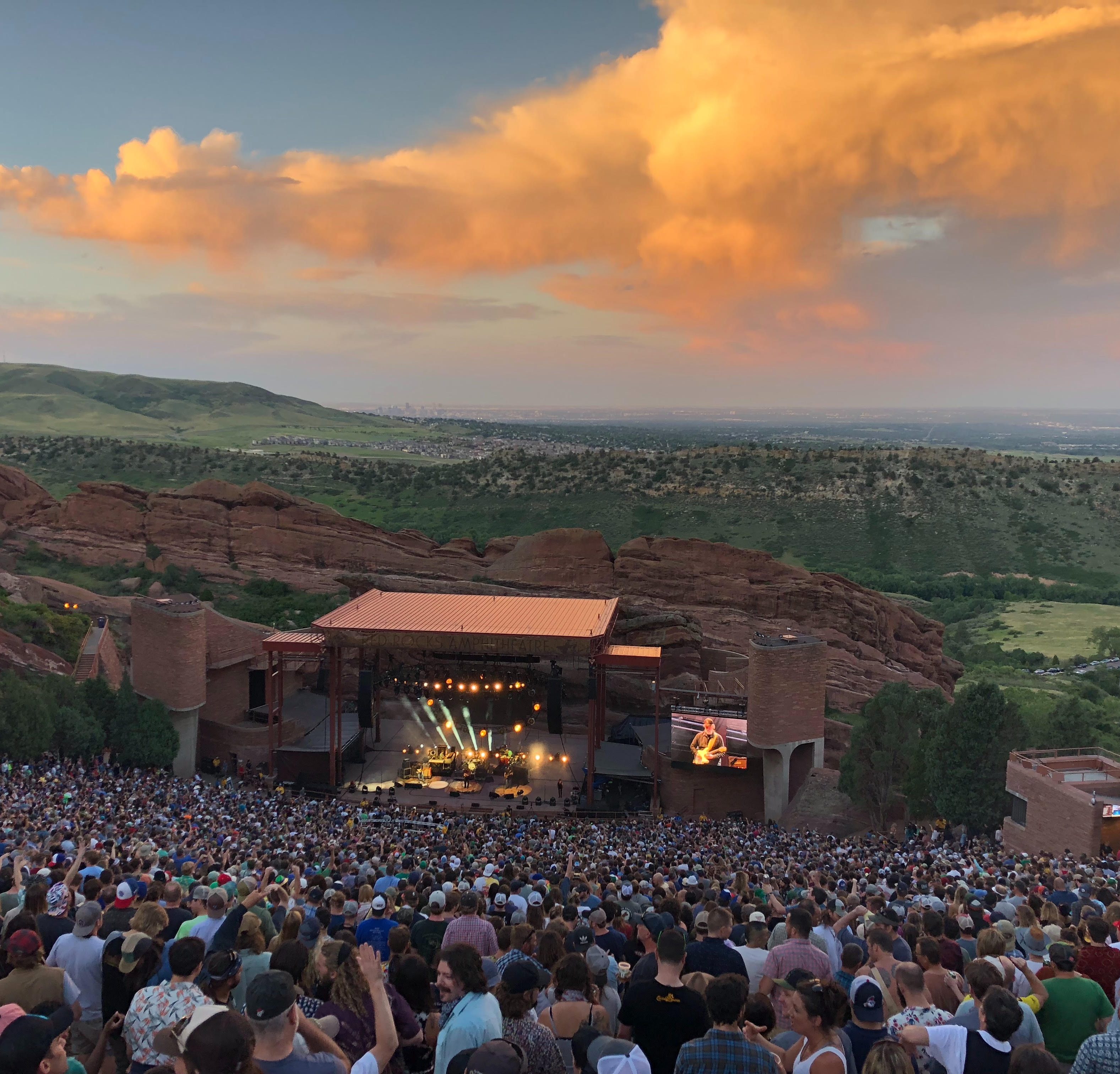
     Unlike my missed opportunity at Red Rocks the year before, we didn’t miss this chance to see U2 for the first time.  The memories are not as clear as I wish they were, but I know the show from this tour was at McNichols Arena.  I believe my party for this show was Jim and some of his pack, and although I’m not positive on any of these, I feel like Brandon, Alan, and Eric were among those who joined us.  If that was the lineup, tragically Jim and I are the only ones left from that 5-some.  Life is precious my friends… enjoy the good music in your life, and those you share it with.
The Honeydrippers “The Honeydrippers, Volume One” (1984)

     More so than almost any artist from the titans of ‘60s and ‘70s rock, Robert Plant has never been content, or even willing, to ride his back catalog and make a career out of his past.  In his next “solo” project after two albums following the dissolution of Led Zeppelin, he joined forces with a collection of talented musicians from several genres to release a 5 song EP under the band name “The Honeydrippers”, and their self-titled album, clarified as “Volume One”.  If this was just an album with great songs by anonymous musicians, I might not include it on the list, and if it was a mediocre effort by great musicians, I definitely would not have it on the list.  However, it hits high marks across the board, and it is a great collection of five standards, remade in modern and classic form.

     Alternating between Jeff Beck and his former bandmate Jimmy Page on guitar, the band also includes Paul Shaffer (yes, Paul Shaffer from David Letterman’s show), Nile Rodgers, who is a highly accomplished performer and producer who among other stops, founded the dance/r&b act Chic, and a series of experienced studio musicians filling out the rhythm section and horns.  In particular, the horn arrangements on this album really separate this sound from much of what was happening around the musical world at the time.  The first song is the 1954 number “I Get a Thrill”, written by Rudy Toombs and first performed by Wynonie Harris.  A doo-wop/R&B track, you quickly hear Robert Plant back where he really wants to be, singing the music he grew up with and savors to this day.

     The next song is the one song from this album most are likely to recognize, the 1959 ballad “Sea of Love”, written by George Khoury and Phil Phillips.  Like the first song, the guitar solo is also played here by Jimmy Page, and he gives a remarkably soulful performance.  As many of us were clamoring for a Led Zeppelin reunion, little did we know we had the two most visible performers hidden in broad daylight, playing this sweet melody that I love to this day.

     Next, we hear their take on “I Got a Woman”, the Ray Charles classic, and Jeff Beck assumes the duties of lead guitar for this version.  Robert’s high tenor plays well as he rocks this out, and his alpha-male golden-god rock singer personality also shines through on this ode to a man who loves his woman and his freedom, all at once.

     We get another ballad, and a gorgeous one at that, with “Young Boy Blues”, which was written for Ben E. King by Phil Spector and Doc Pomus.  A song love song filled with longing and hope, Plant’s voice is high and smooth, and the backing vocals are lush and rich.  The album ends with a song that is labeled as “jump blues”, a soulful sound with a fast-paced beat, “Rockin’ At Midnight”, written and originally released by Roy Brown in 1947.  Again featuring Jeff Beck on guitar, the solo wok builds in a frenzy, yet it still neatly fits within the confines of the 1940’s template.

     Obviously, I was originally drawn to this record for the visible next steps of Robert Plant, but as some of his other albums demonstrated subsequent to this one, if it wasn’t a compelling listen, nostalgia would not bring me back more than once or twice.  Thankfully, the legends did their homework and delivered a record worthy of their collective legacies, and if you haven’t listened to this entire album before, I highly recommend it, as it is easily worth 22 minutes of your day.

Prince “Purple Rain” (1984)

     Another colossal album of the 1980s today, we have “Purple Rain” from Prince.  I know at least one Prince fan who disagrees with me, and I’m sure there are plenty others, but I will gladly hop on the bandwagon and proclaim this to be the best record he ever made.  Every single song on this album is timeless, and no matter what you think of the accompanying film, this album is phenomenal.  It is rated as the #8 album of all time on Rolling Stone’s Top 500 Greatest Albums of All Time, which just for the record, is higher than Michael Jackson’s “Thriller”.

     I do recall being taken with minimal enthusiasm to see this movie when it came out, although I did enjoy it more than I expected.  I also recall my number one Prince fan at the time, my friend Jim, being an early adopter of this album as a classic.  The opening song of the album is truly my favorite Prince song ever, and it is one of the best showcases of his gifts on guitar, in addition to everything else he did so very well.  If I had to pick a short playlist of songs that get me fired up and get the heart pumping, this song would absolutely make the cut.

     We get back to the funkier and sexier side of Prince with the infectious melody of “Take Me with U”.  Was Prince an early adopter of text message abbreviations with his use of “U” for you?  His genius has no end.  Next comes the R&B classic “The Beautiful Ones”, and for all of the shots I take at Prince dragging out songs too long, his riffing at the end of this song is just right.  “Computer Blue” is funkier, a throwback to some of his earlier work, and just bumps perfectly.  Side one ends with the highly controversial “Darling Nikki”.  Because she enjoyed her magazine so much, we all became the beneficiaries of “Parental Advisory” stickers on our albums.

     Side two opens with the first single “When Doves Cry” and the synopsis video from the film.  This probably isn’t my favorite song on the record, even though it was a massive hit, but it certainly is one of the signature songs of the record.  Another iconic track follows, the up-tempo dance hit “I Would Die 4 U”.  The hits just keep coming, as “Baby I’m A Star” showcases the celebratory feel as we get closer to the triumphant end of the album and the film for Prince.  Last, but certainly not least, we have the titanic title track, where Prince (aka The Kid) lays it all out on the line as he professes his love for Apollonia.  Even his arch-rival, Morris Day cheers him on.  And speaking of Morris Day, the only thing that would make this amazing album even better would be if it was treated as a true soundtrack and “Jungle Love” (co-written by Prince) was also on the record.  “Jesse.. Now, Jerome!”

     This is definitely an album that is worthy of all of the hype and praise, and I really enjoyed revisiting the entire record multiple times.  In a perfect world, I would find the time to watch the movie too, but alas, I don’t live in a perfect world… yet.

Metallica “Ride the Lightning” (1984)

     One of the more significant shifts and evolutions in a musical genre is the introduction and expansion of speed metal, or thrash metal, within the framework of heavy metal.  Many acts were chasing this movement at this time, but no act carried more weight, then or now, than Metallica.  Following their first album, “Kill ‘Em All”, which moved at one speed only, which was fast and intense, the band advanced their sound with a more diverse pace on their second album, “Ride the Lightning”.  The title of the album was borrowed from Stephen King’s take on the electric chair, and it is this common theme of darkness that permeates across the album.  Rated as the #8 metal album of all time by loudwire.com, the band moves further from their original lineup that included Dave Mustaine of Megadeth, who had been kicked out of the band by James Hetfield and Lars Ulrich for excessive drinking, drugs and confrontational behavior.

     As I listen to the fastest and most intense content on this record, I realize that thrash metal and hardcore punk are like two cousins who look exactly alike, but live one mile from each other and never meet.  The attitude, pace and feel is very similar, and as I have noted before, the most notable difference is the greater depth of bass that adds the “heavy” to “heavy metal”, along with usually more complex song structures and greater vocal range.  James Hetfield is a stark contrast the high tenor intensity of Bruce Dickinson or Rob Halford, but there is a power and growl to his delivery that backs up the reputation of this band as the baddest of the bad.

     The album opens with “Fight Fire with Fire”, which ends in catastrophic explosion and fire, which fits the track well.  Next comes the title track, which is a good, but not great song, but I do appreciate the way it gets faster and more intense as the song builds. 

     The record really elevates with the next two songs, the centerpiece songs of the album.  Using a similar ominous bell ringing to “Hells Bell” by AC/DC, “For Whom the Bell Tolls” borrows its title from a dark Hemingway book of the same name, and I love both.  The opening bass from Cliff Burton is phenomenal, and when the riff fully kicks in at the 1:50 mark, not only you get the full power of this band at their very best, you also hear that slower can be better, which was a new model for Metallica.

     Another phenomenal track follows, “Fade to Black”, that again features Hetfield on acoustic guitar (imagine !!) and powerful vocals.  These two songs are certainly for me, the highlights of the record, although the rest of the album delivers as well.

     Side two is just as dark, and perhaps closer to the original core of the Metallica legacy.  You begin to truly appreciate Kirk Hammett’s role in the band on “Trapped Under Ice”.  I have always been intrigued by Hammett’s clearly secondary role in the band as a lead guitarist, and in some ways it reminds me of the dynamic of George Harrison taking a visible backseat to John Lennon and Paul McCartney in the Beatles. 

     My favorite song on side two is “Creeping Death”.  It has a bit more of a hook to me than the others, and it is my favorite new discovery of this record.  Metallica ultimately became a big part of my musical world later in the decade, whether I wanted them to be or not, and for many people in my life today, the band remains an all-time favorite.