The Rolling Stones “Goat’s Head Soup” (1973)

    Another album drops from the Rolling Stones in the midst of their classic run with Mick Taylor complimenting Keith Richards on guitar.  That being said, the Stones remain an act dominated and led by Richards and front-man Mick Jagger.  Today’s album is “Goat’s Head Soup”. 

     This album has some highlights, but overall, isn’t a big needle mover for me.  Most of the songs are relatively bland and without much hook, even if they aren’t awful either.  The first three songs, “Dancing With Mr. D”, “100 Years Ago” and “Coming Down Again” are all easy to listen to, but none are terribly interesting.  “Coming Down Again” is unique, as I can’t think of another ballad with Keith Richards on lead vocals, even if with a lot of help from Mick.  Next comes “Doo Doo Doo Doo Doo  (Heartbreaker)”, one of the two big hits on the album, and in my taste, the best song by far.  Charlie Watts is really solid on this track, and the guitar riff and story-telling is Mick and Keith at their best.  The horns are an excellent addition as well. 

     One hit follows another, with the acoustic ballad “Angie”.  Two confessions on this song… one, I thought it was released much earlier, back in the Brian Jones days, and two, I have never really loved it.  It is a big signature hit for the band and I can see why, I just don’t really love it.  Keith does most of the heavy lifting on the songwriting here, and the piano accompaniment from Nicky Hopkins is a great touch.  It is a really well-constructed song, it has just never been a personal favorite of mine.

     “Silver Train” and “Winter” are probably my other favorites on this album, but that is all relative.  Aside from “Doo Doo Doo Doo Doo (Heartbreaker)”, I don’t see much else from this album making its way to my master play list.  One last side note that has come to light recently, they recorded a song with Jimmy Page called “Scarlet” that was subsequently released on an extended album, and I do like the riff on this song better than most of the album.  Coincidence or not, Jimmy Page’s daughter was named Scarlet. That said, there are several moments in the song where I think they just kind of gave up on the transitions, and if they had tried a bit harder, they could have turned the raw chord structure into a really good song.  I’m always a sucker for collaboration by the giants of British blues rock bands, so I love that it happened and came out, warts and all.  If nothing else, I certainly would have enjoyed hanging out at Ronnie Wood’s house, where it was recorded, even before he joined the band.  A night with Mick, Keith, Ronnie, Ian Stewart and Jimmy Page?  Sign me up.

Lynyrd Skynyrd “Pronounced’Leh-‘Nerd ‘Skin-Nerd” (1973)

    The diversity of music styles always makes this experience a rich one.  Today we leave soul and funk for the southern home cooking of Lynyrd Skynyrd and their debut album, “Pronounced’ Leh-‘Nerd ‘Skin-‘Nerd”.  Rated #381 on Rolling Stone’s Top 500 Greatest Albums of All Time, this record demonstrates the raw power and musical strength of this Jacksonville, Florida based band (just an hour up the beach from me currently) who named their band after their overly strict high school P.E. teacher, Leonard Skinner.  Apparently, Mr. Skinner didn’t think much of long hair or loud rock and roll.  As they became more famous, they actually worked out things with Mr. Skinner, proving that closed minds can be opened.

     On to the music, this is a really strong debut album, and might fall into that category where the band does their best, or some of their very best work, on their first album.  All original tracks, the band was infamous for their extensive rehearsals and tight work in the studio and on the stage, so despite being a first album, they were definitely up for the challenge.  The unquestioned leader and heart of the band was singer Ronnie Van Zant, and his personality and style are pervasive throughout this and every Lynyrd Skynyrd production.  Accompanied by three lead guitars, a piano, bass and drums, Van Zant mixes in southern honky-tonk rockers with powerful guitar riffs, along with emotionally deep and impactful ballads.  The record opens with the relatively funky beat and riff of “I Ain’t The One”, and in just 45 seconds or so, you have a pretty good idea what Lynyrd Skynyrd is all about.  Next comes one of their most famous ballads, “Tuesday’s Gone”, which they actually had to fight for to include this great song on the album.  With its soulful vocal performance and lead guitar line, it’s pretty amazing to think anyone could hear this and not hear a big hit.  Next comes another personality-defining track, the big hit “Gimme Three Steps”, detailing a man’s desperate plea for reason when he finds himself caught dancing with the wrong girl at the local bar.

     The power of this album keeps on showing through, as we next have another beautiful slow track, “Simple Man”.  Like “Tuesday’s Gone”, this song helps to define the power ballad we come to hear so much of in the 1970s, and despite its melancholy feel, the multiple guitar tracks reflect the musical muscle Lynyrd Skynyrd always brought to the stage.

     Side two isn’t quite as hit-laden, at least until the end, but the first three tracks, “Things Goin’ On”, “Mississippi Kid”, and “Poison Whiskey” all serve in their own way to properly intersect blues, guitar rock, honky-tonk and southern country flavor.  I wasn’t really familiar with any of these songs, but I love them all.  The more I listen to this album, the more I really respect and appreciate how damn good this band was.

     To close out their first album, we have one of their two defining tracks as a band, the anthemic ballad turned guitar jam and audience favorite, “Free Bird”.  Starting with the iconic organ notes, slowly joined by drums and acoustic guitar, and then Gary Rossington’s signature slide guitar that frames the first half of the song, Ronnie Van Zant sings us the woeful tale of a man who just can’t stay in one place, or with one person for too long.  At different points in all of our lives, this song has probably served as an aspirational anthem for many of us, and will always represent a musical climax, whether in this album or for most of their live performances.  As it builds and transitions into a multiple lead guitar assault jam that lasts for over five minutes, the momentum and power of this song can’t be stopped or denied.  At this point, while a bit cliché and overplayed to some rock fans, there is no denying the greatness of “Free Bird”, and personally, I never get tired of it, no matter how many hundreds of times I have heard this song.

     With all due respect to the Allman Brothers and other acts, Lynyrd Skynyrd are the undisputed all-time kings of southern rock music.  While there are many gifted acts in the genre, and remarkable talents like the great Duane and Gregg Allman, none had the songwriting and storytelling presence of Ronnie Van Zant, whose firm grip on this band delivered several albums of greatness that will live on for many years to come.

Stevie Wonder “Innervisions” (1973)

    It’s Stevie Wonder time again, this time with one of his most accomplished and highly regarded album, “Innervisions”.  This record is rated #34 on Rolling Stone’s Top 500 Greatest Albums of All Time, and is also #5 on digitaldreamdoor.com’s Top 10 Greatest Soul Albums of All Time.  Like “Talking Book”, Stevie continues to deliver monster hits and further evolve his sound, immersed in the peak of his recording career.

     As my son says, this album is “immaculate”, and even if I’m not quite the Stevie Wonder fan he is, this really is my favorite of his albums I have heard so far.  It opens with the perfect blend of funk and soul, on “Too High”.  When you hear the first notes of this song, you know this record is already ahead of pace of any previous Wonder album.  After the soft ballad “Visions”, we have one of his funkiest and most authentic songs, “Living For The City”.  The combination of his vocals and keyboard on this song is pretty stunning.  Two songs later we have “Higher Ground”, another of his songs like “Superstition”, that has been notably covered by others to include the Red Hot Chili Peppers.  Like his best funk-soul blends, the keyboard groove under this track is filthy, and with Stevie’s soulful voice on top, it is easy to see why records like this were such massive critical and commercial successes.

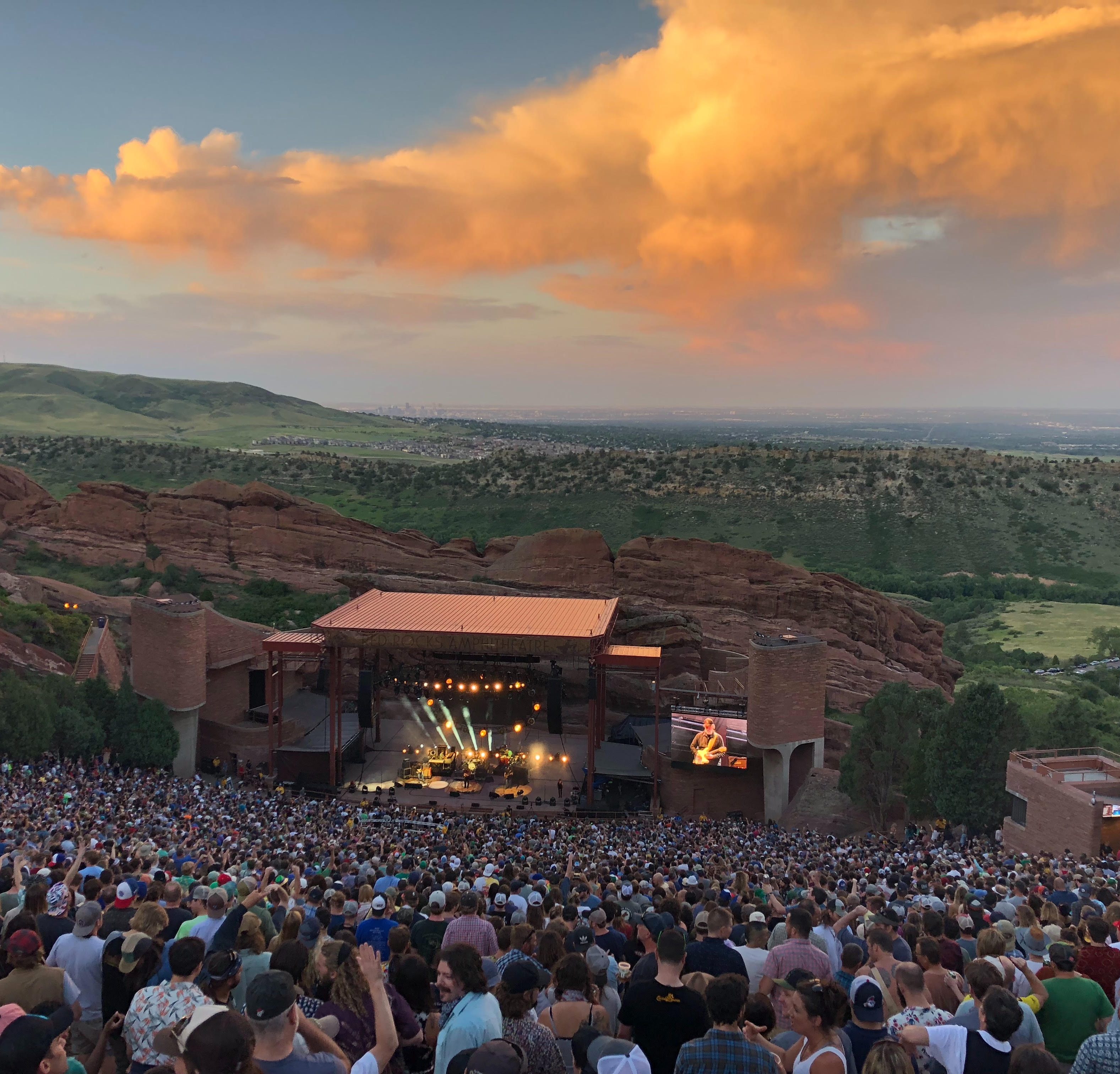
     The city-funk groove of “Jesus Children Of America”, the calypso-South Beach feel of “Don’t You Worry ‘Bout A Thing”, and the straight piano diss track “He’s Misstra Know-It-All” all stand out as great songs on this album.  I can’t recall if I have mentioned this before, but one of my all-time favorite concert memories is taking my son to see Stevie Wonder at Red Rocks, or “Red Rock” as he referred to it as the show.  To see my son experience his “bucket list” artist at the best venue on the planet was beyond rewarding, and I only wish I had fully done my homework on all of these albums before, and not after the show.  All that said, I love the music of Stevie Wonder, and even more so, I love how much my son connects with an artist who was making music well before I was even born.

Tres Hombres “ZZ Top” (1973)

    Another album today with sentimental feelings for multiple reasons, today we have “Tres Hombres” by ZZ Top.  First off, I have to pay tribute to Dusty Hill, bass player and second vocalist for the band, who recently moved on to that little Texas beer bar in the sky.  Dusty always dropped a mean bass line, and added some fantastic vocal compliments to lead Billy Gibbons on every album, including this one.  This album has added significance for me as well, as it always takes me back to 10th grade and my good friend John, who consistently played this cassette in his seemingly indestructible Datsun B210.

     This album, which may be their best overall collection, opens with the connected song combination of “Waitin’ for the Bus” and “Jesus Just Left Chicago”.  Just like “Heartbreaker” and “Living Loving Maid” or “We Will Rock You” and “We Are The Champions”, you can’t hear one without the other.  In particular, the second song, “Jesus Just Left Chicago”, reinforces what an oddly amazing singer Billy Gibbons is, in addition to being one hell of a guitar player.  His raspy, bluesy voice can sing a deep baritone or soulful tenor with such a unique, rough and raw sound.  He really is an underrated performer on every album.

     Two more songs on side one really stand out, “Beer Drinkers & Hell Raisers” and “Hot, Blue and Righteous”.  The first is a fast-paced rocker, the second a bluesy ballad, but both feature Dusty Hill’s complimenting vocals as a perfect blend to Gibbons.  I love both of these songs, such a great intersection of guitars and microphones.

     Side two is also strong from beginning to end, there are no weak links on this album, but two stand out for me.  The first is perhaps their most hard-driven hit, “LaGrange”, which as we discussed previously, is the latest reconfiguration of an old John Lee Hooker riff.  As usual, Gibbons is remarkable on this song, both on guitar and his limited vocal lines.  If you want a special treat, look up the time the band played this song on the Howard Stern show.  The mix and production is perfect, and Gibbons is at his dirty best.

     The other song on this side I really love is “Sheik”, a funky track about a Sheik from Mozambique, who led me to the Congo.  Even more than the big hits on this album, I associate this with being up to no good with John after school.  Good memories, the best of times, even when we didn’t always make the best of decisions. 

     RIP Dusty Hill, thanks for a lifetime of good music and amazing memories…

Waylon Jennings “Honky Tonk Heroes” (1973)

    Yesterday we had a rock band who aspired to be country outlaws, today we have the real thing with country music legend Waylon Jennings.  Today’s album is “Honky Tonk Heroes”, which is rated as the #5 album on tasteofcountry.com’s Top 10 Greatest Albums of All Time.  This particular album was created when Waylon came into contact with songwriter Billy Joe Shaver, who convinced Waylon he had an album’s worth of quality songs to record.  He was absolutely right, this is pure country music at it’s finest, a mix of up-tempo foot-stompers and melancholy ballads in Waylon’s inimitable voice.  Country legend Chet Atkins, who produced this album, initially pushed back on the concept, but ultimately together, they created a great record.

     The album opens with the title track, which starts as an acoustic up-tempo track that only accelerates as the band comes in, a really great and unusual start to a country album.  The next two tracks, “Old Five and Dimers Like Me” and “Willy the Wandering Gypsy and Me” are both slow ballads that are just right, such good contrast to the up-tempo songs that are intermingled throughout the album.

     I really love every song on this record, but none grab me the way the second to last song does, “Black Rose”.  It shocks me that this song wasn’t released as a single, as this song is wildly infectious, the kind you fall in love with the very first time you hear it.  The melody and tempo of this song is absolutely perfect, and it contains one of my favorite verses I have heard in a song in a long time.  Sometimes we just can’t help ourselves…

     “The devil made me do it the first time, the second time I done it on my own…

     Considering this is Waylon Jennings day, I have to pay tribute before I wrap up, to my two favorite “outlaws” of all time, my Dad and my Uncle Bill, who first introduced me to the ways of Waylon and Willie, many years ago.  Their favorite song whenever they were together was “Luckenbach, Texas”, sung jointly by Waylon and Willie Nelson.  While that song is not on “Honky Tonk Heroes”, this album captures the same feel and authenticity of the beauty of country music, just as we hear in “Luckenbach, Texas”.  Tonight I will raise a glass to those two Ark City Bandits and their amazing sister who will always be my favorite outlaws, and if I close my eyes, I can still see my uncle’s truck with the bumper sticker “Willie Nelson for President”….  Amen.

Eagles “Desperado” (1973)

    While listening to today’s album, “Desperado”, by the Eagles, I came up with what I believe to be a new term to describe their music… “Date Night Rock”.  It’s rock enough that the guy doesn’t feel like he’s being dragged to a Michael Buble show, but with enough pop and ballad content that the stereotypical girl is going to enjoy the show as well.  It doesn’t hurt that at this point, it is primarily a middle-age white couple date night, which allows the band to charge several hundred dollars per ticket and fill every seat… but I digress.  “Desperado” is their second studio album, shaped around an entire concept of western/cowboy themes, even though it was recorded in London.

     I do enjoy certain elements of this band, and on this album, you really see Glenn Frey and particularly Don Henley emerge as the most capable and influential members of the band.  Two albums in, and I still haven’t heard anything with Bernie Leadon or Randy Meisner that does much for me, but the two stars of the band do shine on this record.  “Doolin-Dalton” opens the record, and also makes multiple reappearances in an instrumental and reprise format, blended in then with the title track.  If the Eagles ever tried to deny their country-rock roots, they should probably hide this album, as the first two songs, and most of the others, have a very country feel to them.  Glenn Frey then turns it up with perhaps the loudest and heaviest Eagles song I have heard to date, “Out of Control”, and then slams on the brakes with what is my favorite song on the album, his ballad “Tequila Sunrise”.  This is a great mix of melody and lyrics, as most of us can relate to that occasional night that tends to gain a second and third wind, and before you know, you have overcome most of your bad decisions as daylight breaks in the distance.  It really is a beautiful, if simple, song.

     Side one ends with the title track, a Henley classic.  I never loved this song to begin with, and unfortunately for me, for twenty years plus it has just been the butt of a running joke on Seinfeld, but it is another very well constructed tune that highlights Henley’s voice in a way we didn’t hear on the first album.  It is also very true and central to the western-outlaw theme of the album.

     Side two opens with “Certain Kind of Fool”, a song written by and featuring Randy Meisner, that just doesn’t do anything for me.  The same can be said for “Bitter Creek”, later in side two, which is Bernie Leadon’s meandering western ballad.  I do like “Outlaw Man”, featuring Frey on lead vocals, and the multiple reprisals of “Doolin-Dalton” and “Desperado” are interesting content I had never heard before.

     As I noted, I do like the Eagles, at least some of what they do, but two albums in, knowing their primary hit collection as I do, I feel like there is still better work to come.  I can also look forward and frankly see the benefits of some of the lineup changes the band ultimately realized.  More discussion for another day, enough riding fences for today.

Bob Marley “Catch a Fire” (1973)

    The road to Florida sunshine continues, and so does the burst of reggae.  Today we have our first offering from the King of Reggae himself, Bob Marley and the Wailers, and at this point in time, Peter Tosh is also a part of the fun.  Today’s album is “Catch a Fire”, which is album #140 on Rolling Stone’s 500 Greatest Albums of All Time, as well as #5 on rateyourmusic.com’s Top 10 Greatest Reggae Albums of All Time.

      This was the fifth album for the Wailers, but they were still looking for a big breakthrough.  With some good connections and solid support from the recording industry, Marley was able to record and release this album to reasonable commercial success, continuing to advance his cause as one of the leaders of the reggae music movement.  Working with producer Chris Blackwell and well-known session musicians like Wayne Perkins on guitar and John “Rabbit” Bundrick, who also worked with the Who as well as creating much of the music for the Rocky Horror Picture Show, Marley, Tosh and the Wailers recorded nine tracks, all true to their core sound.

     The album opens with two Marley tracks, “Concrete Jungle” and “Slave Driver”, that illustrated Marley’s commitment to social justice and a better world, beyond the happy circle of his musical impact.  Next comes two Peter Tosh songs, the first being “400 Years”, which has a very unusual timing and beat to it, and “Stop That Train”.  I do appreciate the contrast in voice between Marley and Tosh, with Tosh having the deeper tone in comparison to Marley.

      The remainder of the album are all Marley songs, with the highlight being “Stir It Up”, which opens up side two.  By far the most recognizable song to any reggae novice like myself, the beautiful backing vocals from Rita Marley and Marcia Griffiths add such a rich depth to the beauty of this song.  “Kinky Reggae”, “No More Trouble”, and “Midnight Ravens” are all right in step on this defining album for Marley and the Wailers, and it’s a safe bet I will have this one spinning later today as I breath ocean air and look back out upon the sand and waves.

Toots and the Maytals “Funky Kingston” (1973)

    As I prepare to head south for the sands and sun of Florida, what better mood setter than some legendary reggae?  This is our first real encounter with reggae, unless we count yesterday’s Zeppelin attempt, which we probably should not.  Starting us off, we have Toots and the Maytals, featuring reggae front-man legend Frederick “Toots” Hibbert.  Their classic collection, “Funky Kingston”, is rated #344 on Rolling Stone’s Top 500 Greatest Albums of All Time.

     As legendary and defining for the genre as Bob Marley was, it is important to hear other early influences in reggae, and Toots is high on that list.  This album is a great mix of Toots originals and covers.  “Time Tough” is a great opener, and “Funky Kingston” is probably the signature song of the album, in addition to being the title track.  I also really love the closing song, “Sailin’ On”, which sends us off in anticipation of our next reggae serving.  However, before we take that step, we have to celebrate two amazing covers on this album.  Both of these tracks are living proof that pretty much any song can be performed with a Jamaican flavor.  What reggae album would be complete with out “Louie Louie”, and as another amazing offering, we visit “West Jamaica” for a phenomenal version of “Country Road”.  Yes.. the John Denver classic.  Which reminds me, did I create this list without any John Denver??  If so, at least Toots has me covered here.

     I love reggae music in general, and always as mood music when I’m staring at the ocean, which I will be soon.  Much more to come, sooner rather than later most likely, but enjoy this album and the place this music will take you.

Led Zeppelin “Houses of the Holy” (1973)

    From one legendary British rock band to another, today we return to Led Zeppelin for their fifth released album, “Houses of the Holy”.  An interesting change of pace after their colossal fourth album, “Houses of the Holy” is rated #278 on Rolling Stone’s Top 500 Greatest Albums of All Time.

     With a subtle shift in style, I believe this record reflects Robert Plant flexing his increasing influence as the visible front-man of the band, and pushing the band in different directions.  Even though it has been less than five years since the first Led Zeppelin album, I believe that both from a stylistic and ability standpoint, Robert Plant was evolving and changing dramatically from the frenzied, piercing, bulletproof high-end vocalist of “Communication Breakdown” into a true singer.  He didn’t take great care of that upper end of his range, and due to overuse and smoking, he ultimately had to have surgery that impacted the high end of his range, and from that point on, many of the bands songs were lowered in key.  I also think that at his core, Robert Plant is not a hard rocker by nature, and prefers the great diversity of style we have seen in his career since the band split up.  For the first time on this album, he is beginning to confront those vocal realities, as well as his desire to change directions, and has been quoted as saying he greatly prefers this album to the fourth album.

      The good news is, he still sings in front of three phenomenal musicians, who together were the best of their day.  Opening with “The Song Remains The Same”, the connectivity of Page, Jones and Bonham is once again without comparison.  I don’t care for the way they altered Robert’s vocals on this studio version, accelerating it artificially as if to recapture his high-end.  I love this song live, I just don’t like the vocal production on the studio version.  Paired together as they often were live, next comes their first experiment with a string-based ballad, the gorgeous classic, “The Rain Song”.  Page and Jones create a magical middle section to this song, with Page’s acoustic guitar and Jones’ string arrangements, and the subtle drum re-entry adds the dramatic conclusion along with perfect, unaltered vocals from Plant.

     Next comes their best display of light and shade on this album, “Over The Hills and Far Away”.  Opening with a spectacular acoustic lead-in from Jimmy Page, this song is reminiscent of “Ramble On” in the way it moves seamlessly into a powerful, intense rocker, with one of Robert’s last old-school vocal performances.  Overall, this may be the best song on the album.  Side one ends with their next experiment, taking on the world of soul and James Brown.  Even as they ask “where is that confounded bridge”, as if they were riffing “Sex Machine”, they do their best to capture the spirit.  This song has never really been a favorite of mine, but listening to as much James Brown as I have on this journey, I do applaud their effort to try and the rhythm beat from Jones and Bonham is super tight, not surprisingly.

     Side two opens with “Dancing Days”, an exuberant song about the joys of summer, which resonates with me as we are in the middle of summer here as well.  I think this track, and this album, represents the band at their happiest.  At this point in time, they were clearly on top of the rock world, and were still making great records and delivering stunning shows, before they started to backslide into substance abuse, differing directions, multiple bad luck events, and excessive self-indulgence.  The riff on “Dancing Days” is fantastic, and Plant’s vocals are perfect.

     With yet another experimental sound, we have their attempt at reggae, with “D’yer Maker”.  Again, I applaud the effort more than the actual result.  While this song is ok, it doesn’t really grab me, and in fact, I actually prefer a reworked version of this song that was released in 2007 called “Me Love”, by Jamaican singer Sean Kingston.  I bet if you asked Robert Plant, he would say the same thing.

     “Houses of the Holy” has enough inconsistencies like “D’Yer Maker” that I rate the album below their very best albums, but it does have some stunning songs as well.  Next comes what would become the keyboard showcase for John Paul Jones, “No Quarter”.  This is the band at their heaviest and most powerful, even with a slow and mystic song.  The chorus guitar riff hits at your core, and the mix of Jones’ keyboard intro, Plant’s haunting vocals, and Bonham’s ever-present drum superiority makes this song a powerhouse here, or live.  The album closes with John Bonham counting us off, into another master Jimmy Page riff, on “The Ocean”.  This is another track I love here and live, especially when Bonzo grabs the mike to add the high harmony second vocal.  They often used “The Ocean” to close out shows on their 1973 tour, as many of these songs were also featured on that tour.

     As noted, I will nitpick a few of these tracks, more so than on some other performances, but I still love this album, especially for the ammunition of live material that resulted from this album.  Saying once again, this is Robert Plant taking the wheel while on top of the world, and the band was fully equipped to deliver as only Led Zeppelin could in 1973.
Pink Floyd “The Dark Side of the Moon” (1973)

    I consider today’s album one of the most meaningful and impactful albums in the history of rock music, and accordingly, one of the most significant blogs I will publish throughout this journey.  I have never really thought about trying to rate albums like the Rolling Stone list, but if I did, this would have to be a strong contender for Number One.  Yes, tonight is the night I revisited the masterpiece “The Dark Side of the Moon” by Pink Floyd.  Somehow, this album is only rated #55 on the above-noted list, a ranking I struggle to reconcile.  Beyond the unprecedented duration of success (958 weeks on the Top 100 Albums charts), this is just a remarkable creation of sound from beginning to end.  Even from a packaging standpoint, if I had to choose my all-time favorite album cover, it would be “The Dark Side of the Moon”, and it isn’t close.

      Way before the band was ripped apart by divisive and clashing personalities, this is the creative mind of Roger Waters and the powerful guitar and vocals of David Gilmour blended at their very best.  Richard Wright on keyboards is also an essential force on this record, along with drummer Nick Mason.  Other key contributions come from Dick Parry on saxophone, and the unmatched vocal performance of Clare Torry on “The Great Gig in the Sky”, and credit must also be given to lead engineer Alan Parsons for his creative sound generation techniques.

     Each album side is a blended and continuous piece of music, with individual songs connected by theme and sound.  The opening heartbeat grips you from the beginning as Nick Mason opens us with “Speak to Me”.  The next three songs feel like one piece as the soft melody of “Breathe (In the Air)” is suddenly jarred into the frenetic instrumental “On the Run”.  These two tracks set the stage for the overwhelmingly powerful and intense “Time”.  The blend of Gilmour and Wright’s harmonized vocals, taken higher by one of my favorite guitar solos of all time, make this a track I can never forget, a true high point on a consistently excellent record.  The darkness and depth of Waters’ lyrics help us all to see, for good or bad, the mortality we all eventually face, and as we grapple with that, Wright and Clare Torry hit us with the surreal piano and vocal improv, “The Great Gig in the Sky”, closing out the rush of side one.

     Side two opens with looped cash registers and Waters’ opening bass line, leading into the cynical rocker “Money”, once again sung by Gilmour, along with another of his devastatingly spot-on guitar solos.  His work on this album is phenomenal.  Like side one, each song blends into the next, and we are treated to one of the most peaceful, settling, and relaxed songs of all time, “Us and Them”.  The above-noted saxophone work of Dick Parry takes this song to another level, along with the embedded semi-nonsensical interview and text insertions from random crew and peers.  Feeding into the teetering brink of sanity, these clips also serve to reinforce the utter Englishness of this band.  The collective result is yet another one-of-a-kind breakthrough for the band.

     We are then jarred back out of balance by another instrumental track, “Any Colour You Like”, before Roger Waters takes the microphone for the last two songs, the perfectly connected “Brain Damage” and “Eclipse”.  This entire album is an emotional and powerful experience, particularly if given proper setting and consideration.  To do this justice, I waited until the sun had set, and being in Colorado, took myself to the highest location in near proximity.  On a peaceful summer evening, I took in the entire album without distraction, as I looked down upon the distant nightline of the sprawling city of Denver, recapturing this nocturnal sense of musical love and adventure from my nights here as a growing young man.

      The entire experience did not disappoint, and as noted, as Roger Waters closes out this concept with a wallop that leaves you stunned and breathless, as we are left alone with the same beating heart we first encountered forty minutes before.  The only other album I can think of that comes close to closing with this kind of buildup is the second side medley of “Abbey Road”.  Perhaps this isn’t completely coincidental, as this album was also recorded at Abbey Road Studios, and Parsons also served as an engineer on that recording several years before.

     There may be other albums that ultimately move me and impact me as much as this album, but it is hard for me to envision any collective recording from beginning to end that is anymore brilliantly conceived as a single art form than this record.  Strong words, I know, but this is a story I have been waiting almost 40 years to write… and tonight was the night.

“And if the cloud bursts, thunder in your ear… You shout and no one seems to hear..

And if the band you’re in starts playing different tunes, I’ll see you on the dark side of the moon.”