Van Morrison “Moondance” (1970)

     Today we come back to Van Morrison for his next released album, “Moondance”.  This album was recorded and structured for a greater commercial appeal than the highly regarded “Astral Weeks”, and he was definitely successful with that goal.  This album is rated #120 on Rolling Stone’s Top 500 Greatest Albums of All Time.  As a comparison, “Astral Weeks” was #60.

     I’m a big fan of both albums and of Van Morrison in general, but I can see why this album had a better reception.  In general, the songs are shorter and more upbeat, and there are some amazing songs on this album, including what I consider to be the ultimate Van Morrison song, “Into the Mystic”.  I will share my own tragic “Into the Mystic” story a bit later, but let’s look at the rest of the album first.

     It opens with the warm “And It Stoned Me”, an excellent opening track with lush horns.  Next comes the well-known jazzy title track “Moondance”.  Once again, film association enters my head as I always think of the horror-comedy film (is there such a thing?) “An American Werewolf in London”.  Anyway, this song is a perfect mood setter on any night where your heart and mind are in the same place.  This whole album carries that same vibe, following with “Crazy Love”.  Two tracks later, we reach the peak of romantic emotional impact with “Into the Mystic”, one of the greatest love songs ever.

     The entire album has great flow and there isn’t a bad song in the mix, so if I had to choose, I would rate this as my favorite Van Morrison album over the more experimental “Astral Weeks”.  Ten beautifully produced songs in 38 minutes, a great listen from beginning to end.

     So, about two years ago, I saw Van Morrison in concert for the first time.  Through the course of the night, I was greeted with unfamiliar songs I enjoyed, as well as the expected… “Brown Eyed Girl”, “Moondance”, “Crazy Love”, and others, as I waited patiently for “Into the Mystic”.  And then, it happened.  The lights came up, the band left the stage, the amphitheater emptied, and there I was left, still waiting.  How in the world does Van Morrison play a show and not play “Into the Mystic”?  Two years and counting, and I’m still waiting for him to make this right.

Simon & Garfunkel “Bridge Over Troubled Water” (1970)

     The 1970s kick off with one of the most successful duos of the 1960s, Paul Simon and Art Garfunkel.  Despite growing differences and conflict between the two that ultimately led to their dissolution as an act not long after this album was released, they recorded and released what I and most others consider to be their greatest album.  Highly successful, the album “Bridge Over Troubled Water” was the #1 selling album of 1970, and is rated #172 on Rolling Stone’s Top 500 Greatest Albums of All Time, which feels a bit low to me.

     The album opens with the powerful title track, a soulful ballad written by Paul Simon, like most of their songs, but sung primarily by Art Garfunkel.  Paul originally had to convince Art they had a hit on their hands, but it took some time for Art to come around.  Paul continued to harbor some resentment even as the song hit big, concerned his contribution to the number was not fully appreciated.  Despite the pettiness and hard feelings that ultimately soured their working relationship, they did create a beautiful song here.  At the urging of their produced, Paul wrote a third verse that they sing together, and it adds significantly to the overall impact of the song.  The album continues on with “El Condor Pasa (If I Could)”, a beautiful Peruvian classical piece remade in their two-part harmony.  It is a really lush and powerful piece also, and the strength of the album continues to shine with the more pop-sounding “Cecilia”. 

     Side two opens with another home run Paul Simon song, “The Boxer”.  I will always vividly recall when Paul performed this song solo on Saturday Night Live, in their first show following 9/11, a somber and deeply emotional scene as he performed to a stage full of New York firefighters, police officers and other first responders.  It was the perfect song of resilience for that moment, and has always stuck with me as such.  There really isn’t a weak song on this album, songs like “Keep the Customer Satisfied”, “Baby Driver” and “The Only Living Boy in New York” all display the wide range and continued growth of Paul Simon as a songwriter.

     As if to keep the mood light during the dark tension, the album also includes a live cover version of the Everly Brothers hit, “Bye Bye Love”.  The similarities in harmony between the two acts are obvious, and they surely had a lifetime career as an Everly Brothers tribute act if they didn’t have such gifts with their own music.

     As a fan, we can all get selfish and ask why acts like these couldn’t work it out better, but in the end, like all, I’m grateful for the five albums of remarkable songs that have had a notable impact on my music life, and I certainly respect where both of them evolved to professionally after they disbanded.  They will always be one of the most recognized and influential acts of the dynamic decade that was the 1960s.

The Meters “Looka Py Py” (1969)

     One more album slipped in under the wire before I move forward to 1970.  In late 1969, New Orleans funk masters The Meters released their second album, “Looka Py Py”.  Like their first album, this is another instrumental collection of Louisiana funk that really hits the mark.  It is rated as album #415 on Rolling Stone’s Top 500 Albums of All Time.

     Listening to this album is another easy pleasure, 12 songs in just 32 minutes, each with a unique funk groove that just begs you to slow down, ease back, and let the rhythm take over.  The cohesion of this band is really apparent in this second album, they just play together so well.  As a four-piece unit who was still entirely instrumental at this point, Art Neville’s organ line usually serves as the replacement for the lead vocal melody, while guitar, bass and drums create the rhythm and harmony backing.  Ziggy Modeliste is one of the first masters of the off-beat drum sound that exemplifies what I love about New Orleans funk.  What I would have given to seen this band live in their original form, on a late and hot night in New Orleans as the sounds permeate the city.  Every one of these songs is great, but my two standout favorites are “Funky Miracle” and “Little Old Money Maker”.  I don’t know how anyone can listen to this and not be completely pulled in. 

     The Meters are a treasure of American music, and one of the legendary heartbeats of New Orleans.  I will say it one more time, although it might emerge again.  It is an absolute travesty that the Meters and/or Neville Brothers, and the Neville family at large, is not in the Rock and Roll Hall of Fame and are not more widely appreciated for the depth and greatness of their sound.  OK… rant over.  Time for more funk…

The Rolling Stones “Let It Bleed” (1969)

     Here we are at the end of the 1960s, the last album I have listened to from this remarkable decade of musical transformation and evolution.  Every decade has its moments of greatness, but I don’t know if anything will ever match the cultural and musical revolution of the 1960s.  We wrap up with a good one today… no, in fact, a great one, the album “Let It Bleed” by the Rolling Stones.  This album is the 41st rated album on Rolling Stone’s Top 500 Greatest Albums of All Time.

     1969 was a time of triumph and tragedy for the Stones.  Original member and founder Brian Jones was removed from the band and died shortly thereafter at the age of 27, setting in motion a disturbing trend for the coming years.  As this album was released in late 1969, with Mick Taylor replacing Jones, the Stones played at the Altamont Music Festival, after not appearing at Woodstock.  This festival in California, following on the heels of the positive after-effects of Woodstock, proved to be the very opposite.  Overbearing security that was self-imposed by the Hell’s Angels led to a fatal stabbing, and three other accidental deaths all cast a dark shadow on the festival. 

     Through all of this darkness, the Stones delivered a blockbuster album.  It opens with the super-intense “Gimme Shelter”, featuring Merry Clayton’s powerful duet with Mick Jagger.  I said in an earlier blog that I felt “Sympathy for the Devil” was their most impactful song ever, but this song just might change my view on that.  Charlie Watts and Bill Wyman also stand out as a powerful rhythm section on this track.  Following “Love In Vain”, we have “Country Honk”, which is a over-the-top country version of their classic hit “Honky Tonk Women”, which was released prior to the album as a single.  In either form, this song’s combination of music and lyric are perfect, and Mick and Keith crush their dirty harmony vocal.  The more familiar single version is also another amazing performance from Watts, the funky Stones delivering a performance no other band could consider.  Side one ends with the title track “Let It Bleed”, which has always been another personal favorite of mine.  I always thought this song and album title were a parody of “Let It Be” by the Beatles, but it actually came out several months prior so that theory has effectively been rendered false.

     Side two opens with another great riff, the bluesy “Midnight Rambler”, which is one of the best 3 minute rock songs ever.  Unfortunately, it goes for 6:52, and along with “Monkey Man”, another great song on this album, I think they could have done more with less.  Minor nitpicking on great songs from a great album, and to top all of this off, another legendary Stones song closes out the album, “You Can’t Always Get What You Want”.

      With all of that content on one album, it truly is a period of triumph and greatness for the Stones, and along with the three other British superpowers, an incredible year of music.  Think about it, in one year, we were given the first two Led Zeppelin albums, “Tommy” by the Who, “Abbey Road” from the Beatles, and this masterpiece.  Although “Exile on Main Street” and even “Sticky Fingers” garner a lot of hype, someone has a lot of work to do to convince me this isn’t the best Stones album ever.

“You can’t always get what you want, but if you try sometimes, you might find, you get what you need.”

Creedence Clearwater Revival “Willy and the Poor Boys” (1969)

     Nearing the end of 1969, we have our first encounter with another timeless act from that era, as well as another act who performed at Woodstock.  Today we look at the album “Willy and the Poor Boys” by Creedence Clearwater Revival.  This album, which was their fourth album released as this band (even though they had performed and recorded together under other names for almost ten years), is rated #193 on Rolling Stone’s Top 500 Greatest Albums of All Time.

     Creedence Clearwater Revival, or CCR, primarily features singer, lead guitarist and songwriter John Fogerty, although the band also included his brother Tom Fogerty, Stu Cook and Doug Clifford.  Interestingly enough, CCR hails from the San Francisco area of California, even though the casual fan would assume, based on their sound and their lyrics, that they originated from the Bayou of Louisiana.  Ultimately, they all became embroiled in long and bitter disputes over legal issues, and to this day, John Fogerty refuses to perform with any of them, including his brother.

     This album is a strong mix of well-known CCR classics and some lesser-known instrumental tracks and covers.  It opens with “Down on the Corner”, building on the theme of a sidewalk hustle band jamming for spare change.  Two other standout tracks on the first side are the Leadbelly cover “Cotton Fields”, which might be my favorite song on the album, and “Feelin’ Blue”.  The second side opens with the fiercely anti-Vietnam war song “Fortunate Son”, which right or wrong, I will always associate this song with the scene in the movie “Forrest Gump” when Forrest and Bubba arrive to their combat unit in Vietnam.  The third prominent song on the album is another Leadbelly song, “The Midnight Special”, and the album concludes with a powerful condemnation of Richard Nixon on “Effigy”.

     I have always found it sad that CCR could never reconcile their differences, especially when family is involved, but they had a very strong run of productive recording in the late 1960s and early 1970s, and to this day remain one of the most successful American bands of that classic rock era.  This album is probably the best one to showcase as an introduction to new listeners.

Led Zeppelin “Led Zeppelin II” (1969)

     Another all-time personal favorite of mine comes next, the second album from Led Zeppelin, aptly named “Led Zeppelin II”.  Released just nine months after their first album was recorded as the band toured non-stop across America, quickly building their brand and reputation.  By 1970, they surpassed the Beatles as the most popular band in the Melody Maker polls, and like their first album, the second release was another massive success.  It is rated as album #123 on Rolling Stone’s Top 500 Greatest Albums of All Time.

     Led Zeppelin broke new ground with some of the filthiest guitar riffs ever, and this album is full of them, from beginning to end.  The album opens with “Whole Lotta Love”.  Jimmy Page’s opening riff, bolstered by John Bonham and John Paul Jones, with Robert Plant still at his most powerful at the high end of his range, this is truly an epic rock song.  Next comes the funkier “What Is and What Should Never Be”, a mellow drifting jam that explodes in perfect sync at the chorus.  On this song, and in particular the next, “The Lemon Song”, you can fully appreciate that each of the four members of Led Zeppelin are among the very best at their craft.  John Paul Jones is just insane on bass on these songs, and I give credit to Jimmy Page for giving each of his band mates a spot in the spotlight.  “The Lemon Song” is a remade blend of “Travelling Riverside Blues” by Robert Johnson and “Killin’ Floor” by Howlin’ Wolf, and is another example of Led Zeppelin doing two things they became known for:  playing blues rock at a previously unreached level, and unfortunately, not providing appropriate songwriting credit in part for this song.  While I will always wish they had been more transparent in this aspect of their recording, it doesn’t change the fact that nobody, and I mean nobody, could play hard blues rock like this.  Not before, and not since.  The first side ends with “Thank You”, a simple (perhaps too simple) ballad that has never been a favorite of mine, but widely appreciated nonetheless.

     Side two opens with another ridiculous riff, “Heartbreaker”, and the middle solo piece by Jimmy Page was one of many moments where he claimed his guitar god status.  “Living Loving Maid”, which always accompanies “Heartbreaker” on radio play, is a bit of a throwaway song, one of their least inspiring songs, even though the bass line from Jones is a keeper.  Next comes “Ramble On”, one of many stellar Led Zeppelin songs that radiates a concept Page refers to as “light and shade”.  What he means is a song that blends the mellowest of vibes with the contrasting hard rock intensity few others can deliver.  Fully inspired by “The Hobbit” like many of Plant’s lyrics, this song has evolved into one of my top five favorite Led Zeppelin songs of all time.  Then we have John Bonham’s drum solo song, “Moby Dick”.  Honestly, this studio version is pretty tame and not a true representation of his greatness.  Watch the live version of “Moby Dick” from their 1970 performance at Royal Albert Hall, and I guarantee you will see why John Bonham is the unchallenged king of rock drumming to this day.  The album ends with another really dirty riff, the blues intro of “Bring It On Home” bursting into all four of the band rocking in a groove that is truly unforgettable.

      As a Led Zeppelin fanatic, I recognize my view of this album is biased, but it really is a mostly great album with a few brief stall-outs.  I remain fascinated by the fact that four guys in their early twenties could create these first two albums and play over a hundred live shows in their first year, immediately surging to the very top of the crowded perch of guitar rock bands looking ahead to the 1970s.  Like the first album, this is the band at their early and most pure form, before fame, drugs, and other questionable choices began to take their inevitable toll.

The Beatles “Abbey Road” (1969)

     Today we discuss one of my favorite, and most highly significant albums ever recorded.  “Abbey Road”, by the Beatles, is the last album they ever recorded as a group.  Based on some unusual circumstances with the start and stop of “Let It Be”, that was actually the last full album they released, but chronologically this was the last album they recorded together, and as most of the band would say, they knew the end was near. Personality conflicts, differences in musical and business opinions and the collective stress of a decade under a microscope had taken its toll on the band.  All of that considered, they somehow produced some of their finest work ever, and this album is highly regarded, rated #5 on Rolling Stone’s Top 500 Greatest Albums of All Time.

     Even the album cover is considered legendary, with the famous photo of them crossing the street together in front of their studio of the same name.  I think it is easy to say that at least three of the four Beatles did their finest work on this album.  John’s leadership role had diminished somewhat by this point, and I think I would look back at their earliest days and “Rubber Soul” as his greatest contributions to the band.  That being said, “Come Together” is an instantly recognizable late-era Beatles track, and “I Want You (She’s So Heavy)” is one of the most blues-rooted songs the band ever recorded.  Turning to Ringo Starr, he contributed another solo composition “Octopus’s Garden”, and his drumming on the side two medley, including his brief solo, makes a major impact on the album.  George Harrison unquestionably delivers his two most impactful songs on this album, “Here Comes the Sun” and “Something”, which was the first single off of the album, and the first Harrison song ever released as an “A” side single.  It has become the most covered Beatles song ever, and whenever Paul performs his favorite George song in concert, this is almost always the pick.  The melody is beautiful, a remarkable song, and I would put his guitar solo on this song up against Clapton’s work on “While My Guitar Gently Weeps”.

     Last, but certainly not least, we have Sir Paul McCartney.  Paul’s overwhelmingly impressive musical talent is on full display on this album.  His first song is the ridiculous “Maxwell’s Silver Hammer”, which feels like a sequel to “Ob-La-Di, Ob-La-Da”. With that said, he then follows up with “Oh! Darling”, which I consider his most amazing vocal performance ever.  As great as that song is, his true triumph on this album is the infamous medley of short songs that takes up most of Side Two.  To be fair, there are three Lennon leads in the middle of this medley, but the formation, construction, and dominant tracks of this medley are all Paul McCartney.  Starting with the piano intro to “You Never Give Me Your Money”, the album then blends together “Sun King”, “Mean Mr. Mustard”, Polythene Pam”, “She Came In Through the Bathroom Window”, “Golden Slumbers”, “Carry That Weight”, culminating with Harrison, Lennon, and McCartney all taking turns on lead guitar through “The End”.  In all, it runs approximately 16 minutes, and even though I normally love randomly shuffling songs, I believe these songs should always be listened to in sequence, in their entirety.  Incredible hooks, beautiful Beatle harmonies, stellar instrumental performances, and ultimately very poignant lyrics. 

     Combined together, we have the most impactful rock and roll band of all time, delivering a final act truly worthy of their place in musical history.  If you haven’t listened to this album recently, or perhaps ever in its entirety, I can’t recommend it any higher.  To the new Beatle fan, this is a great album, along with “A Hard Day’s Night”, to showcase how good both the early and late Beatles eras were, with “Rubber Soul” added in to cover their transition phase.

“And in the end, the love you take, is equal to the love you make…”  The Beatles – Abbey Road

The Band “The Band” (1969)

     Today we return to the highly acclaimed act of musicians from Canada and the United States, known as “The Band”.  As noted previously, this group formed out of a backing gig with Bob Dylan, and built on his folk-rock sound with a variety of vocalists, harmony styles and compositions.  This album, like most of their music, is highly rated.  It is rated as the 57th best album of all time on Rolling Stone’s Top 500 Greatest Albums of All Time.  And I just can’t understand why…

     It’s not like the songwriting is poor, although beyond “Up On Cripple Creek”, “Look Out Cleveland”, and “The Night They Drove Old Dixie Down”, the songs are pretty bland.  There is nothing remarkable about the instrumental support, although it is good enough.    And although the vocals aren’t great, there is a frayed charm to their sound, both solo and in harmony.  A harmony vocal doesn’t have to be lush like Crosby, Stills and Nash or the Beach Boys to be effective.  Listen to Mick and Keith sing together on many a Stones song, and you will understand what I mean.  That is effectively what The Band goes for here, and my guess is like the rest of their act, it translates much better in a live setting.  Three of the best examples of this are “Across the Great Divide”, “Jemima Surrender” and “Whispering Pines”.  Each of these might hit in a live setting, but I think they sound stale and outdated, even in the context of an album that is over 50 years old.

     It finally occurred what leaves me the most underwhelmed by this album, and it is the production.  Unlike many of their contemporaries of this time, the mix of these songs just doesn’t do the band any favors.  The instruments are imbalanced and often buried in the mix, and the vocals often sound as if they were recorded from a distance with inadequate and dated recording equipment.  Like I said, I bet this band sounded much better live.  They had to, the entire ensemble is filled with highly accomplished and regarded musicians.  I just don’t hear much of it shining through on this album.

     Like I said, I will always appreciate the funkier sound on the song “Up On Cripple Creek”, sung by drummer Levon Helm, featuring Garth Hudson on clavinet.  It is a song that stands out way above the rest of the content, in my opinion.  Beyond that, I just don’t see myself coming back to this album for much. 

The Doors “The Soft Parade” (1969)

     Another round of the Doors today, and this album, “The Soft Parade”, really showcases the vocal talents of Jim Morrison.  Like the last two releases from the Doors, this album isn’t quite the hit factory of the first album, but it does have its moments, and I find it impressive the band kept recording and releasing solid albums even as Morrison was becoming more erratic and unpredictable with every day.

     The album opens with two very unique songs, “Tell All The People” and “Touch Me”.  They are very horn-centric, and almost have a Three Dog Night feel to them, but both really highlight that despite his lack of vocal training, Jim Morrison was really a great rock-and-roll singer.  Many, many years ago, in the 1980s, I remember playing “Touch Me” for my dad, who didn’t care for much of my music, as I was trying to convince him that Morrison was in fact a crooner at heart, with the ability to sing like the Rat Pack legends like Sinatra & Martin.  More than 30 years later, I still stand by that statement.  Singing was almost an afterthought for Jim Morrison, but beyond his gifts as a poet, performer, and visual centerpiece, the guy really could sing.  Lots of credit also go to Ray Manzarek and Robbie Krieger and the producers for continuing to expand the sound of the band, while also remaining true to their roots on songs like “Shaman’s Blues” and “Do It”. 

     Listen to “Easy Ride”, and you can hear the inspiration of Ray Charles’ “I’ve Got a Woman”.  “Wild Child” is the most Morrison-esque song on the album, and probably the second most recognized song on the album after “Touch Me”.  At the very end, Jim drops the line “Remember when we were in Africa?”, a line that was later referenced in the “Morrison is Alive” conspiracy theories.  Robbie Krieger’s guitar is also outstanding on this song.  The album ends with the 8:33 long title track, “The Soft Parade”, opening with Morrison’s blistering fire and brimstone gospel outburst.  This song is consistent with previous albums and their extended last songs.  This song even has a bit of a jazz feel, and doesn’t hit with the same impact as “The End” or “When the Music’s Over”, but it is a unique end to a unique album during a productive run for the Doors.

Merle Haggard “Down Every Road 1962-1994” (1969)

     I’m running a bit behind, but will play catch up over the next several days.  The main reasons for my delay are two that are related in a unique way.  This week, I have been in Colorado, spending time with my family for the most part, and the occasional old friend.  What better soundtrack to accompany around the roads of Douglas County, Colorado than “Down Every Road 1962-1994” by country legend Merle Haggard.  I picked 1969 as a good middle ground for this long collection of songs, and it was also the year he released “Okie from Muskogee”, considered by some an anthem for the anti-antiwar movement, and a parody of it by others.  For the most part, it appears that Merle stood by the song and its Americana simplicity.  This album lasted almost five hours in total, and is rated as album # 284 on Rolling Stone’s Top 500 Greatest Albums of All Time.

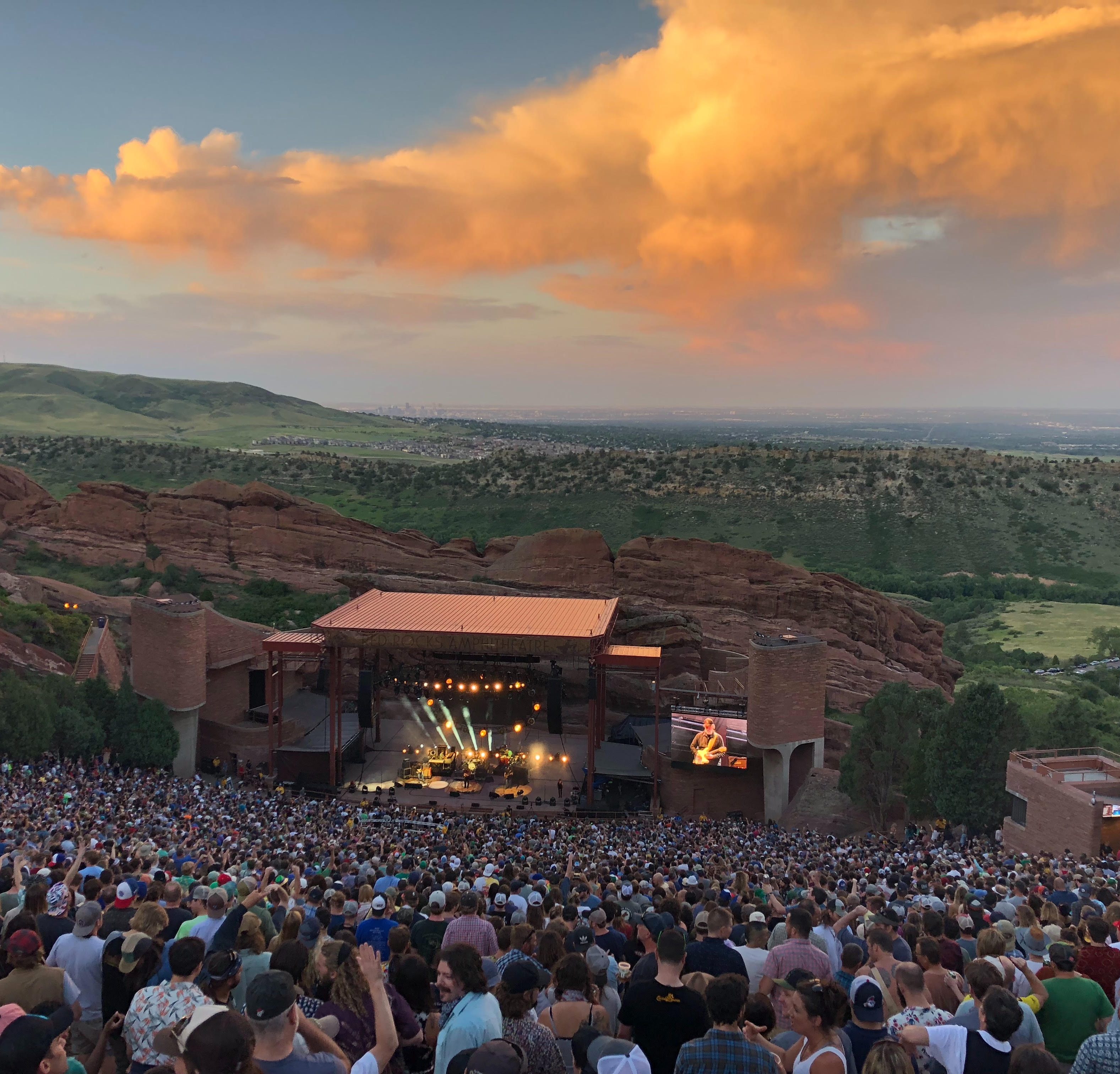
     This was a perfect selection for my time here this week.  When in Colorado, I most commonly look back on the first 22 years of my life here, and the wonderful times and amazing connections I have established that last to this day.  Aside from the occasional standout tune, most of this album gently blended in, song after song, with the perfect country voice of Merle Haggard taking me back to the days when most of the roads around here we dirt roads, the summers were hot and simple, and we stayed outside from dawn to dusk every single day.  I loved my life growing up in the relatively wide-open spaces of 1970s Douglas County, and hidden within the strip malls and suburban sprawl, you can still find country magic at the Stagecoach Saloon, the shady Main Street of Parker, or the never-ending skies of Castlewood Canyon gazing south at Pike’s Peak.  Listening to Merle Haggard as I made my way around this week, I didn’t have to think, I didn’t have to concentrate, I just soaked it all in, the acreage of my past and my future, all coming together as one.

     As Merle said in “Are The Good Times Really Over”, the signature song for this week…

Let’s make a Ford and a Chevy, Still last ten years like they should…”

“The best of free life is still yet to come, the good times ain’t over for good.”