James Brown “Live at the Apollo” (1963)

     Today we explore an intense and historically significant album, “Live at the Apollo” by James Brown, recorded one night in late 1962 at the epicenter of black music in America, the Apollo Theater in Harlem, New York.  This album is the 65th rated album of all time by Rolling Stone’s Top 500 Greatest Albums of All Time, and is also the 2nd rated soul album of all time by digitaldreamdoors.com.

     This album is a frequent selection by my son, and I give him full credit for introducing me to this showcase.  We often put it on for long drives like we have this weekend, and the miles always pass by quickly.  The first appearance of the “Godfather of Soul” on my list, or as he is introduced in spectacular fashion at the beginning of this performance as “The Hardest Working Man in Show Business”, “Mr Dynamite”, “Mr Please, Please Himself”, the energetic and intensity of this showman is captured forever here.  This is one of the first dedicated “live” albums in its entirety, and to understand the experimental nature of this format at the time, this recording was funded by James himself, because his record label was not eager to release it as they saw it as redundant to material already available.  While credited to James Brown, his backup singers the Famous Flames and his masterpiece band merit equal billing for this magic.

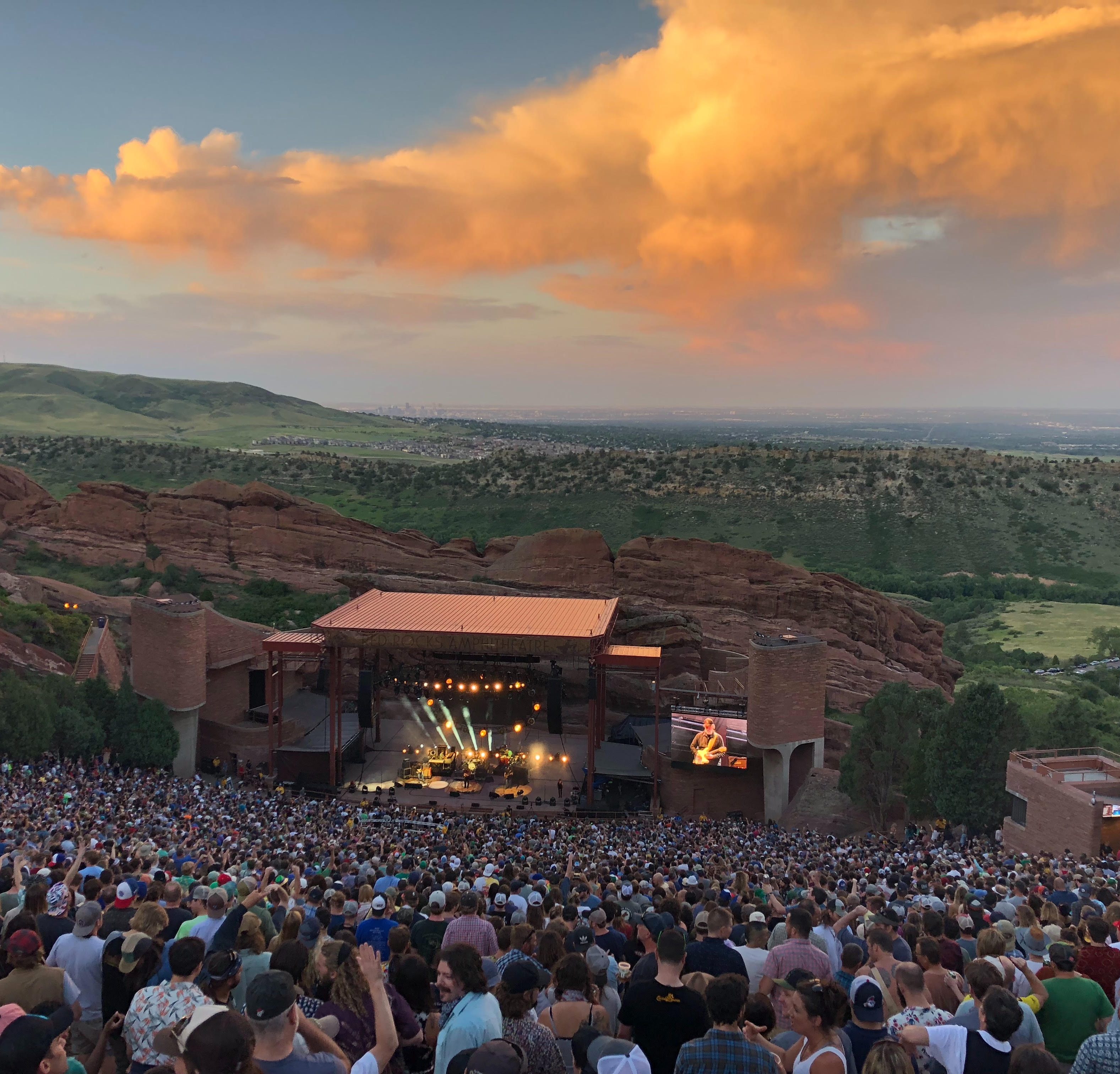
     There is nothing quite like the experience of live music.  Many of the best nights of my life have been spent at a show.  Big venue or small club, with a large group of friends, one ideal companion, or even solo, you are never truly alone at a show.  The energy of the performance, the common bond of musical movement, and the unforgettable lifelong connection you establish with the artist and those around you is a feeling I crave like few others, and miss terribly.  My life is better when I’m at a show, and I bet your is as well.

     There are many highlights on this album.  It alternates between bombastic high-energy dance blasts and soulful, wounded ballads of the soul.  As my son explained to me the first time we listened to this album, this is James Brown at his dynamic best, back when he could sing like few others and way before he became an Eddie Murphy parody.  With the opener “I’ll Go Crazy”, “I Don’t Mind”, and even the crush of James’ amazing band performing instrumental lead-ins between songs, you are quickly transported back to the packed intensity of this scorching night.  It is easy to envision the shared perspiration of the performers and the audience coming together as one.  Most notably, this is an audience reacting to the sounds and feelings of the music, versus the wincing and piercing screams that detracted from almost every live performance from yesterday’s artist, the Beatles.  This is pure musical passion, and the best advertisement possible for the next ticket you buy to any show.

The Beatles “Please Please Me” (1963)

     It took approximately 40 days to get here, but we have just reached the next major milestone.  John… Paul… George… and Ringo.  In early 1963, the Beatles released their debut album, “Please Please Me”, named following one of two lead singles on the album.  Building on many of the sounds we have enjoyed so far, the Beatles represented another quantum leap forward in popular and rock and roll music.  As songwriters, performers, and cultural influencers, the impact of this four-piece band from Liverpool, England is immeasurable. 

     The Beatles were dominated from the beginning by their two lead songwriters, John Lennon and Paul McCartney, whose partnership and evolving rivalry fueled many of the highs and lows for this quartet.  Along with George Harrison and Ringo Starr, these four men changed music forever.  There were only two singles released from this album, the first of which was “Love Me Do”.  This was one of the last Beatles recordings to deal with their recent turnover at drums, and the percussion on this track was actually recorded by a session drummer, not Ringo Starr.  Both “Love Me Do” and “Please Please Me”, the second single, feature John on harmonica, with altering lead vocals from John and Paul.  Personally, I have always preferred the upbeat “Please Please Me” as a true debut for the Beatles.  The harmonies are spectacular, the melody is incredibly infectious, and the instrumentation, while not highly complex, is very well performed, including a very tight drum line from Ringo Starr.

     Even from a band as consistently excellent as the Beatles, some songs deliver a bigger impact than others.  The album hits the ground quickly, with Paul on lead for “I Saw Her Standing There”.  The rhythm section of Paul on bass and Ringo on drums really drives the tempo, with us getting our first look at Paul’s “Little Richard” rocker voice.  Two other standout songs that aren’t as highly acclaimed are “Anna”, and “Chains”.  John’s soulful sadness on “Anna” is one of many great contrasts on this album, and “Chains” presents another beautiful three-part harmony, led by George.  As with nearly every Beatles album, Ringo gets at least one song to sing lead on.  “Boys” is not my favorite Ringo song by a long shot, but it is good to hear the wide variety of voices amongst the group.

    There are three other songs that for me, have stood the test of time above the others.  “P.S. I Love You” is perhaps the first of Paul’s many “silly love songs”, “Do You Want to Know a Secret” is another great vocal harmony with George on lead, and “Twist and Shout” is the iconic cover version with John on raspy lead, followed by Paul and George with backing harmonies.  It’s unlikely they realized back then that their rushed recording of this classic would re-appear again and again in popular culture, including the streets of downtown Chicago, as celebrated by the one and only Ferris Bueller.

     In many ways, the Beatles are without equals in the history of popular music, and you can expect to see all of their catalog covered as we follow their evolution in sound, including their industry-influencing movements along the way.  Dismissed initially by some as the latest “fad of the month”, they remain among the most impactful artists in the history of music as we approach the 60th anniversary of this debut album.

The Beach Boys “Surfin’ Safari” (1962)

     Another big step forward into the 1960s today with the debut album of the Beach Boys, another lifelong favorite of mine.  Truly a family affair, the Beach Boys featured brothers Brian, Carl and Dennis Wilson, along with cousin Mike Love and friends Al Jardine and David Marks.  The band was even managed by Murray Wilson, the temperamental and explosive father of the Wilsons.  Even from the beginning, Brian Wilson was the creative genius behind the Beach Boys.  However, on this album, vocally Mike Love takes the lead on almost all of the songs, and their famous harmonies and Brian’s remarkable falsetto doesn’t emerge as much as on future releases.

     Although this album’s most recognizable hit is the title track “Surfin’ Safari”, followed by “409”, most of the album sounds very basic and simple in structure.  A mix of early raw surf-rock sound and rockabilly carryover from the 1950s, covers of “Summertime Blues” and “Moon Dawg”, an early instrumental surf track which sounds a lot like a predecessor for “Wipe Out”, help fill the mix of songs written by Brian Wilson.  The first single was “Surfin”, written by Brian Wilson and Mike Love based on a suggestion from Dennis Wilson that they should try writing a song about the emerging craze of surfing in southern California.  The song structure is incredibly simple by comparison and has roots in 50s doo-wop mixed in with a touch of sea and sand.  Oddly enough, Dennis Wilson was the only Beach Boy with even a passing interest in actually hitting the surf.  Surprisingly, even Dennis, who usually was on drums and the least featured brother of the three, takes the lead vocals on the song “Little Girl”, a cover of a Herp Alpert song.

     There is enough here to certainly catch your ear, but in general, it also shows how much room the Beach Boys had to build on and improve in their performance and musicality.   As one who made several trips to southern California in the early 1970s, I fully subscribed to the American dream of sunny beaches and palm trees in the surf, and this music, especially subsequent releases, still fills a big place in my summer playlist when its warm, and my winter playlist when I wish it was…

Bob Dylan “Bob Dylan” (1962)

     For the first time today, I felt as we were truly beginning to open the door into the decade that became the 1960s.  Today’s album was the debut performance of folk-rock legend and songwriter Bob Dylan.  Although his fame and success ultimately were built upon the quality and quantity of original songs, this initial release was primarily traditional songs and covers, with only two original compositions.

     The album started somewhat uneventfully, with all of the songs very simple with a single acoustic guitar and harmonica.  It turns out that almost every song was recorded on a single take, just as you can envision hearing this young man in your local bar or coffee shop playing as an accompaniment to the conversations of the day.  The first song that really caught my ear was “In My Time of Dyin’”, a traditional blues-rock song that was robustly reshaped in 1974 by Led Zeppelin.  “Man of Constant Sorrow”, another traditional piece, hit home with the lyrics speaking of a man who hails from Colorado with many ups and downs in life.  The other most recognizable track to most would be his version of “House of the Risin’ Sun”, which of course would be much more widely remembered by the version recorded in 1964 by the Animals.  I think the most appealing song on the album, not surprisingly, is one of the two Dylan originals, “Song to Woody”, which was young Dylan’s ode to the legendary Woody Guthrie.  A beautiful melody, this song best captures the coming change in young and restless America as we began to look at our artists as more than just entertainment, but also voices of our aspiration for change.

     With my list including Rolling Stone’s Top 100 Greatest Album of All Time, you can rest assured that there will be plenty more of Bob Dylan to come on this journey.  As a songwriter and performer, his impact is immeasurable, as will be seen in the music of many others to follow.

Roy Orbison “The Monument Singles Collection” (1962)

     Today is one of those days where I had to make an edit to my list after the year had started.  As I was working through my mental Mount Rushmore of early rock and roll legends, it occurred to me that Roy Orbison had somehow slipped through all of the various criteria I had used to put this list together.  As I listed to his album “The Monument Singles Collection”, which contains all of his singles and key recordings from 1961 to 1964, I realized what a complete oversight that would have been to not spend a day with Roy and his angelic voice.

     Predictably, there were many instantly recognizable songs in this collection, most of which were originally authored by Orbison.  “Oh, Pretty Woman” is really good, “Only The Lonely” is even better, and “Crying” is an absolute masterpiece.  As much as I anticipated and enjoyed each of those, there were several other gems to be found here.  “Let the Good Times Roll” and “I Can’t Stop Loving You” are great covers, and the 19th century traditional song “Beautiful Dreamer” was outstanding.  Another standout was the original performance of “Blue Bayou”, known to many as the soulful smash for Linda Ronstadt.  (Wait… is she on my list?  It never ends…).

     Many of you from my generation may recall the second career surge for Roy Orbison in the late 1980s, with his top 10 hit “You Got It” and his showcase performance in the Traveling Wilburys with George Harrison, Bob Dylan, Tom Petty and Jeff Lynne.  Sadly, that second wave of success was realized primarily on the heels of Orbison’s too-young passing from heart failure at the age of 52.  Fans of all ages realize there is, and was, only one Roy Orbison.  His style, and that voice… oh man, that voice… they both live on forever.

Willie Dixon “I Am The Blues” (1962)

     With all of the blues founding fathers I have covered during these first ~ 40 days, I couldn’t complete the cycle without including Willie Dixon.  Dixon was actually one of the most productive songwriters of the blues emergence of the 1950s and 1960s, he just didn’t have quite the same vocal prowess or performance flair as his more prominent peers Muddy Waters, Bo Diddley and Howlin’ Wolf.  That being said, his album “I Am The Blues”, is rated as the # 4 blues album of all time by digitaldreamdoors.com.  This album was actually released as a collection in 1970, but for sequencing purposes, I felt it was important to place it within the time frame these songs were being played and performed, and equally important, ahead of when they were delivered to a wider audience with powerful covers by The Rolling Stones, Jeff Beck, Led Zeppelin and The Doors, among others.

     “Back Door Man”, “I Can’t Quit You, Baby”, “I Ain’t Superstitious”, “You Shook Me”, “I’m Your Hoochie Coochie Man” and “The Little Red Rooster” lay the foundation for blues rock that still resonates on classic rock playlists to this day.  Unlike many of his peers, Willie Dixon performed primarily on standup bass, leaving the guitar and piano leads to other bandmates.  I find this synchs up well with the fact that while he was the creator of all of these songs, most of the most famous versions were performed by his blues contemporaries or the rock artists that followed in his footsteps.

     Maybe because it is Saturday night, or maybe it is because I’m feeling particularly inspired by the magnitude of impact Willie Dixon had on my lifelong favorites, but I have extended this listen by alternating takes of his versions (and others of his day) with their remarkable remakes.  These much more commercially successful versions may be the ones I grew up with, but more than ever, I appreciate where they came from, and where the real roots of rock and roll music come from.  Artists like Willie Dixon will never receive the full credit they deserved, and they certainly had no idea at the time how long-lasting or impactful their songs would be, but I can only hope each listener who takes the time to look back on where it all started will emerge as fortunate and blessed as I have been to experience this American sound in its purest original form.

Original Soundtrack “West Side Story” (1962)

     In 1962, even as the rock and roll era was regrouping and other sounds like folk and jazz were gaining in popularity, musical theater and its expanding audience through cinematic releases, still reigned supreme on the charts.  The number one selling album for 1962 AND 1963 was the soundtrack to West Side Story.  Unlike My Fair Lady, Camelot, or even The Sound of Music, I have seen the film version of West Side Story, even though it has been many, many years.

     I have always known Natalie Wood played Maria, the female lead in this tragic story based loosely on “Romeo and Juliet”.  I did not know, until reading up on this soundtrack, that she did not do the singing for Maria.  This was performed by Marni Nixon, and the male lead also had an alternate vocalist, Jimmy Bryant, in lieu of Richard Beymer.  Setting the stage for a generation of dance rumble-brawls in film and music videos, there are several songs recognizable to the novice musical theater fan.  “Maria”, “Tonight”, and “I Feel Pretty” are musical theater staples, and stand out above the other tracks in this collection.  Beyond the theatrical appeal of this romantic musical tragedy, “West Side Story” stands out for confronting racial tension and violence, even within the relatively benign boundaries of a musical.  The message remains clear, that despite our obvious differences, we are better served embracing the diversity of other cultures and coming together through this turmoil.  Distrust and hate only breed violence and sadness, and how many lives have been unnecessarily ended or destroyed because of this inability to love one another, regardless of differences in background, faith or culture?

     Myopically looking at the songs alone, I think would rate this soundtrack as good, not great, and will always think of West Side Story as a showcase for Natalie Wood and a highly relevant story in the 20th century melting pot of urban America.  It’s staying power as the #1 album for two years in a row is indisputable, and it clearly frames where the mass musical preferences of America aligned in the early 1960s.

Ray Charles “Modern Sounds in Country and Western Music” (1962)

     Today’s album is not only a great collection of performances, it represents another significant effort in the world of music to break down racial barriers and historical silos.  As such, the meaning of this album outweighs the music itself, which is a strong statement when the artist in question is Ray Charles.  In 1962, looking for a new path to explore musically, Ray decided to record an album of traditional country songs.  This album was actually rated as the 6th best country album of all time by tasteofcountry.com.  I will fully acknowledge that I did a double-take when I saw Ray Charles on that list, which was exactly the reaction I’m sure he was striving for in the first place.

     Yesterday’s country music, and to a lesser degree, today’s country music, are not bursting with diversity.  Most importantly though, Ray noted something I also observed earlier this year when comparing Hank Williams to Robert Johnson.  While blues and country may sound a bit different at their core, the two styles are also linked by their similarities.  Both are rooted deep in the heart of America, with tales of heartache and less commonly, joyful love, and they are transparently and authentically performed by and for common folk, without any unnecessary flair or excess style.

     While it was highly probable that for me, this blend of singer and style was going hold great appeal, there are certain moments that stand out.  The album begins with “Bye Bye Love”, the song made most famous by The Everly Brothers.  The chorus is sung in multiple harmony by accompanying female vocalists, with Ray handling the main verses in perfect contrast.  The big band is upbeat and this song just works; it had to be a great number live.  I turned back to the roots of country when I heard Ray perform “You Win Again” and “Hey, Good Lookin’”, two contrasting classics from Hank Williams.  The most well-known song from this album is “I Can’t Stop Loving You”, which reached #1 on the pop and R&B charts of the day.  It’s nearly impossible to not love Ray’s passionate appeal on this song, but my favorite song on the entire album is “It Makes No Difference Now”, by Floyd Tillman and Jimmie Davis.  The piano intro is without compare, and the blues and honky-tonk blend never sounds better anywhere on this album, or really, anywhere.

     Aside from being an amazing performer and one-of-a-kind vocal legend, Ray Charles’ courageous take and willingness to challenge norms and test limits makes this album a true milestone in the continued evolution of all music in the 1960s.

Etta James “At Last” (1961)

     Not many artists are as singularly identified with a single song as Etta James is with the title track from today’s album, “At Last”.  This timeless ballad of romantic redemption has been the soundtrack to more movie scenes and varied playlists than I can count, and the album it is featured on is the 191st rated album on Rolling Stone’s Top 500 Greatest Albums of All Time.

     While “At Last” is the most impactful and memorable song from this album, there are several other selections that had a notable impact on me.  I loved the mood-capturing allure of “A Sunday Kind of Love”, as I find that the day of the week and what is ahead or behind on the calendar can be a great mood influencer.  She added a powerful take on the Willie Dixon song “I Just Want to Make Love to You”, showing a different side of her sound that previews a look ahead to the raw intensity of Janis Joplin, later this decade.  Aside from her most famous song, I believe my favorite recording on this album is the slow and lamenting “Stormy Weather”.  This song is dripping with the unique style of Etta James, and serves as the painful reminder that love can vanish as quickly as it emerges.

     Like many artists of her time, Etta had her share of personal struggles with substance abuse, as well as financial and legal troubles.  Thankfully, she was able to persevere and lived a longer life with extended periods of career rebirth and renewed health before her passing in 2012.  I can’t imagine anyone who doesn’t know of Etta James, or at least her hallmark song, but if for some reason you aren’t familiar or if it has just been a while, do yourself a favor at put this one on…. “At Last.”

Original Broadway Cast “Camelot” (1961)

     Immersed in 1961, America and the world around it was beginning to change.  The Kennedys had replaced the Eisenhowers in the White House.  The surge of rock and roll in the late 1950s had lost a bit of momentum, and while blues, jazz and country all evolved significantly within their given niches, popular music was still at an awkward pause, stuck between the past and the future.  Resultingly, the best-selling album of 1961 was another Broadway soundtrack.  This year, it was another production from Allen Lerner and Frederick Loewe, who had realized great success four years prior with “My Fair Lady”.  This year’s release was “Camelot”, based on the legend of King Arthur.

     Not unlike “My Fair Lady”, I found the overall collection of songs to be pleasant, if not particularly memorable.  The one true moment of musical distinction of this album is the star-studded cast.  Featuring Richard Burton, Roddy McDowall, and the debut of Robert Goulet, the true star of this production, like most she appeared in, was the remarkable Julie Andrews.  While Mary Martin performed admirably in the Broadway version of “The Sound of Music”, there is no match for the classic elegance and amazingly pure tone of Julie Andrews.  Like many other performances, she is simply stunning in her performances on this soundtrack.

     Most American history followers recognize the references to Camelot, hinted at by Jacqueline Kennedy, as the perfect label to attach to her attempt to resurrect social grace and formal protocol for the White House following the Midwest simplicity of Mamie & Dwight Eisenhower.  I learned in reading about this production that not only was Camelot the vision of historical austerity aspired to by the Kennedy White House, President Kennedy was in fact a big fan of this soundtrack, and actually studied at Harvard with Allen Lerner.  It has been said JFK was particularly fond of a verse from the final song, as King Arthur passes his torch to the next generation…

“Don’t let it be forgot, That once there was a spot.”

“For one brief, shining moment, That was known as Camelot.”