Bruce Springsteen “Born in the U.S.A.” (1984)

     Aside from Michael Jackson’s “Thriller”, there may not have been a bigger commercial success in the 1980s than “Born in the U.S.A.” by Bruce Springsteen.  After his relatively dark and subtle solo acoustic record “Nebraska”, Bruce reunited with his E Street Band to produce this hit factory, which delivered seven Top 10 singles.  Even though it was released in early June of 1984, this was the number one selling album in 1985 (“Thriller” still outsold this in 1984).  This album is rated #142 on Rolling Stone’s Top 500 Greatest Albums of All Time, and may have been a bit too commercially appealing for their tastes.  That said, these songs and music videos were everywhere for years.  Obviously, many of the tracks were very familiar, but it was good to hear the entire collection as one piece, and there were several non-singles that stood out as favorites, which was a pleasant surprise.

     The title track was a bit deceiving to some, as some saw it as the latest resurgence of overt patriotism, as America was on a roll in 1984, hosting the Summer Olympics in Los Angeles and the Reagan presidency was rolling towards a landslide re-election.  However, you don’t have to listen to closely to realize this was much more of a calling out of some of the economic and societal imbalances that continued to linger from the embers of the 1970s.  Ultimately, Springsteen had to weigh in to remind the Reagan campaign this testimony on behalf of Vietnam veterans struggling to move forward was not a song they should be using in their campaign, nor did he support the President or his policies.

     The rocker “Cover Me” came next.  It was one of those songs that did really well, but never made much of an impact on me, even to this day.  In contrast, I really like “Darlington County”, which was not a hit single. It has a much warmer melody, and the organ reminds me of my favorite Springsteen song, “Hungry Heart”.  “Working on the Highway” has a bit of a rock-a-billy feel, and it is another deep cut I really like from this record.  I also the slower “Downbound Train”, and it was about now I realized that between these songs and all of his hits, Bruce really did make a great record here.  Side one ends with what may be my favorite song on the record, the soft tale of longing for someone far away, a sentiment I can certainly appreciate.  “I’m On Fire” is a beautiful song, and one of my favorite Bruce vocal performances.

     “No Surrender” opens side two, and it is another really solid upbeat song, as is “Bobby Jean”.   This record may not be a patriot anthem, but it definitely has to be one of the happiest and most upbeat celebrations of the simple Americana most of us grew up with in this generation.

     The last four songs were all successful singles.  First, we have “I’m Goin’ Down”, which is another of my favorites among the hits on this album.  Someone I knew went to a military academy after high school, and she told me the cadets would do push-ups to this song trying to keep pace each time Bruce sings “Down, down, down, down”.  I don’t know if this old man can still pull it off, but I’m going to give it a shot at the gym tonight.  I also really like the song “Glory Days” as well, with one minor exception.  Along with John Mellencamp’s “Cherry Bomb”, these two songs are two of the very best retrospectives that look back at the happiest and easiest times in our lives, before the burdens of adulthood took over.  It even has that same happy organ that I love.  My one pet peeve with “Glory Days”?  It is the lyric when he is talking about his friend the baseball player.  Bruce sings, “I had a friend who was a big baseball player, back in high school.  He could throw that speedball by you, make you look like a fool.”  Bruce… what is a speedball?  The proper term is fastball, please don’t be that musician who exudes ignorance about sports.  We have all watched baseball, some more than others, and I can assure as one who has watched way too much baseball, there is no such pitch as a “speedball”.

     The hits continue with the first single from the album, the uber-smash “Dancing in the Dark”.  Most of us recall this as the debut of a young Courtney Cox, who is pulled from the crowd to dance on stage with Bruce in the music video.  To this day, I see other bands covering this song, looking for their own Courtney in the crowd.

     With one last solemn ode to days past, we have the soft story of “My Hometown”.  This song adds great balance to the record, and like many of these songs, it is instantly relatable, as most all of us have a soft spot for the place we called home growing up.  I certainly do, even if it was in Colorado, and not New Jersey.

     A few minor silly and absurd nitpicks I acknowledge, but this was and is a great record, and is one of the defining soundtracks of the time we all came of age in the 1980s.  Never again would Bruce have quite this much success with a record, but to be fair, not many others would either.

R.E.M. “Reckoning” (1984)

     College radio continued to flourish in the mid ‘80s, and R.E.M. remained the centerpiece of this genre as they released their second album, “Reckoning”.  For me, this is a better overall album than their debut, and like many bands, their sound grows more refined with time.  Reading up on the recording of this album, it seems like there were often challenges getting the band to come together in the studio.  Singer Michael Stipe was withdrawn and fatigued from tour and success, and the rest of the band had their moments as well.  Ultimately, they dug in for two to three weeks and grinded out this collection of songs.

     Interestingly enough, I would say the first two songs are possibly my least favorite on the record.  They aren’t bad songs, but I find “Harborcoat” and “7 Chinese Bros.” to be among the more bland tracks from this album.  Things notably pick up with “So. Central Rain”, one of the very best early R.E.M. tunes, and definitely one of the most memorable.  The guitar riff is very recognizable among their early work, and Michael Stipe does some of his best and most empowered work on this track.  Somehow, the next song had fallen a bit off my R.E.M. radar in recent years, but thankfully I was reunited with “Pretty Persuasion” on this album.  The driving beat and their unique harmonies, along with the great melody of this chorus, quickly elevated this to my favorite song on the album.

     “Time After Time (Annelise)” was my favorite new discovery on this record, and it really takes me back to the intellectually stimulating vibe that encompassed their sound.  R.E.M. always sounded important and significant, and I always looked at them, even now, as a band I wanted to understand and appreciate as a way of rounding out my portfolio of music appreciation.

     One more significant song I will point out on this record is one that has stood out to me for most of my career, based on the title.  “(Don’t Go Back To) Rockville” has always made me wonder if it was inspired by Rockville, Maryland, a town I spend a lot of time in even in current times, due to work obligations.  As I read up on it, I found out that in fact, it was Rockville, MD that was the source of this song’s story, as it was written by bassist Michael Mills imploring his then-girlfriend not to go back home.  In fact, this song was personal enough to Mills that he usually assumed the lead vocal duties when they performed it live, which I love, and he does have a great voice that usual provides the high-harmony compliment to Michael Stipe.

     “Reckoning” is a very era-appropriate record, and an important step forward for R.E.M.  I really enjoyed having this one on the list for the new and old of what I discovered along the way.

Run-D.M.C. “Run-D.M.C.” (1984)

     Hip-hop music continued to move forward in the mid ‘80s, and no act realized more initial mainstream success during this time than Run DMC.  With “Rev Run” Simmons and Darryl McDaniels (DMC) on dueling vocals and Jam Master Jay as the DJ, they set the stage for many acts who followed in their footsteps.  Their debut album, “Run-D.M.C”, is the 378th rated album of all time on Rolling Stone’s Top 500 Greatest Albums of All Time.

     Deep from the heart of Queens, their first album is a pretty simple and basic sound.  The format is pretty similar from song to song, with a steady beat and limited keyboard and the occasional guitar, with the yell-chant consistent vocal patterns from the two MCs.  The biggest success from this album was their first single “It’s Like That”, followed by the first song on the album, “Hard Times”.  As much as I love hip-hop and can appreciate the historical significance of this record, I don’t consider it an album I really liked or want to listen to again.  I tend to prefer a smoother rap delivery and some funkier bass grooves as the foundation, and this is just a little too straight up, and frankly, uninteresting in comparison to a lot of the music that would follow.

     That said, I will always respect not only this first step, but other unique steps they took subsequently, such as partnering with Aerosmith to re-do “Walk This Way”, bringing the sound of rap and hip-hop to a much wider and more mainstream audience.  As we stand here now in 2021 with hip-hop dominating the charts, it can be hard to recall back when rap was fighting for attention and airplay as a mostly underground genre but Run-D.M.C. will always be one of the biggest influencers in the growth and expansion of hip-hop, and they also cemented New York City as the ongoing home of hip-hop… at least for now.

The Cars “Heartbeat City” (1984)

     After the Cars released their debut album in 1978, they continued a run of successful records, culminating with their 5th release, “Heartbeat City”, which was their last major hit, and their biggest hit since their first.  Like most acts of the time, they rode the dual wave of success on radio and video, as their quirky sound and style carried over well to music television.  I love all of their records, and this one was a particular favorite of mine for several reasons.  I was originally captivated by the second single, “Magic”, which is incredibly catchy, but it was another song that ultimately defined my long-term affection for this record.

     Producer “Mutt” Lange makes another appearance in this blog, and this was his first work with the band.  The record opens with the perfect welcome back, “Hello Again”, sung by Ric Ocasek.  “Looking for Love” was not a single, but has that ideal Cars sound.  Then we have “Magic”, with yet another bouncing bass line I love.  Released in May of 1984, this belongs on any summer fun playlist, it is such a happy song.

     It is the 4th song that really endures, the slow and wondering tune, “Drive”.  Beautifully sung by Ben Orr, this song has always been a favorite of my mom, and I will never not think of her when I hear this song, and fondly recall how much she tried to embrace my music as a way of staying connected during those awkward teen years.  She has had a bit of a rough year, so I’m happy to listen to this song again and simply say, “I love you Mom”.

     There are three notable songs from side two.  The opener is “You Might Think”, which was the first single released from the album.  I always liked this simple track, but again, this one has a more enduring memory and meaning for me.  When my son was in high school, he performed in a unique musical that was created around several characters from the Brat Pack films.  He played Duckie from “Pretty in Pink”, and sung the chorus of this song with a college acapella group during his moment of lonesome affection for Andie.  As usual, he crushed it, and it was a nice preview of his own future to be had singing acapella in college.

     One of the less visible singles on the album is the ballad “Why Can’t I Have You”.  This is one of Ocasek’s best tracks, and like almost all Cars songs, it magically incorporates the layered keyboards of Greg Hawkes.  The title track is the last song on the album, and it really serves as an appropriate farewell to the golden age of this remarkably unique and talented band.

     Sadly, Ben Orr died way too young in 2000 from pancreatic cancer, and of course we recently lost Ric Ocasek as well.  As I mentioned before, the Cars were and are a band who unite music lovers across all genres.  I honestly don’t know a music fan who doesn’t love this band, and I look forward to many more years enjoying all of their rich catalog.

The Pretenders “Learning to Crawl” (1984)

     Even into the ‘80s, female leads in the rock and roll world were not often on the charts or as successful as their work deserved.  One of the most influential and accomplished artists of this era was Chrissie Hynde and her band, The Pretenders.  She hails from a town familiar to me, Akron, Ohio, and her band underwent many lineup changes over the years, with musicians from the UK and America.  The most consistent and present member throughout the years was drummer and backing vocalist Martin Chambers, who is from the United Kingdom.  Their 1984 release, “Learning to Crawl”, was a really strong and diverse collection of tracks that includes many, if not most, of the songs you would recognize from the band today.

     The album opens with the hard-rocking “Middle of the Road”, featuring an outstanding harmonica solo from Hynde, and it is one of two tracks recorded and released in advance of the rest of the album.  Next comes the pop hit “Back on the Chain Gang”, which reminds me a bit of the Byrds with it’s jangly guitar sound.  The funky hit “Time the Avenger” comes next, and you start to wonder if you know every song on this record.  “Watching the Clothes” is probably the best reflection of their new-wave roots, and side one ends with another notable pop hit and genuine love song, “Show Me”.

     Side two burst open with a rockabilly treat that is “Thumbelina”, and if you listen closely, you actually hear the same chord progression that is on “Legs” by ZZ Top.  Following this one, we have my all-time favorite Pretenders song, “My City Was Gone”.  First off, the bass line, which was recorded by Tony Butler, who also played with Pete Townshend and Big Country among others, is ridiculous.  I rate it side-by-side with “Billie Jean” by Michael Jackson as the two most infectious bass lines I have ever heard open a song.  The rest of the song is just as good, and it tells the sad tale of Chrissie Hynde coming home to see how much her childhood home had changed, a phenomenon most of us can relate to, no matter where we grew up.

     UK vocal legend Paul Carrack contributes on piano to the next track, another beautiful hit for the band, the ballad “Thin Line Between Love and Hate”.  I think this may be my favorite vocal performance by Chrissie on the entire album, her vocals are genuine and true.  We have the plodding rocker “I Hurt You” next, which might be my least favorite track on the record, but the album ends on a high note with the song we all now recognize as a Christmas song, “2000 Miles”.  The melody and soft-build delivers a hopeful and optimistic melody in contrast with the sad emotion that results from being away from one you love during the holidays.  Sadly, Hynde wrote this song in honor of her former bandmate, James Honeyman-Scott, the band’s first guitarist, who perished in 1982 due to excessive cocaine use.  Whether that moment of longing is permanent or temporary, this song does serve as a reminder that if at no other time, we can still have hope and reason to believe in better days ahead as we gather for the holidays with those we love.

Van Halen “1984” (1984)

     There certainly can’t be any better album to kick off 1984 than “1984” by Van Halen.  This record is significant for many reasons.  First off, it was a return to all original tracks after the cover-laden “Diver Down”.  Second, it is the first album to broadly feature Eddie Van Halen on synthesizers in addition to his brilliant guitar playing, and in case you weren’t there at the time, a lot of people really panicked that this was the beginning of the end of Van Halen, if Eddie was now playing keyboards instead of guitar.  The reality is that he was gifted enough to master and play both, and keyboards had already surfaced on previous albums in a less prominent fashion.  As a result of his and all of their combined talents, the overall musicality on this record is fantastic.  So, while it wasn’t the end of Van Halen because of keyboards, it did sadly prove to be the end of the run for the band with David Lee Roth on vocals.  It is pretty clear that neither he nor Eddie were always easy to get along with, and as their creative differences and clashing personalities began to escalate, ultimately Dave released a solo album, and the band moved on without him.

     For all of that turmoil, the band really went out on a high note with “1984”.  As good as Eddie and Dave still sound on this record, in my opinion, the unsung hero of this album is drummer Alex Van Halen.  His playing on the entire record rocks, and there is a three-song sequence in the middle of the album where he is a dominant element on each song.  Of course, the album notably opens with the keyboard title track which flows into “Jump”, their smash single that remains a huge hit to this day.  Again, as the first song released from this album, there was a lot of angst in the rock world, but Eddie’s keyboards have a great tone to them, and he even adds a Van Halen-brand guitar solo on top of the track.  All is still OK here, people.

     If there was any doubt, “Panama” brings back the guitars in powerful fashion as the second-biggest hit on the record.  I have never been a fan of “Top Jimmy”; I find the chorus and overall hook lacking, even with some more great Van Halen riffs.  However, side one finishes strong as we shine the spotlight on Alex Van Halen during “Drop Dead Legs”.  His recurring beat and his fills, along with the mix of his drums are so good; he really drives and leads the impact on this great song that also has the rest of the band at their best.

     If you weren’t already convinced, just listen to Alex’s insane multi-track drum intro to “Hot for Teacher”, simulating a revving engine.  Beyond that explosive intro, the rest of the song serves as the perfect final show of greatness from the band.  Dave’s alpha-male rock star personality gets one last moment in the sun, Eddie’s guitar work is immaculate, and Michael Anthony does his usual solid work on bass with some added backing vocals.  If this had to be their last release, at least they went out on top with a song like this, and they backed it up with an equally memorable music video.

      “I’ll Wait” is another synth-dominant track that again features Alex’s drums in overdrive.  It is a very pop song that gets its edge from Alex, without question.  The last two tracks, “Girl Gone Bad” and “House of Pain”, don’t have quite the hook as the first six tracks, but are two more examples of the entire band rocking with tightly contained reckless abandon, if that makes sense.

     Accompanying this album was their last major tour with this lineup, and we finally caught up with them at McNichols Arena.  I’m pretty sure I attended with Mike and Jim, and I think Matt and Shane also attended with two separately located tickets.  I’m forever grateful that I saw this lineup in their original state when I did, although I will say I always thought the show was really good, but not great.  Maybe the cracks in the chemistry were starting to show through, and as time passed, we all saw the rough edges surface more and more in Dave’s singing voice live.  I’ll never know for sure, but regardless of those minor drawbacks, I’m so glad I saw this band while I still could.

     After this, Roth and the other three went separate directions, never to reach the same heights again.  We will take one look at the Sammy Hagar era of Van Halen, and while I think that Sammy is probably a better technical singer than Dave, and probably a more genuine and authentic person, the Van Hagar era was not even in the same ballpark as the bad-ass party band that Dave and the Van Halen brothers spent nearly a decade crafting into the untouchable machine they were at their prime.

Robert Plant “Pictures at Eleven” (1982) & “The Principle of Moments” (1983)

     For the first time that I can recall, I’m actually combining two albums in one blog, as I consider them companion pieces that fueled not only a new touring act, but a new start for one of the most legendary rock idols of the 1970’s.  Following the death of drummer John Bonham and the breakup of Led Zeppelin, each of the remaining three band members went their separate ways.  John Paul Jones began to focus on production and a return to his session days, Jimmy Page remained bogged down in both depression and addiction, and singer Robert Plant looked to make sense of all the tragedy he had endured over the last five years.  Ultimately, he found a new direction by singing in pubs and with mostly unknown musicians, and finally formed an act he felt comfortable recording his first album with, “Pictures at Eleven”.

     As an obsessed Led Zeppelin fan without the actual band still around to support, I and all of us were desperate for any glimpse or showing from any of the guys, and Robert Plant finally whetted our appetite with these albums.  “Pictures at Eleven” and his second album, “The Principle of Moments”, were released in the summers of 1982 and 1983, respectively.  Both were a fairly notable departure from the heaviest sounds of Led Zeppelin, although there were still notable similarities.  With the exception of a few songs that I will note below, my feeling is that most of these songs on these first two solo albums were a bit incomplete.  Many of them had a great hook or chorus, but few of them were what I would actually categorize as great songs.  That said, we ate them up with a rabid hunger for anything Zep-related, and our prayers were answered when Robert Plant announced he would tour after the second album was released.  More on that in a bit…

     The two most notable members of his recording, and ultimately touring band, were one relatively anonymous performer and one mega-star.  Robbie Blunt assumed the difficult role of becoming the next guitar pairing for Plant, following Jimmy Page, and to his credit, he did a remarkable job, primarily because his style was completely and totally opposite from Jimmy the riff-master.  Surprisingly and admirably, Genesis and solo star Phil Collins played drums on most of each album, and also toured with Plant, doing nothing more than manning the drum kit.  I always thought that was a kind and genuine gesture, to help Robert get past the loss of his dear childhood friend and drum legend, Bonzo.

     On “Pictures At Eleven”, the first song and first single was the rocker “Burning Down One Side”.  It still sounds good to this day, and was our first taste of what was to come.  Like I said, most of the rest of the album is a bit inconsistent, but there are two real favorites that I love.  “Far Post” is the last song on this album, and it is the most consistent rocker on the album, with some great drums from Collins, as well as some very fine piano work from Jezz Woodroffe.  I had almost forgotten about how great this song was, until my friend Mike reminded me about a year ago.  I will reserve my highest praise for this first album for the ballad, “Moonlight in Samosa”.  This has to be one of the prettiest songs and best vocal performances I have ever heard from Plant.  He was no longer the vocalist who blasted “Communication Breakdown” and “Immigrant Song”.  Instead, he had evolved into a high-tenor crooner who could shape his voice in a much more subtle and soothing approach, and no song from this album shows this better than this gorgeous song.  I highly recommend it, and if you aren’t a diehard, you have probably never heard it before.

     Moving on to “The Principle of Moments”, the same lineup was assembled.  This album is a bit more polished than the first, but still has its hits and misses.  A bit more keyboard-centric, a common theme from both albums is that in least my opinion, the less he tried to sound like Led Zeppelin, the better the song was.  If he wanted to resurrect Led Zeppelin, somewhere Page and Jones would have gladly jumped back on board, but more so than almost any artist, Robert Plant has never been about looking back, and these records showed that.

     Similar to “Far Post” from the first album, “Other Arms” is a great up-tempo song that has some great layered vocals and more solid drumming from Collins.  Perhaps the biggest hit from either album was the mellow glow that emerges from “In the Mood”.  Not only is this an appealing groove, it is the perfect set opener, which we witnessed first-hand when we finally got to see our beloved golden god live for the first time at McNichols Arena in Denver in 1983.

     I know that Mike was with me, and some combination of Shane, Jim and Matt were also in attendance.  I vaguely recall that either Matt or Jim was on lockdown and sadly couldn’t join us, but I can’t remember who it was.  Either way, I’m grateful I made it, it was a highly significant moment for me and one I will always remember.  As one who looked only forward, Plant was emphatic about not having any Zeppelin tracks in the set list.  As such, he only toured after he had two albums worth of material in order to deliver a full set, which is why I have always looked at these two records as one extended effort.  We all embraced his approach, even if we still secretly hoped for some Zeppelin, and it would be the beginning of many post-Zep moments for many of us as we hung on to the past, present and future of my favorite band.

     The last song of the concert was the last song of the album, and remains my all-time favorite of his solo work for multiple reasons.  As the drum loop fired up, Phil Collins moved over to xylophone and the enveloping warmth of “Big Log” came on.  Not only is it another purely beautiful song, it is an anthem for one of my all-time favorite past-times, the road trip.  Whether with great company, or alone with my thoughts and my music, road trips have been an essential and often-deployed form of travel for all of my life.  I have driven to both coasts, and in recent years have made many journeys across America and up and down the eastern United States from Florida to Virginia to Massachusetts and wherever else the next adventure lies.  The lyrics of the song say it all, which I will share below.  There is nothing quite like the setting sun, the coming of nightfall, and the gentle purr of the road as the miles fly by. 

     I look back on these records now, like many of them, with fond memories, and great appreciation for a talented artist who refused to let one era or a stack of tragedies define his career.  He remains a favorite to this day, and one of the most thoughtful and insightful musicians of our generation.

“My love is in league with the freeway, its passion will rise as the cities fly by…”

“And the tail lights dissolve in the coming of night, and the questions and thousands take flight.”

“My love is exceeding the limit, Red-eyed and fevered with the hum of the miles…”

“Distance and longing, my thoughts do collide, Should I rest for a while at the side?”

“My love is in league, with the freeway, and the coming of night time…”

“My love, my love… is in league with the freeway…”

The Police “Synchronicity” (1983)

     One of the biggest acts of the 1980s was the British reggae-pop-rock band, The Police.  With the highly accomplished Sting on bass and lead vocals, Andy Summers on guitar and the well-acclaimed drummer Stewart Copeland, they released a total of five albums during their run.  Their last release, “Synchronicity”, was a massive hit, and is rated as album #159 on Rolling Stone’s Top 500 Greatest Albums of All Time.

     Side one opens with the frenetic “Synchronicity I”, a high-paced driver that was probably a great track heard live.  Things mellow out a bit with “Walking In Your Footsteps” and “O My God”, but the musicality and vibe remain very strong.  Next we have another example of where it doesn’t always pay off to have another artist take over the lead vocals.  Andy Summers wrote and sung “Mother”, and if nothing else, it makes me appreciate when Sting grabs the lead vocals back on the Copeland track, “Miss Gradenko”.  Side one ends with the frenzied book-end of “Synchronicity II”, another rocker that is one of the many major hits of this record, and one of my favorites.

     For all of the hits on this record, none was bigger than “Every Breath You Take”, which opens side two.  At first, it seems and sounds like a love song of deep devotion, until you listen more closely and realize it crosses the line into obsession and stalking.  A lovely song otherwise, I must say.  The hits keep coming with “King of Pain”, a soft and warm ballad that belies the title.  Perhaps the most mystical of tracks on the album, we have another hit ballad, “Wrapped Around Your Finger”.  This record really is loaded with great songs.  “Tea In The Sahara” is an odd little track, a bit more progressive in sound, with the same alluring Sting vocal that pulls it together, and the album ends with the funky, yet soft groove of “Murder By Numbers”, which really puts a great capstone on the impressive career of The Police.  All three members really shine on this song, and I think that after a couple of listens, this one stands out above all as my favorite on the entire record.

     Sting carried on as one of the most successful artists in modern music, while Copeland and Summers continued to find their niche and place in a less visible manner, but the influence and legacy of The Police stands tall as a not only a hit factory, but a highly competent act who successfully integrated the sounds of reggae into mainstream pop unlike any other band before them.

Stevie Ray Vaughan “Texas Flood” (1983)

     Of all of the rock-blues guitarists I really appreciate, I’m not sure if there is one who is a more of an integrated blend of obvious influences and original sound than Stevie Ray Vaughan.  He burst onto the scene in the early 1980s.  Many don’t know that he played lead guitar on David Bowie’s highly successful album “Let’s Dance” before that relationship devolved into a train-wreck over credit and opportunities for Vaughan.  Stevie then took the lead with his own band, Double Trouble, and released “Texas Flood” in 1983.  There are obvious similarities in style between Vaughan and Jimi Hendrix, and his sound is deeply rooted in American blues, but there is also something very unique and remarkable about Vaughan, both in his guitar playing as well as his Texas twang vocals.  Losing him when we did (a helicopter accident in 1990) remains one of the many tragedies of this industry.

     This album opens with a blues burst.  The first song is “Lovestruck Baby”, which is more on the up-tempo side, and then we have my all-time favorite SRV song, “Pride and Joy”.  His fierce defense of his true love, combined with some insane guitar playing, has always elevated this song for me.  It is simply spectacular music, and provided a nice contrast to the thin, keyboard-pop sound of the early 1980s that was taking over.  Next comes a true blues classic, the title song, and you hear once again that Stevie is great, not just good, at what he does here.  With just this first album, he creates a sound that is legendary to this day.

      The rest of the album is filled with several instrumental jams and blues-deep jams.  “I’m Cryin’” is a bit of “Pride and Joy” repurposed, “Dirty Pool” is truly a filthy jam, and what can you say about a blues-rock interpretation of “Mary Had a Little Lamb”?  There are thousands of blues guitarists out there jamming every day, but none of them sounded like, or jammed as hard, as Stevie Ray Vaughan once he hit his stride.

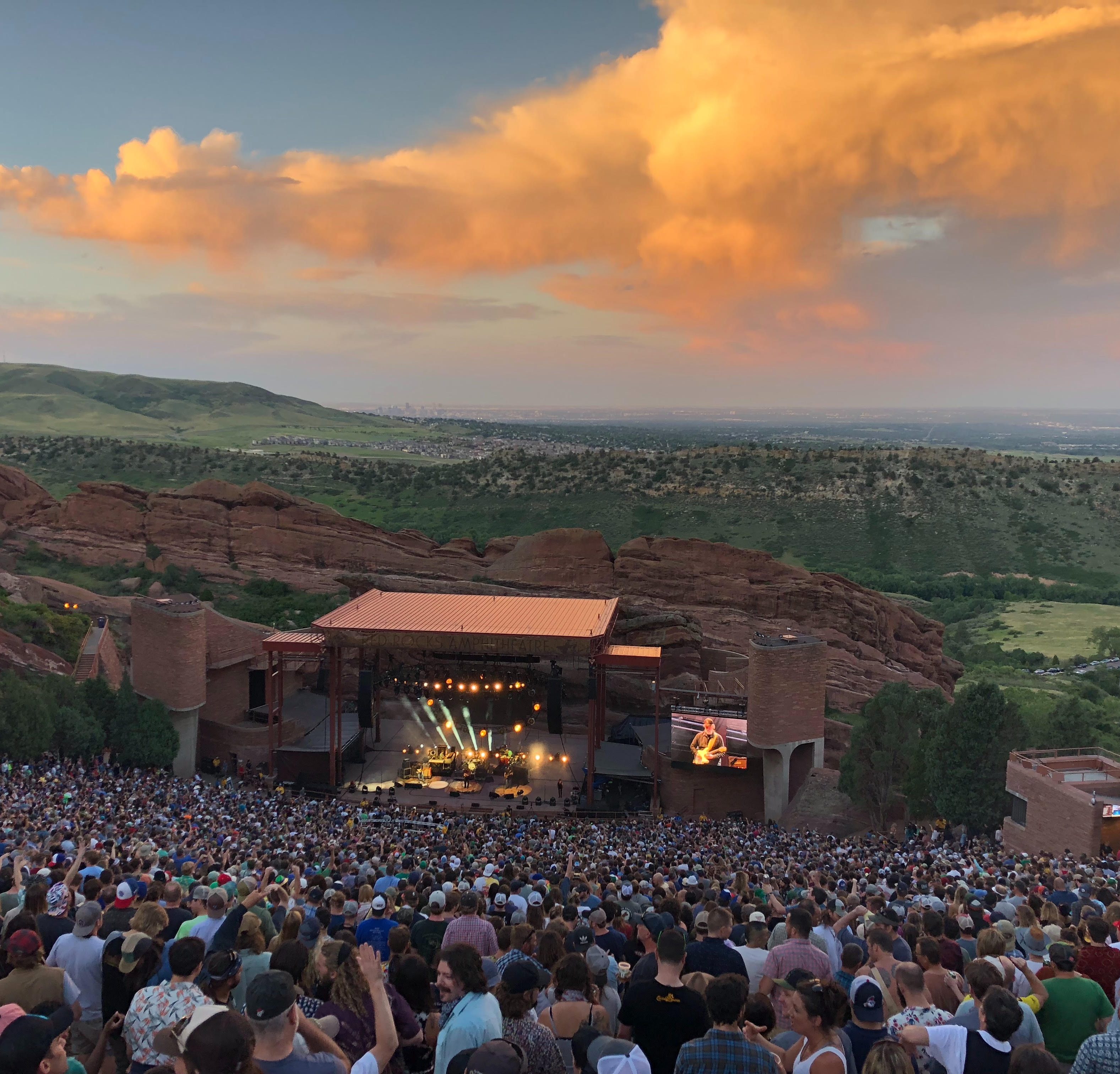
      I was lucky enough to see SRV at two of my favorite venues in the world.  First, I saw him sit in with the Neville Brothers at Tipitina’s during Mardi Gras 1987, which was amazing.  I’m not positive, but in my head, I believe they covered “Red House” by Hendrix.  Following that, just a year before his death, I was able to see him at Red Rocks with my friends Mike & Jim.  It was an awesome show of course, and Stevie was candid and blunt about finally overcoming the demons of addiction and looking forward to a healthy and long life ahead.  Such a waste, that early loss of life, but his gift of guitar greatness will absolutely live on forever; what a tremendous talent.

The Fixx “Reach the Beach” (1983)

     Today’s album was a pleasant surprise, as I listened to “Reach the Beach” by the British new-wave band, the Fixx.  There have been two songs by the band I have always loved, both of which are on this record, but it was nice to discover how much I enjoyed this entire album.  The Fixx is one of those bands that was always around in the ‘80s, and had more hits than I remembered, but one I had never researched or looked into in any way, until now.

     The album opens with “One Thing Leads To Another”, which has always been my favorite song by the band.  It has a great, driving tempo, and I love both the lyrics and musical components of the song.  Definitely one of my favorite hits from that era and genre.  Next up comes “The Sign of Fire”.  It is another great song, and as the 3rd single from the album, it is on that cusp of familiarity where I thought I had heard it before, but wasn’t immediately sure.  Two songs later we have the 1st single from the record, and the other well-known hit, “Saved by Zero”.  This song has a mellow groove, and overall, this song and this band reminds me a lot of Roxy Music and the Psychedelic Furs.  As much as I like this record, I may have to dig further into their catalog as well as the comparative acts I just cited.

     I always love it when I hear new songs (to me, at least) that I really love and want to add to my playlist.  We have two of these on this record.  The title track is funky by British new-wave standards, and I also really love the track “Liner”.  The entire record is consistently strong, and the voice of Cy Curnin is classic new-wave at its finest.  This was a good one…