Duran Duran “Rio” (1982)

     Once again, we have early ‘80s sensations Duran Duran with their second and perhaps most successful album of all, “Rio”.  With three massive hits and a much stronger overall production and collection of songs, the band really took a major step forward with this second album.  Thriving with their visual presentation and investment of time and energy in music videos, Duran Duran became one of the most successful and significant acts of this era, riding the wave of momentum from these first two albums.

     The album opens with the title track, and once again, we have some really phenomenal bass work.  In Duran Duran, that role is performed by John Taylor, and he lays down a great line that drives the pace of this entire song.  With an upbeat tempo, strong vocals from Simon Le Bon, and a flashy video as the dapper band catamarans across the high seas, the New Wave movement was in top gear with this record.  The next song, “My Own Way”, was actually the first single released from the album.  It wasn’t nearly as successful as the next three released singles, but it is a strong track that has a similar quality.

     Honestly, almost every one of these songs sound like they could have been the hit singles from the album.  I particularly like “Hold Back the Rain”, “Last Chance on the Stairway”, and the last song, “The Chauffeur”.  With all of that said, the other two major hits are both iconic tracks for the band.  “Hungry Like The Wolf” added the carnal energy that followed this band everywhere, and “Save a Prayer” proved they could sing at almost any style, speed, and pace, and make great music.

     When they first hit the scene, I was slow to embrace Duran Duran as I was not an early adopter of the New Wave sound.  I remember performing in air guitar contests as Jimi Hendrix while the vastly younger crowd (aka one year younger) took on Duran Duran.   Although it took me a few years, I really do genuinely love this band and their influence on the music of the 1980s, and although I would have denied it 100 percent at the time, I was no doubt envious of both their talent and their best-of-breed style and appearance.

Van Halen “Diver Down” (1982)

     “Diver Down” is a fascinating study on the dynamics of Van Halen, and although it is a quirky album filled with covers, it has some great songs and is probably some of the best partnership and collaboration between David Lee Roth and Eddie Van Halen, before things really began to sour.  After their tour for “Fair Warning”, they released one cover single, “(Oh) Pretty Woman” by Roy Orbison.  As a success, including the intro track “Intruder”, which is oddly enough, primarily Roth on synthesizer with Eddie and Alex Van Halen ripping through the end of it, they released the video which inspired their record company to pressure them for a full album.  They didn’t have anywhere close to enough original material, so this album has a total of five covers.  That did not thrill Eddie, as he took great pride in his original riffs and songs, but if you are going to have a record full of cover tracks, there is no better choice than SoCal’s #1 party band to put them out.

     The record opens with their second Kinks cover, “Where Have All the Good Times Gone!”.  I don’t think this is near as compelling as their version of “You Really Got Me”, but Eddie’s guitar makes it as fun as it can be.  “Hang ‘Em High”, “Cathedral” and the bluesy “Secrets” are all good, but not great original tracks, with “Intruder” and “Pretty Woman” rounding out side one.

     Side two is my favorite, it opens with their version of “Dancing in the Street”.  Originally co-authored by Marvin Gaye and made famous by Martha and the Vandellas, this song has been covered by many artists, but I consider this to be the best rock interpretation of this song.  Eddie does some great work on keyboards and guitar, and the song is a perfect fit for Diamond Dave.

     Next comes the amazing flamenco opener and full track of “Little Guitars”.  Eddie was brilliant once again here, Dave proves that he once was a really good singer with lots of character, and Alex does some of his best work on drums on the main track.  If you want more evidence of the color and character of this band, check out “Big Bad Bill (Is Sweet William Now)”.  A hilarious song written in 1924 that tells the story of the town’s toughest guy who was brought to his knees by the love for his woman, this song brings in Jan Van Halen, the boys’ father on clarinet.  In recent years we have seen the love between Eddie and his son Wolfgang, and I love that he was also able to record this song with his dad; what a great memory and it is really entertaining, as they usually are.

     Through all of the covers and hilarity of these covers, they come back with “The Full Bug” to remind you that they were still capable of rocking like no other band of their time.  Dave opens up on acoustic guitar, and then we get the nastiest riff of the record from Eddie.  This song simply kills, and Michael Anthony and Alex Van Halen are equally excellent on this track as well.  We even get a top-notch harmonica solo from Dave.  This song is not in regular rotation among the Van Halen classics, but I will put it up against any track they have ever delivered, it is that good.

     For one more laugh, we close it out with their a cappella four-piece harmony interpretation of the Roy Rogers and Dale Evans theme song, “Happy Trails”.  When I look at the complete disaster this band turned into over egos and differing opinions on business and music, I like to recall the fun times like this song, and the natural chemistry, remarkable talent, and healthy tension that produced six great albums, including this one.

Iron Maiden “The Number of the Beast” (1982)

     After Ozzy Osbourne left Black Sabbath, legacy British heavy metal was ultimately lifted and reinvented by a multitude of bands, primarily two major acts that had their biggest successes in 1982.  These two bands led the way for heavy metal in the 1980s, at least in the first half of the decade, before the southern California hair-metal scene emerged in significance.  For now, the domain of heavy metal was dominated by these two bands, both of which we will cover this year.  The first is Iron Maiden.  Like many acts of this time, they featured two guitarists, Dave Murray and Adrian Smith, but the dominant influences in this band are the spectacular, frenzied bass work of Steve Harris, who was their primary songwriter, and yes, THE Bruce Dickinson on lead vocals.  Their 1982 album, “The Number of the Beast”, is rated as the #3 greatest heavy metal album of all time by loudwire.com.

     I don’t think I have ever listened to this entire album before today, but I will concur that this record absolutely rocks.  Taking metal to a faster and more intense place, Harris sets the pace with his high-speed fury on bass that is unmatched in the metal world.  If I had to describe the difference between heavy metal and punk rock, which are different and yet similar in intensity and aggression, obviously the arrangements are more complex on most metal songs, and the operatic-like ranges of the singers also define the sound.  I did not know a single song on side one, but I really enjoyed every one of them.  Some start slow, and some start fast, but they all finish with an intense race to the end.

     The two signature songs from this album open side two.  First comes the haunting guitar rage of the title track, with Dickinson’s insane range and vocal power.  I’m not one who buys into the real threat or fear behind the satanic connotations of this song, but it does tap into the dark side of our society, however deep that may run.  Next comes “Run to the Hills”, which has to be one of the greatest metal tunes of all time.  Based on the exploitation and genocide of native Americans by their colonial intruders, the duo of Harris and Dickinson set this song on fire, and even non-fans of metal like my son have been known to turn this one up as high as they can.  It is just a phenomenal track.

     The album winds down with a seven-minute ode to darkness, “Hallowed Be Thy Name”.  I was not a big fan of this specific genre back in its heyday. The images of their mascot, this massive skeletal zombie named Eddie, along with the fire and matching leathers probably distracted me from the overall quality of their performance.  That said, I really wished I had added them to my long list of arena concerts in the early ‘80s, I have no doubt it was a show I never would have forgotten.

Asia “Asia” (1982)

     Several times already I have been surprised to learn what the #1 selling album was for a particular year.  Once again, with all of the breaking trends in new music, I have to say I did not expect “Asia”, by the UK supergroup Asia, to be at the top of the list for 1982, but here they are.  I do recall a lot of air-play for this album, but for reasons I will explain further below, I didn’t think this would be THE album of the year.  Formed from the remnants of multiple British progressive rock bands, we have lead singer and bassist John Wetton from King Crimson, guitarist Steve Howe and keyboard player Geoff Downes from Yes, and drummer from Carl Palmer from Emerson, Lake and Palmer.  Make no mistake, there is a lot of musical talent in this group, and yet despite their obvious commercial success, I was never enamored with this band or this record.  I always found it to be bland and lacking any edge whatsoever, and unfortunately, 39 years and a couple of fresh listens has not changed my mind.  Said in the politest way possible, this is perhaps the whitest rock music I have ever heard.

     The album opens with the three singles from the record, in descending order of release and success.  First, we have “Heat of the Moment”, next comes “Only Time Will Tell”, and then we have “Sole Survivor”.  Most of you will recognize some or all of these songs.  I mean, they are fine as they are, and they are easy to listen to, but the production of all of the songs on this album completely buries the guitar and bass as if they barely even existed, grasping for air under several layers of ‘80s synthesizers.  And with a great drummer like Carl Palmer, this might as well have been any unknown session drummer playing the basic beat, also buried in the mix.  I think I also recognize the last track, “Here Comes the Feeling”, but I’m not really sure, and that’s OK.  Of the tunes I don’t recall at all, I probably enjoyed “One Step Closer” the most, as it had an interesting chorus and vocal arrangement, but the rest are completely forgettable.

     The other remnants of Yes reformed around the same time to record the album “90125” and one follow-up album.  Equally successful with the hit “Owner of a Lonely Heart”, I found this group and production to be much more appealing, and I actually went to see this version of Yes in the late ‘80s with my friends Mike, Darren, and I believe we dragged Jim to the show as well.  Their albums were produced by former Yes bass player Trevor Horn, and here is where this finally gets interesting.

     What is the common link, you ask?  In another musical fact I had no idea until today, Trevor Horn from Yes, and Geoff Downes, from Yes and Asia, were in another band in the late ‘70s and early ‘80s.  The name?  Of course, the one and only Buggles, who gave us the infamous “Video Killed the Radio Star”, the first video ever to air on MTV.  I never could have imagined that quirky new-wave one-hit wonder rose from the ashes of one of the most progressive and highly orchestrated bands of the 1970s, Yes, and that one of them would then find their way into… Asia.  So, with that, my work here is done today.  You’re welcome…

The Misfits “Walk Among Us” (1982)

     You learn something new today, and for me, today’s fun fact is that before he formed his own self-named band heavy metal band Danzig, Glenn Danzig was and still is the lead vocalist and primary influence for the American punk rock band The Misfits.  Their debut album, “Walk Among Us”, is the #9 rated punk rock album of all time as rated by loudersound.com.  While the two genres aren’t quite as distinct as something like being a bluegrass and hip-hop artist, it is still an impressive bridge nonetheless.

     “Walk Among Us” is pretty standard-fare punk rock of the era.  Most of the songs are fast, intense and short bursts of energy.  I will say that they have some great song titles.  Among my favorites are “Nike-A-Go-Go”, “Hatebreeders”, “Devils Whorehouse”, “Astro Zombies”, “Braineaters”, and my #1 favorite song title, “Mommy Can I Go Out and Kill Tonight”, which is also the only live track on the album. 

     To be fair, my favorite song on this album is definitely “Astro Zombies”.  There is a more melodic feel, it sounds very Ramones-esque.  “Braineaters”, which is only 0:56 long, also has a bit of a beer-pub soccer match singalong feel to it as well, which I like.  The rest of the album is pretty consistent.  If you like your rock music fast, aggressive and filled with themes of horror scenes and destruction, then this is your record.  Like many of the acts of this era, I think I would have enjoyed seeing them live, even if I would probably be standing far away behind the mosh pit.  I’m a lover, not a fighter.

AC/DC “For Those About to Rock” (1981)

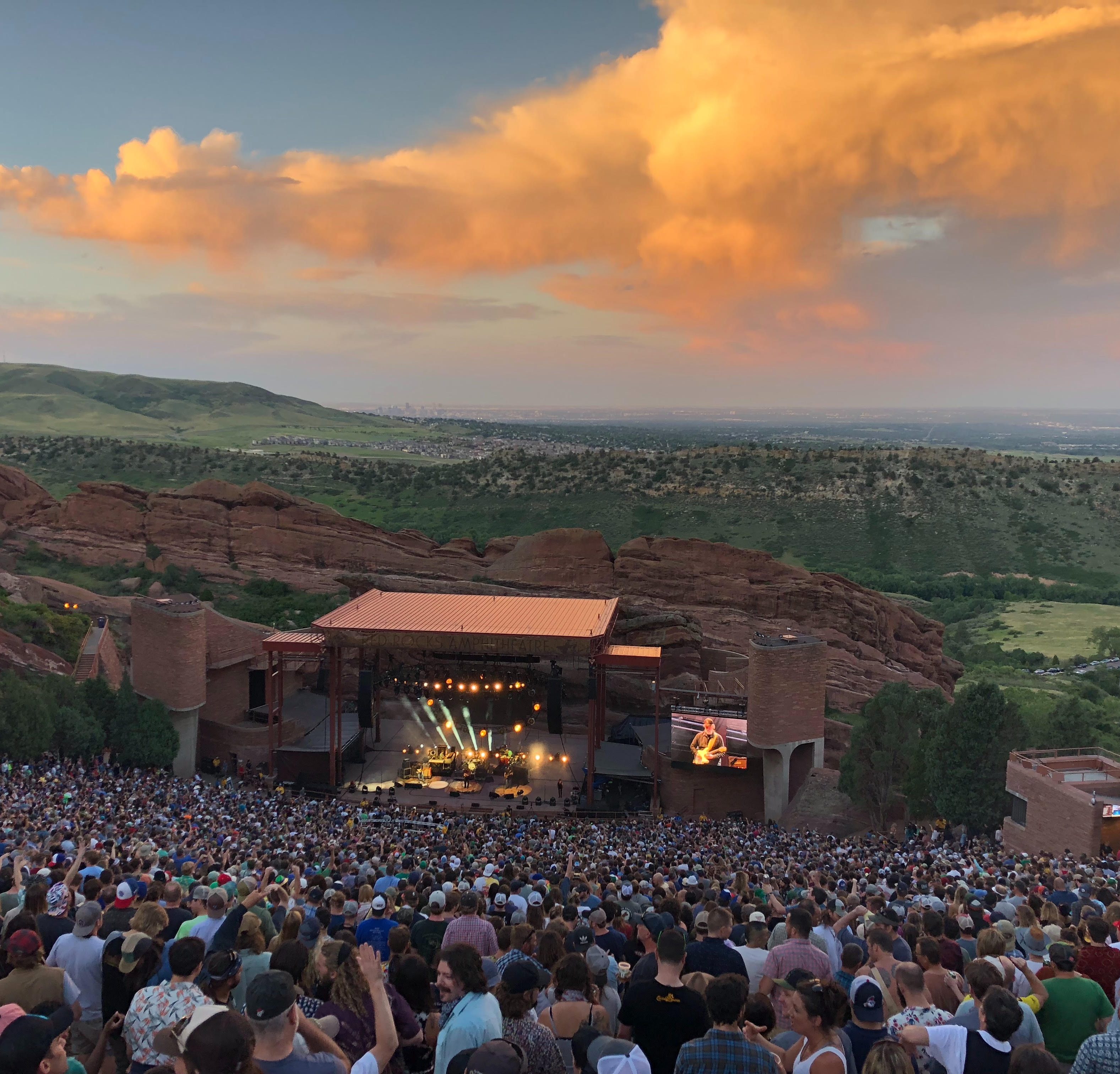
     February 19th, 1982 was a big night for me.  Following the release of AC/DC’s “For Those About to Rock” in 1981, I attended my first legit rock concert at McNichols Arena in Denver, Colorado.  Joining me were my friends Mike and Nevin.  I’m not sure, but I think my Dad drove us and Mike’s mom picked us up.  The opening act was Midnight Flyer, featuring legacy Swan Song artist Maggie Bell, and I remember very little about their performance.  Tickets were a steep $13.  I will never forget the electricity in the air between acts, as the roadies prepared the stage for the main act.  That surge of energy when the lights went down, and the bells from “Hells Bells” began to ring, I knew then my life would never be quite the same.  With Angus Young running all across the stage in his signature schoolboy uniform, Brian Johnson belting at supersonic levels, and Malcolm Young and Cliff Williams walking up and back for each backing vocal chorus, it was unlike anything I have ever heard or seen before.  Eventually I saw AC/DC four times, and each time was an overwhelming, deafening, exhausting and exhilarating experience.  From that night on, even at my relatively advanced age, my eyes are keenly focused on what live music show will be my next opportunity to relive that amazing memory.

     “For Those About to Rock” was the band’s follow-up to “Back In Black”, which is no easy act to follow.  Once again produced by “Mutt” Lange, listening to this full album again was a great flashback.  I actually won this album on a radio station call-in, the second album I had won in my life, the first being “Endless Flight” by Leo Sayer.  I played this one with a bit more consistency, and I had forgotten how good this record is.  In recent years, I had convinced myself it was one or two good songs only, but coming back to it reminded me how much I enjoyed almost every track.

     Of course, the epic title track is the defining song on this album, and like “Hells Bells” or “Back in Black”, it is a titanic showpiece in concert.  As I recall, it was the final song of that first concert I attended.  My second favorite song on this album is “Let’s Get It Up”.  Like Prince’s album yesterday, the song title is mildly uncomfortable, but it really is a great riff, one of their best.

     AC/DC never strays far from their themes of darkness and sexual double-entendre, and this album is no exception.  Thankfully, they keep the same amped-up energy that they had been perfecting, and among the other songs I really like on this album are “Put the Finger on You”, “Evil Walks”, “C.O.D.”, and “Breaking the Rules”.

     With the release of this album, my first concert and obligatory concert t-shirt, I became a lifetime fan of rock music and live music in general, with so many great experiences to be had.  It had to start somewhere, and I will never forget this night and all that came afterwards.

Prince “Controversy” (1981)

     Today we have the first appearance from one of the biggest superstars in American music history, Prince.  Late in 1981, he released “Controversy”, which was the first time I became aware of this dynamic and charismatic performer from Minnesota.  If you combine the talents of songwriting, performing, playing musical instruments, singing and dancing, Prince has to be the most versatile and talented performer we have ever seen.  Like many artists, we lost him way too young, but he left an unmistakable impact on the music world.  He is very likely my son’s favorite recording artist of all time, so I have spent a lot of time listening to and contemplating Prince.

     This album is like a lot of early Prince.  True to its title, it is certainly controversial, heavily embedded with subtle and not-so-subtle sexual references across the entire record.  Prince asks us on the first lyric, “Am I black or white, am I straight or gay?”  As we pondered these questions as well as many others, we realized this guy was something unlike anything we had seen before.  I do favor the title song as my favorite song on the album, probably both from familiarity and the funk groove it offers.

     Before I go any further, I have to note my one major pet peeve with Prince’s songs.  This has been a subject of debate between my son and I for many years now.  As much as I love Prince, I think he, like Michael Jackson, as well as many other artists to be fair, often take a good four-minute song and turn it into seven minutes of redundancy.  While I can absolutely appreciate the escalation of intensity and the reckless abandon with which Prince unleashes at the end of many songs, sometimes it is just a little too much, at least for me. 

     One of the best examples of this is “Do Me, Baby”.  While there isn’t much mystery about what this song is about, which is fine by me, I’m not quite sure what Prince is doing the last three minutes of this song.  It certainly sounds like he is enjoying himself, so good for him, but I would have probably been OK if this song was a bit more… concise.

     My other favorite tracks on this album are “Private Joy” and “Ronnie, Talk to Russia” where we bring some modern-age geopolitical concerns into the studio.  I also really like the last song, even if the title, “Jack U Off”, is a tad bit on the awkward side.  Awkward and uncomfortable with a great backing melody?  That’s Prince for you, welcome to his era.

U2 “October” (1981)

     The second album from U2, “October” was released in 1981, and I find it to be very similar in style and structure to the first album, “Boy”.  Some moments of brilliance, but also some moments where they still haven’t quite mastered their song-writing chops just yet.  The energy and performance intensity are fully present, I just don’t find that many memorable songs on this second album.  I’m understanding further why it took until the third album, “War” for me to really stand up and notice U2.

     The record opens with their signature song from this record, “Gloria”.  Perhaps their first of many truly anthemic songs, this would be one of their most recognized songs of the early era.  In case anyone is confused, this is not the same song written by “Van Morrison”, although I have heard U2 cover that song as well.  Next comes “I Fall Down”, which we begin to hear The Edge play piano in addition to his innovative guitar performance.  On “I Threw a Brick Through a Window”, I really like the drum pace from Larry Mullen, Jr.

     My other favorite track on this album is the haunting ballad that is the title track from the album.  U2 are masters at making a simple chord structure into a beautiful song, and this is a perfect example.  On deluxe editions of this album you can hear it performed live, which is an ideal showcase for the passionate and dramatic delivery by Bono and The Edge.

     Don’t get me wrong, I’m a big fan of U2, and I do enjoy these first two albums, particularly for the early preview of the raw talent of these four musicians.  I do look forward to listening along the way as they rise the ladder of greatness into superstardom, starting with their next album.

Merle Haggard “Big City” (1981)

     As the rest of the music world rolled forward with changes around every corner, the genre of country music remained consistent and rooted in the core of its American legends.  Today’s album is “Big City” by Merle Haggard, which is rated as the #10 best country album of all time by tasteofcountry.com.  I heard some overlap from a previous Haggard album we had listened to, which made sense when I looked back and realized that back in May, his album “Down Every Road”, which I sequenced in 1969, was in fact a career compilation from 1962 to 1994.  Some of the best songs from that album are also here on “Big City”.

     The album opens with the title track, which is one of two #1 singles from this album.  This is the purest and happiest song on the album, and it is easy to see why it was such a big hit.  The real-world lyrics, blended with the fiddle and guitar give this song a wonderful nostalgic feel, as it could have been recorded twenty years earlier during the peak of Patsy Cline and Porter Wagoner.

     The next song, “My Favorite Memory”, which was also a #1 single, is an interesting find.  If you listen to this song, it is nearly a note-for-note replication of “Good Hearted Woman”, originally written by Waylon Jennings and also recorded by Willie Nelson and George Jones among others.  It is much slower, performed as a ballad, but the familiarity is unmistakable.  I even had to check the songwriting credits, as I’m surprised nobody else recognized this uncanny resemblance.

     The rest of the album is packed with more of the same remarkably authentic country sound.  I love “Good Old American Guest”.  Two songs later we have “This Song Is Mine” where Merle even seemingly refers to the borrowing of phrasing and structure across all genres of music.  “I’ve written words in many ways to make them rhyme, And at times I’ve stolen notes that wasn’t mine, Sometimes I changed my style all around to make it new, These are my words and this is my way and it’s for you.”  You aren’t the only one, Merle Haggard, if we have learned nothing else on this journey, we learned that every piece of music is in someway influenced and shaped by what came before it.  Sometimes the references are more direct and obvious than others, but they are always there.

     “Stop The World And Let Me Off” has a great Mexican cantina feel with the trumpets, and the other great song that we also heard previously is “Are the Good Times Really Over (I Wish a Buck Was Still Silver)”.  A highly reflective song that laments the lost innocence of pre-1960s America. Despite the much-needed changes that came with the 1960’s and 1970’s, there are still segments of simplified values of hard work and family that ring true in this melancholy look back.

     This is definitely one of my favorite country albums on this list, and Merle Haggard once again stands out as one of the most accomplished and pure icons of country music.   

Rolling Stones “Tattoo You” (1981)

     By 1981, the British rock legends of the ‘60s and ‘70s were fading into the backstory of rock music.  All future hope for a Beatles reunion died with the death of John Lennon, Led Zeppelin announced they were finished as an act, and The Who were trying to forge forward without Keith Moon, with mixed results.  Left to carry the flag, the Rolling Stones released their last great studio album in 1981, “Tattoo You”, and embarked on a worldwide tour fueled by this highly successful album.  Surprisingly enough, this album actually was compiled out of many songs that were in some incomplete state for several years, with some of them even dating back to the Mick Taylor era.  Even with that, I definitely recall the major impact this record had at the time, and it is an all-time favorite for me.  I don’t know if some of that is just because I know it so much better front to back than any other Stones album, having lived it during its release, but there are many great songs to celebrate on this album.

     The record opens with their classic hit, “Start Me Up”.  This record is a defining song from this year, and was actually a song they reworked from a reggae tune into an up-tempo rocker.  They often use it to this day as a concert kickoff, and it can be heard almost as often today as it was during its run on the charts.  Next comes “Hang Fire”, another absolute rocker, and with “Start Me Up”, gives us a really good one-two punch to open the record.  We then have the bluesy “Slave”.  As always, the Stones have a wide assortment of studio musicians on call, and I learned that even Peter Townshend sat in on the backing vocals for this track. 

     As we often do, we have a Keith Richards-led track, “Little T&A”, and this song ranks up there as one of Keith’s very best.  He is not a classic vocalist, but he is truly as rock-and-roll as they come.  I love the next song as well, another bluesy romp, “Black Limousine” where Mick looks back fondly at their early success, and side one ends with “Neighbours”, one of three tracks that features Sonny Rollins on saxophone.

     Side two is a more mellow collection of songs, with four good ones and one great one.  I enjoy each of the first four tracks, with “Tops” being my favorite of those four, but the other real masterpiece on this album is the last song of the album, “Waiting on a Friend”.  This is one of the tracks that dates back to Mick Taylor vs. Ronnie Wood on guitar, but it is a beautiful song that celebrates the connection of friendships through the ups and downs of life.  I know this album was a big album for my friend Jim and I, and even though we didn’t quite have the freedom yet to pull off seeing the Stones on this ’81 tour in Boulder, we certainly loved the Stones and celebrated this last great release of theirs.

     It is hard for me to believe this record, and all of these albums from 1981, are forty years old.  I remember their success as if it was just yesterday, and I am excited for the duration of this journey with each album being released to my focused attention as a fully conscious and keenly aware music fan at the ripe old age of 14.  This is the 16th and last album of original songs we have from the Stones; they have more albums on this list than any other act.  Their enduring run is unprecedented, and even as we fast forward to today, Mick Jagger, Keith Richards, and Ronnie Wood still press on as the active and surviving members of a stadium-touring act that has been playing together for almost 60 years in total.  They have been a part of my musical world for as long as I can remember, and I will always celebrate them as one of the greatest bands in rock music history.